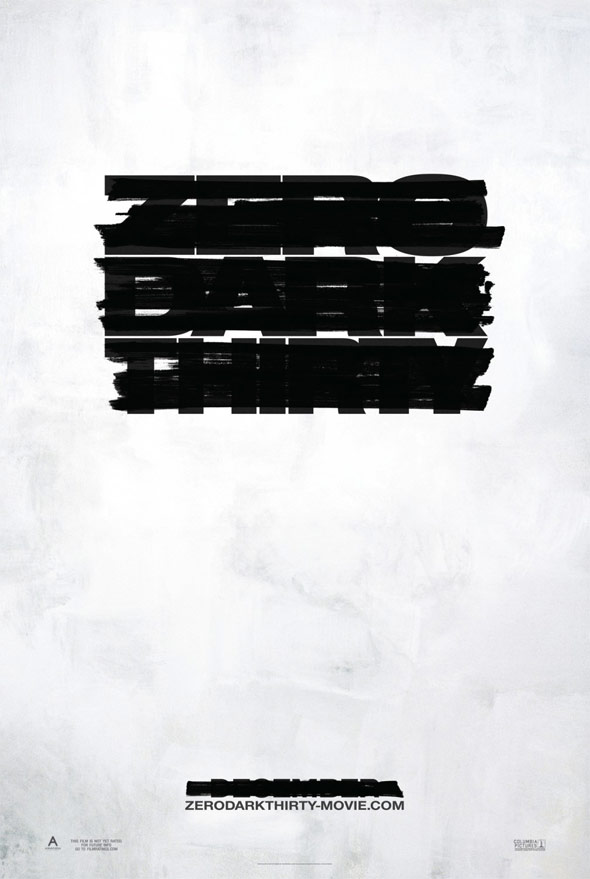
Even before its release, Zero Dark Thirty was courting controversy: does it glorify torture, was the Obama administration a little too florid in its support to the filmmakers, does Kathryn Bigelow get more credit than she deserves because she's a female filmmaker? At least two out of three of those questions maybe valid, but I think Zero Dark Thirty cements Bigelow's reputation as a solid, and solidly audacious, filmmaker.
Showing posts with label war movie. Show all posts
Thursday, 10 January 2013
Friday, 20 August 2010
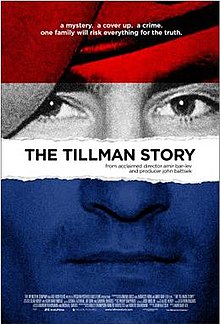
The Tillman Story
Rating: ****
Despite being only seven years since the start of Operation: Iraqi Freedom, it probably stands that it is as dramatized and as analyzed through film as the Second World War. But through all those various dramas and documentaries, none have been as personal as THE TILLMAN STORY. If you think you know Pat Tillman – the NFL player who left his lucrative contract with the Arizona Cardinals and signed up for military service following the events of 9/11 – think again. THE TILLMAN STORY isn’t a tale of heroism and sacrifice, it’s a tale about how one man’s road of good intentions was paved over by a cynical government and military structure trying to sell an improbable and dishonest war.
I would not consider myself an uninformed person, but even I was surprised by the turns, the testimonials and reprisals contained in THE TILLMAN STORY. Killed while on duty in Afghanistan on April 22nd, 2004, Tillman’s death was originally painted as a heroic fight-to-the-death where Tillman, a private with the 2nd Ranger Battalion, 75th Ranger Regiment, Fort Lewis, Washington led his troops against insurgent fighters that ambushed them. Soon though, Tillman’s family was forced to question the “official” story as military brass strong-armed them to accept the ultra-American version of events, while the politicians in charge of executing the war painted the former Defensive back as the closest thing to a real life Captain America.
In reality, Tillman was cynical about the wars his country was prosecuting, and though he did his duty to the best of his ability, he was no mere “jarhead.” He was well read and counted Ralph Waldo Emerson and Noam Chomsky amongst his favourite authors. He was also an atheist, or at the very least aggressively agnostic. One of the most arrest parts of the film is a scene from Tillman’s funeral when his little brother Rich follows words of religious faith spoken by Sen. John McCain and California First Lady Maria Shriver by saying that his brother was “f**king dead” and wasn’t with God because Tillman wasn’t religious.
Despite these glaring contradictions, the U.S. government persisted in making Tillman a symbol of the America they wanted. Like Jessica Lynch, whose rescue from an Iraqi hospital was described like the climactic battle at the end of any one of a number of war movies – and almost as fictional – Tillman’s death became a recruitment device. Military brass tried to convince Tillman’s wife Marie to let him be interned at Arlington National Cemetery, in contradiction to Tillman’s expressed wishes. All the while, the holes in the military’s narrative about Tillman’s death started to become bigger and bigger. Eventually, the true version of events describing how Tillman was killed in a friendly fire incident, start to come to light.
Director Amir Bar-Lev does an admirable job of deconstructing the timeline while balancing the emotions and the outrage of the Tillmans. The main thrust to the film is that Tillman has becoming everything he didn’t want to be, no matter what side of the war you fall upon. Whether painting Tillman in the archetypal image of the American patriot, or condemning that by pointing out Tillman’s more quiet patriotism, the former footballer has become the one thing he never wanted to be: the centre of the debate. One senses Bar-Lev’s attempt to restore a sense of equilibrium to the man’s legacy, and that is not an easy task in the modern media atmosphere.
THE TILLMAN STORY may occasionally seem like a polemic, but it really isn’t. It’s a tragedy. Not just because Tillman was killed, although certainly the almost unnecessary loss of such a well adjusted young man is undoubtedly a tragedy, but because like all things touched by the Iraq War, truth was sacrificed for political expediency. The facts tainted the truth, or at least the truth that the government wanted to exist. At the centre of it all, was a man that heard the call to service and felt he had more contribute than making millions of dollars throwing a ball around a field. In short, Tillman deserved better, but then again, who amongst the thousands who’ve died in the War or Terror doesn’t?
Labels:
documentary,
iraq war,
military,
pat tillman,
sundance,
tillman story,
u.s.,
war movie,
war on terror
Sunday, 9 May 2010
Hot Docs - War Games and The Man Who Stopped Them
Rating: ***1/2A lot of people get the lion’s share of the credit for ending the Cold War: Ronald Regan, Mikhail Gorbachev, even Ronald McDonald. But what about Colonel Ryszard Kuklinsk? Who? you're asking. Kuklinsk was a high ranking officer in the Polish army, one of their best actually with dozens of citations to his name. But he was also a traitor. To some people anyway, nearly as many think he’s a national hero that laid aside nationalism for the sake of not just the free world, but for the entirety of mankind as well. War Games and the Man Who Stopped Them is Kuklinsk’s story, one that unfortunately he didn’t get a chance to contribute too.
No, that’s not foreshadowing of a sinister end to Kuklinsk, but that wasn’t altogether certain considering that one night in 1981 when he and his family had to flee Warsaw for fear of him being discovered as an American spy. Kuklinsk was a decorated officer and pride of the Polish military, but he was a humanist too. Upon seeing the Warsaw Pact plans in anticipation for an invasion of Western Europe, up to and including the use of the nuclear option, Kuklinsk said to himself that enough was enough. He turned spy for the Americans and over several years provided valuable intelligence that might have hastened the collapse of the Soviet block.
A combination of memoir, docudrama and spy thriller, War Games chronicles Kuklinsk’s nearly decade long service as a double agent, his tragic retirement in Florida and his eventful return to Warsaw that where people came out to welcome him and lynch him in equal measure. It’s a weird, wild story that spans across the worlds of international espionage and family heartbreak. Director Dariusz Jabłoński gives the film both a personal touch and a journalistic distance. That’s not an easy task, but Jabłoński’s personal relationship with Kuklinsk before his death is tempered by the fact that the man’s death offers some remoteness to the subject material.
Treading in the grey waters of international intelligence gathering, there’s plenty to get the paranoid-turned mind going with visits to facilities and ceremonies so secret that there’s no filming allowed lest there be exposure for the active C.I.A. agents inside. Not that this is some James Bond action piece, this is the real nuts and bolts of spy work in all its unglamorous glory. But this is a story about a man who was accidentally a spy, a man struck by conscience and with the courage and guile to accept that his actions may have led to no happy ending for himself. Terse and mechanical, yet still loving and personal, War Games is a great tribute to not just Kuklinsk, but to unsung heroes that influence events bigger than themselves all the time.
Labels:
cold war,
documentary,
hot docs,
soviet union,
spy,
war games,
war movie
Thursday, 6 August 2009
The Hurt Locker
There aren’t many war movies without a lot of combat, and there aren’t a lot of war movies with a wicked sense of humour either. Well, The Hurt Locker defies both those generalities, and does so with a tremendous amount of panache and talent. That talent primarily belongs to Jeremy Renner, whose Staff Sergeant William James is perhaps the greatest subversive military character since one Benjamin Franklin Pierce step foot in the camp of M*A*S*H 4077. Grounded in something more than the politics of the day, Hurt Locker manages to excel past the bumps and contrivances that have itched previous depictions of the Iraq War in order to tell a tale more character driven. It’s war on the edge of madness.
The film follows the final 40 days in rotation for a U.S. Army Explosive Ordnance Disposal (EOD) unit in Bravo Company. When the unit’s previous commander, Sergeant Matt Thompson (Guy Pearce), is killed in the line of duty, James is rotated in to lead the team made up of Sergeant J.T. Sanborn (Anthony Mackie) and Specialist Owen Eldridge (Brian Geraghty). Immediately Sanborn and Eldridge notice a distinct change in style between Thompson and James, primarily the fact that James seems utterly full of contempt for both Army procedure and his own life. The title of the film refers to a box James keeps under his bed full of old bomb components from devices he’s disarmed.
Despite the somewhat brazen characterization of Sgt. James, there is a certain degree of authenticity on display in The Hurt Locker. The script was written by first time screenwriter Mark Boal, who also wrote the short story that Paul Haggis’ In the Valley of Elah was based on. Boal spent time embedded with an actual bomb squad unit in Iraq, and apparently based this script on the experiences. "It's the first movie about the Iraq war that purports to show the experience of the soldiers," Boal told the Guardian UK. The slate of Iraq War movies that have come out over the last few years have irrevocably some kind of colour commentary on the nature of the conflict, but Hurt Locker’s focus is on the day-to-day impact of the soldiers fighting it. Is Sgt. James really Section 8, or is he merely adapting to suit his circumstance?
The film is grounded by Renner’s go for broke performance picture James as both a lunatic and as someone trapped near the end of his rope with only one way to cope. The film’s very intently focused on character; James’ predominately, but there’s also Sanborn, who’s a stand-up soldier trying to keep James insanity from overflowing. Eldridge meanwhile finds James’ approach initially refreshing, but quickly finds himself questioning the renewed state of greater madness he finds himself in as the end of the rotation gets nearer. What’s really perplexing is that James is also a competent soldier, maybe one of the best, and Renner always has you wondering whether he’s lucky, crazy or completely unorthodox.
Technically the film is superb. Kathryn Bigelow, typically known for her cult efforts (Near Dark, Strange Days) and her strangely inept action films (Blue Steel and Point Break), finds a strong and pointed voice through which she can tell the story. The film only really falters in its last third, with at least one scene that feels cut and pasted from a typical action movie. While watching it, the sequence feels out of place as James gets caught up on a mission of personal revenge only to find a solo mission in a community he doesn’t know and doesn’t speak the language of a greater challenge than advertised. We get it, we get it, things are not what they seem, the enemy you know, and so on, and so on. It tarnishes what might otherwise be near perfection, but Bigelow keeps things pretty grounded in the daily, drill sergeant realities for the most part. And enough can’t be said about Renner, without him The Hurt Locker could have been just another war movie. Keep in mind though, that it’s anything but.
Monday, 6 April 2009
The Lucky Ones
I’ve seen a lot of movies about the Iraq War; I mean a lot! In fact, I think there have been more films made about the current Iraq War than the last one that took place almost 20 years ago now. One would thing that I’d be Iraqed out by now, but it appears I’m a glutton for punishment. So here I am again, reviewing another movie about this very subject matter, and I’m still a little on the fence about what this glut of creative output means, and how it’ll influence the way we see the conflict years from now.
Maybe there’ll be no affect at all, but I think that by far the most interesting stories will come from the soldiers’ point of view. In The Lucky Ones we’re introduced to three soldiers: one being discharged and two others on 30 day leave. The film is an interesting time capsule of a point in the war when people were still raw, raw, raw about it, but on the outer edges there’s the shadow of doubt about the entire endeavour that was still a few years away from a full-on eruption, The acting is uniformly excellent thanks to the three very capable leads, even if the plot itself feels unfinished and meandering.
Tim Robbins does the heavy lifting as the retiring Cheever, who returns to his St. Louis home after nearly two years away. He’s not in the door three minutes when his wife says that she’s used her time while he’s away productively by realizing that she doesn’t want to be married to him anymore. That’s bad, but on the bright side his son got into Stanford with a scholarship that pays for half his tuition. That’s good, but the kid still needs $20,000 more. So where does a pug fresh out of the service pick up 20 Gs? Cheevers wavers between pragmatism and desperation; for a long time coming home is all he could think about but home now seems to no longer exist, at least not as how he remembers it.
I wonder how many people have had similar experiences to Cheevers: you come home with one set of expectations only to realize unintentionally that time didn’t stay still while you were away. Robbins plays the anguish card really well, and manages to potently display frustration without going into hysterics. Cheevers’ story is complemented by Colee’s (Rachel McAdams), who’s in the position of looking for a family rather than finding it gone. She hopes by returning a killed comrade’s guitar to his family then she might have a family to return home to. Instead she finds that in war the first casualty is truth, even about your best bud’s personal history. McAdams is by far the heart and soul of the picture, exuding a bizarre Pollyanna-like optimism that for some strange reason never feels misplaced.
The final soldier’s story is that of T.K. (Michael Peña), who was wounded in action, but is too embarrassed to say where. He’s high-tailing it to Vegas to meet up with his fiancé who’s also in the service. He comes from a military tradition and has siblings in the army as well. His path is clear, for when he gets out of the military he ends to shuffle off into a bright career in politics and higher office. But interestingly, T.K. seems the most conflicted, the most ambivalent, about heading back to Iraq. Peña shows his usually deft dramatic chops by displaying T.K.’s inner struggle with his fate without having to verbalize it ever ten seconds.
The Lucky Ones is an odd ball mix of comedy and drama. It’s aimless road trip with a specific physical destination but numerous emotional portholes to pursue. The direction by Neil Burger (The Illusionist) is so intently focused on the actors and their characters that the bizarre mix of tones and emotions can almost be forgiven for the confusion it causes. Are you supposed to be laughing or merely observing intently? Now I can be the king of inappropriate laughter, so I’m probably a pretty poor judge on what’s funny, but for the most part it seems that this film is meant to easy the real heavy drama with a laugh, especially in light of the bittersweet ending. It’s a satisfying journey, albeit odd in the presentation.
Wednesday, 14 January 2009
Defiance
With all the “Nazis-Weren’t-All-Bad” movies that have been released lately, it’s kind of nice to explore a “No-They-Really-Were” type of film. For his part, director Edward Zwick has an ability to find unique war stories (Glory, Courage Under Fire) and stories about about brothers in arms both figurative (The Last Samurai) and literal (Legends of the Fall). Defiance combines both these themes into a compelling, though typical narrative, based on the true story of a group of Polish Jews that escaped the Nazi purge and tried to rebuild their lives in the Belarussian forest despite the constant threat of annihilation.
The film is based on the lives of the Bielski Brothers, who according to the film seemed to be the Dukes of Hazzard of World War II Poland. Constant reference is made about how they know the forests of Belarussia well, because occasionally being in trouble with the law, they take refuge there and hide from what I can only assume is Boss Hogg’s Polish equivalent. (Actually, what they’ve done, or have been accused of doing, is never revealed.) The film is a serious piece though and the above stated character detail is interesting, painting the Bielski’s as flawed characters, not saintly do-gooders. As the first refugees arrive in their camp, they even talk about using them as cannon-fodder, to buy them get away time should the Nazis discover them.
Naturally though, the Brothers discover their better selves. At the heart of Defiance is an interesting story about survival, moral choices and the notion of faith being tested. “Every day of freedom is an act of faith,” declares Tuvia Bielski (Daniel Craig), his meaning plain that survival on your own terms is never a guarantee, but that shouldn’t stop you from living outside of a role given or a role ordered. But despite the grandiose theme, the way it plays out is rather pedestrian, and kind of predictable. The romance between Tuvia and one his charges played by Alexa Davalos, although part of the true story, seems kind of tacked on and is really only given a lick and promise by the screenplay.
Also predictably, there’s tension between the brothers as Tuvia’s natural leadership of the desperate group of Jews and the rules he imposes on them for their own safety, don’t rest well with the older Zus (Live Schreiber). Instead, Zus signs up with Soviet partisans, fighting Nazis using guerrilla tactics. I wish Zwick had spent some time exploring this plot thread a little more because there are always some interesting things hinted at in the ranks, but their never really looked at except for the mention. But timing is tricky because the film is already quite long; sometimes it’s noticeable and sometimes it’s not. At times it seems that the film doesn’t live up to its ambitions of being a boldly defiant story about cheating fate, although it certainly tries.
Having said all that though, the film isn’t short on action, which is all brilliantly staged and well-paced. Of course, if Zwick couldn’t handle battle scenes after all this time, I’d be profoundly disappointed. And Craig ably leads the cast with his surly gravitas, and steely, blue-eyed glare, which, admittedly, he leans on a little too much at times. Many of the secondary characters were also kind of interesting, but it would have been nice to get a little bit more than background from them. A convenient montage shows how many of the survivors go from accountants and other sorts of paper-pushers to survivalists far too quickly; it would have been interesting to see that change a little bit more clearly, but then again: time restricts.
But the story itself is interesting, and like Valkyrie offers uniquely different perspective on the events of World War II, this time presenting the Jews not as witless victims, but as people willing to fight and not go quietly into the night. It’s an impressive story, that definitely has its moments, but I think it could have been executed a little bit better. Zwick though is a careful and contemplative filmmaker so he does manage to put on a good show, with enough skill to overcome the story’s shortcomings. Defiance is certainly well-crafted, and its end result is far from disappointing, but it left me feeling like there should have been more.
Labels:
action,
daniel craig,
defiance,
holocaust,
true story,
war movie,
world war two
Subscribe to:
Posts (Atom)