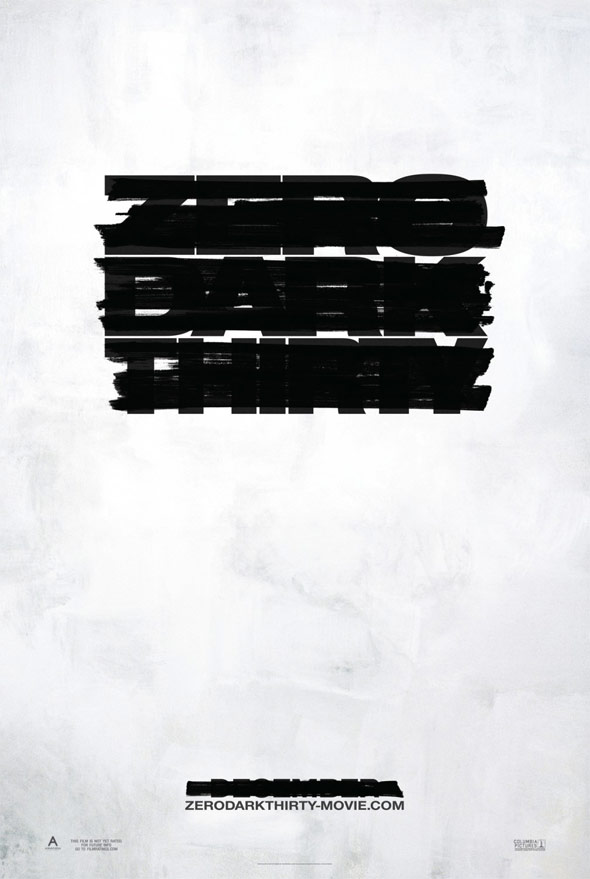
Even before its release, Zero Dark Thirty was courting controversy: does it glorify torture, was the Obama administration a little too florid in its support to the filmmakers, does Kathryn Bigelow get more credit than she deserves because she's a female filmmaker? At least two out of three of those questions maybe valid, but I think Zero Dark Thirty cements Bigelow's reputation as a solid, and solidly audacious, filmmaker.
Showing posts with label afghanistan. Show all posts
Thursday, 10 January 2013
Saturday, 5 December 2009
Brothers
For what’s supposed to be a personal family drama, Brothers is as maddeningly unoriginal in its plot as it is in its title. It can be as cold as the winter weather of the film’s setting and as distant as the Rocky Mountains in the background of all the scenery. Further complicating things is the fact that as much as Tobey Maguire can ably fill the boots of your friendly neighbourhood Spider-Man, seeing him play a hardened Marine captain taxed even my nimble ability to suspend disbelief. Kind of corny but still occasionally compelling, Brothers follows a simple plot, but mixes sporadic bouts of serious drama with its well-worn characters. And in case you didn’t already realize this, the trailer pretty much gives the ending away.
Maguire plays Sam Cahill, a respected soldier about to return to Afghanistan for another tour of duty. In one of those cosmic coincidences that only happen in movies, Sam’s brother Tommy (Jake Gyllenhaal) is released from prison mere days before Sam disembarks. While in Afghanistan, Sam’s chopper is shot down and he is presumed dead with everyone else onboard. Sam’s wife Grace (Natalie Portman) is suddenly faced with the prospect of raising their two girls (Bailee Madison and Taylor Geare) alone, but she finds returning to a normal life without Sam difficult to say the least. Listless, and without much going for him, Tommy steps in help Grace and the girls cope with Sam’s passing. Or make that supposed passing, as the captain is found alive, rescued from captivity after being held by insurgents.
It’s hard to tell which character is more cookie-cutter: Sam or Tommy. One’s a good old boy Marine with a dark side, and the other’s a misdirected bad boy with a heart of gold. Actually, the father played by grizzled 1890s prospector Sam Shepard is probably the most clichéd. A retired army vet that thinks the world of the son that enlisted and serves his country and has no time at all for the loser son with a criminal record. To be fair, the actors do hold some surprises in their performances. Despite the blatant archetypes that they play, both Maguire and Gyllenhaal hone finely nuanced performances where you can believe them as brothers. Portman is probably the shining star of the film, playing the grieving widow with neither over the top melodrama nor grating histrionics.
Overall, the family drama of Brothers works well. Certain scenes and moments tend to carry with them a genuine feeling of realism; times when your not thinking about how nicely divided the ground is between Sam and Tommy. Frankly, it would have been better if director Jim Sheridan had expanded on that and given us more on the homefront rather than continually take us away to Sam’s horrible POW experience at the hands of Afghan insurgents. There were so many scenes that practically covered the same ground again and again in regards to his treatment and they serve to do nothing other than make you say to yourself “Geez those Taliban are awful.” By the time Sam comes home haunted, we as the audience are practically haunted along with him. For me it would have been much more dramatically interesting if we had seen Sam leave and then see him come home broken. Leaving us wondering what broke him and how scared is he?
Despite the scripting issues and the Mad Libs characterization, there is something admirable in Brothers for the way it gently brings the war home. So many films made about the wars in Afghanistan and Iraq focus on the politics or the battles in country, only Brothers and last year’s The Lucky Ones seem to really seriously address how soldiers may cope with their experiences once back to what was once their normal life. Sheridan may be channelling Tennessee Williams at times with how the film plays out with a Blanche DuBois-style meltdown, but his heart was in the right place. Plus he had the help of three very tremendous actors to bring the characters to vivid life rather than potentially let things veer too deeply soap opera territory.
Labels:
afghanistan,
brothers,
drama,
family,
natalie portman,
tobey maguire,
war on terror
Wednesday, 25 March 2009
Red Sands
Rating: **After several films about the true to life tales of heroism and depravity concerning the wars in Afghanistan and Iraq it seems time for something completely different. Red Sands attempts to adjust the silly quotient of ripped-from-the-headlines inspired storytelling by setting a group of US troops in the middle-of-nowhere Afghanistan against a vengeful spirit that has an ancient grudge against humans. I applaud the effort, but the execution fails on so many levels. In the end, actually very little of the film is truly engaging, and the parts that attract your interest seem almost flukes or just following in the graces of other, similar films.
Red Sands stars Shane West as Keller, a soldier fighting under the command of Master Sergeant Howston (Leonard Roberts) whose unit is order to a deserted sector to monitor Taliban activity. On the way to the survey point, the soldiers foolishly use a pre-Islamic idol for some target practice. (Although, in their defence, I’m sure if they had know the act would unleash an ancient evil they would have thought twice about it.) As the men settle into their assignment, the monster begins to pick them off one by one. The creature in question: a djinn, an ancient spirit made of flameless smoke now known famously as a genie.
Truly director Alex Turner and writer Simon Barrett seemed inspired to do something a little different, but inspiration is really where any sense of originality ends with Red Sands. Have you ever seen Aliens or The Thing? Yep, Turner and Barrett have too. That’s okay, because if you’re going to steal, you might as well steal from the best and make a day of it. However, those films had interesting characters with personalities and motivation. In the film’s opening, each of the soldier’s names and rank are shown on screen in a title card, as if to say, “Hey, these guys are real people! They have full names and everything.”
And far be it for me, someone who’s currently working in independent film myself, to observe but the movie looks kind of fake. There’s a shot at the beginning with Black Hawk helicopters flying over Kabul that was so badly composited that you couldn’t even say that it looks like it was done on somebody’s home computer, because I’ve seen stuff done on people’s home computers that look better. The film also has a “backlot” look and feel; believe me I’ve seen enough movie to recognize the deserts of southern California when I seen them. Again, far be it for me to judge, but between the generic quality of the script to the generic look of the film, the material really has no where to go.
And can I take a moment to revisit the acting and talk about how Shane West is about as convincing as a battle hardened US soldier as he was a Tom Sawyer in The League of Extraordinary Gentlemen-In-Name-Only movie. The always excellent J.K. Simmons gets second from the top billing, but his total screen-time can probably be easily measured in seconds. So that’s another strike against this film, which I think brings its count up to 10. Regardless, I have a lot of fondness for the concept but I just wish it had been done with a greater degree of panache. But seeing as how they keep pumping out those other movies about Afghanistan despite the public reception, it’s not impossible to think that someone else might try this again.
Labels:
action,
afghanistan,
horror,
red sands,
soldiers
Friday, 14 December 2007
The Kite Runner
With all of Afghanistan’s troubles you’d think a movie would hardly rate as something to get all hot and bothered about. That is unless the movie is based on a controversial book by Afghan author Khaled Hosseini and features the highly contentious subjects of caste discrimination and sexual assault on children. Adapted by director Marc Foster, The Kite Runner is a touching story of friendship and duty. A tale about how secrets can affect us all and how we can work to make things right again. And despite the fact that the film’s subject matter put its young actors in danger back home, The Kite Runner is the finest film I’ve seen this year so far.
The story begins in Kabul prior to the Soviet invasion of the 80s where a young boy named Amir (Zekeria Ebrahimi) is friends with Hassan (Ahmad Khan Mahmidzada), the son of his father’s servant. As Hassan works beside his father at the home of Amir’s father, who’s only known as Baba (Homayoun Ershadi), Amir goes to school and learns how to read and write and do all those other school things. Amir desires to be a writer, and in this endeavour he’s encouraged by his father’s friend Rahim Khan (Shaun Toub) and Hassan who enjoys hearing his friend’s tales.
So far so good, as the boys, despite being the target of the neighbourhood bully Assef (Elham Ehsas), laugh and play and fly kits together. The name of the film comes from competitive kite flying, a pass time in Afghanistan, where strings are coated with finely cut glass and glue as to try and break the tethers on the other kites. The Kite Runner is the one who goes to pick up the defeated kite as it becomes the prize for the victorious flyers. Hassan has an instinct for where the kite is going to land.
These kite flying scenes are just beautifully achieved and are actually fairly exciting to watch. Kite flying can’t possibly have the adrenaline oomph of a good dog fight sequence you say, hah, it can my friend, believe me. Director Marc Foster spends a lot of time with these two kids, he finely moulds their relationship as one that’s as quaint and familiar as any childhood friendship. If you’re unfamiliar with the source material, it kind of makes you stop and wonder what the movie’s about.
Then comes the twist. The friendship between Amir and Hassan is fractured as Amir witnesses an attack on Hassan by Assef, and neither calls for help or steps in to defend his friend. The secret between them breaks their friendship as Amir deals with his inability to deal with his inaction by framing Hassan for a theft and getting his father fired. Before the two boys can resolve their differences, Amir and his father flee Afghanistan in front of the advancing Russian army, Baba, as an outspoken anti-communist would surely be one of the first rounded up.
This is the part that’s causing so much fuss, that part that forced the young boys in the film to move from their homes in Afghanistan to the United Arab Emirates. The scene of Hassan’s attack could almost be called tasteful if it weren’t an act of such extreme brutality. The point is the scene is not exploitative in anyway, Foster takes great care to use editing and acting to convey the sucker-punch emotions involved in the scene. There’s a terrible resonance to the scene that rings true, it haunts the film like a ghost the way that unresolved tensions often do in real life
But to continue the plot Amir and Baba eventually end up in the United States, where Amir grows up (now played by Khalid Abdalla) and assists his father at a gas station and an area flea market while he continues to pursue his writing career. He marries and finishes his first book, but a phone call from an old friend forces Amir to return to a now Taliban-controlled Afghanistan where he must “find a way to be good again” in atonement for things past.
Foster’s attention to detail again pays off with the adult Amir’s return home. The Taliban-ruled Afghanistan is frighteningly realized with its burnt out hovels and colourless streets. “Beard patrols” stalk city looking for men without adequate facial hair and adulterers are stoned to death during half-time at the soccer match. The musicless soundtrack highlights a world without much to live for, a stark contrast from the days when bright colours and children laughing filled the street, the days when kites flied high in the sky, another activity banned by the Taliban.
Abdalla is really good playing the older Amir in these scenes. He’s Americanized now and about as prepared for the Taliban’s Afghanistan as someone who’s America-born. It’s a trial by fire to be sure, but I think that the script lets Amir down by never truly testing him, particularly when it comes to one encounter that I won’t give away. To the untrained mind, there’s not a lot of resolution, but only because one glosses over an essential line: “There is a way to be good again.” The point isn’t to find closure, but rather to find a way to make piece, a way to move forward and do better the next time.
The Kite Runner is beautifully realized and is an emotionally fulfilling film in a great many respects. There should be a great many more movies like it and I applaud the effort. This is a movie for anyone who’s ever realized the cathartic release of kite flying and at the same time it’s for those who’ve never realized that there’s any subtext to a paper box tied to a string.
The story begins in Kabul prior to the Soviet invasion of the 80s where a young boy named Amir (Zekeria Ebrahimi) is friends with Hassan (Ahmad Khan Mahmidzada), the son of his father’s servant. As Hassan works beside his father at the home of Amir’s father, who’s only known as Baba (Homayoun Ershadi), Amir goes to school and learns how to read and write and do all those other school things. Amir desires to be a writer, and in this endeavour he’s encouraged by his father’s friend Rahim Khan (Shaun Toub) and Hassan who enjoys hearing his friend’s tales.
So far so good, as the boys, despite being the target of the neighbourhood bully Assef (Elham Ehsas), laugh and play and fly kits together. The name of the film comes from competitive kite flying, a pass time in Afghanistan, where strings are coated with finely cut glass and glue as to try and break the tethers on the other kites. The Kite Runner is the one who goes to pick up the defeated kite as it becomes the prize for the victorious flyers. Hassan has an instinct for where the kite is going to land.
These kite flying scenes are just beautifully achieved and are actually fairly exciting to watch. Kite flying can’t possibly have the adrenaline oomph of a good dog fight sequence you say, hah, it can my friend, believe me. Director Marc Foster spends a lot of time with these two kids, he finely moulds their relationship as one that’s as quaint and familiar as any childhood friendship. If you’re unfamiliar with the source material, it kind of makes you stop and wonder what the movie’s about.
Then comes the twist. The friendship between Amir and Hassan is fractured as Amir witnesses an attack on Hassan by Assef, and neither calls for help or steps in to defend his friend. The secret between them breaks their friendship as Amir deals with his inability to deal with his inaction by framing Hassan for a theft and getting his father fired. Before the two boys can resolve their differences, Amir and his father flee Afghanistan in front of the advancing Russian army, Baba, as an outspoken anti-communist would surely be one of the first rounded up.
This is the part that’s causing so much fuss, that part that forced the young boys in the film to move from their homes in Afghanistan to the United Arab Emirates. The scene of Hassan’s attack could almost be called tasteful if it weren’t an act of such extreme brutality. The point is the scene is not exploitative in anyway, Foster takes great care to use editing and acting to convey the sucker-punch emotions involved in the scene. There’s a terrible resonance to the scene that rings true, it haunts the film like a ghost the way that unresolved tensions often do in real life
But to continue the plot Amir and Baba eventually end up in the United States, where Amir grows up (now played by Khalid Abdalla) and assists his father at a gas station and an area flea market while he continues to pursue his writing career. He marries and finishes his first book, but a phone call from an old friend forces Amir to return to a now Taliban-controlled Afghanistan where he must “find a way to be good again” in atonement for things past.
Foster’s attention to detail again pays off with the adult Amir’s return home. The Taliban-ruled Afghanistan is frighteningly realized with its burnt out hovels and colourless streets. “Beard patrols” stalk city looking for men without adequate facial hair and adulterers are stoned to death during half-time at the soccer match. The musicless soundtrack highlights a world without much to live for, a stark contrast from the days when bright colours and children laughing filled the street, the days when kites flied high in the sky, another activity banned by the Taliban.
Abdalla is really good playing the older Amir in these scenes. He’s Americanized now and about as prepared for the Taliban’s Afghanistan as someone who’s America-born. It’s a trial by fire to be sure, but I think that the script lets Amir down by never truly testing him, particularly when it comes to one encounter that I won’t give away. To the untrained mind, there’s not a lot of resolution, but only because one glosses over an essential line: “There is a way to be good again.” The point isn’t to find closure, but rather to find a way to make piece, a way to move forward and do better the next time.
The Kite Runner is beautifully realized and is an emotionally fulfilling film in a great many respects. There should be a great many more movies like it and I applaud the effort. This is a movie for anyone who’s ever realized the cathartic release of kite flying and at the same time it’s for those who’ve never realized that there’s any subtext to a paper box tied to a string.
Labels:
afghanistan,
drama,
foreign,
immigrants,
kite runner,
novel to film,
subtitles
Subscribe to:
Posts (Atom)

