Friday, 30 November 2012

Silent Night

Rating: *1/2

Just when you thought all available source material had been exhausted, someone realized that no one had yet remade Silent Night, Deadly Night. Killer Santa? Of course! Why didn't anyone want to remake this right out of the gate? Freddy Kruger, Michael Myers and Jason Voorhees all have brand awareness, but Killer Santa Claus has only blasphemy and child welfare concerns, there's more than enough there to build a brand out of.

Wednesday, 21 November 2012

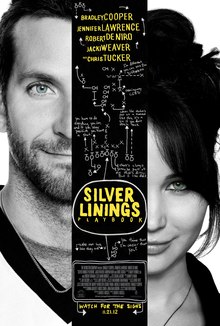
Silver Linings Playbook

Rating: ****

Most romantic-comedies are the same: boy meets girl, boy and girl date, one of them does something that causes strife with the other which forces them to end their courtship before they come together again in a beautiful, life-affirming ending. Silver Linings Playbook doesn't deviate far from that outline, but it does enjoy toying with it. Director David O. Russell pulls out various sprockets and gears and tries something of his own design: a romantic-comedy where the two lead characters sort of don't realize they're in a romantic-comedy.

Red Dawn (2012)

Rating: **

Like another release this year, Drew Goddard's The Cabin in the Woods, this remake of the John Milius 80s hit, Red Dawn, has been rescued from bankruptcy purgatory, a near-terminal condition it enjoyed thanks to the shaky financial ground of studio MGM post-recession. But like Cabin in the Woods, Red Dawn is now free to regale us with its tale, but really that's all you can say about this film on the occasion of its release. Instead, Red Dawn is a bizarre time capsule of a movie now, a pre-Thor Chris Hemsworth, a pre-Hunger Games Josh Hutcherson, a pre-father's-separation-from-Katie-Holmes Connor Cruise...

Of course, the original Red Dawn is a time capsule in its own way. A call back to the last, great gasp of the Soviet Union, the renewed fears in the mid-80s of nuclear stand-off, and Star Wars, and an evil empire ready and willing to gnarl its teeth at the world's beacon for freedom. Sadly, the world nearly 30 years after the first Dawn is a completely different place. We know now the villains of the world are more likely to be lone wolves rather than empires, and although there are some countries ready to fit the part, they lack the desire to conquer militarily, or the capability.

Which is why this Red Dawn starts a step back to begin with. Originally casting China as the villain, the movie may have been able to earn, at least, an iota of plausibility, but the cynical move to recast the bad guys as North Korean, lest lucrative Chinese box office money be lost, automatically puts Red Dawn on a bad footing. Granted, if you know anything about real world politics, a Chinese invasion is pointless considering that country is literally the economic centre of the world as it is, but North Korea? They can put on a good parade, but they've only ever been able to fight their southern neighbours to a stand still. Honestly, if you're going to conquer the world, why not start with South Korea?

Of course, logic has no place (mostly) in an action movie. In this film, it is North Korea that launches an all out invasion of the United States, although it is inferred that they're getting help from the Russians, which frankly poses more questions than it answers. In small town Pacific Northwest U.S., several teens manage to escape the North Korean paratroopers and set themselves up as freedom fighters living in the woods on the outskirts of town. Leading the ragtag group is Army veteran Jed Eckert (Hemsworth), who teaches his younger brother Matt (Josh Peck), love interest Toni (Adrianne Palicki) and a group of assorted and demographically well-represented teens (Hutcherson, Cruise and Edwin Hodge) in the fight against the Koreans. Taking the name of the local high school football team, The Wolverines, they make life miserable for the local commander (Will Yun Lee) and the occupation force.

But seriously, if the initial premise didn't already strain credibility, seeing this group of Breakfast Clubers fight the mighty, North Korean military machine with the efficiency of the Dirty Dozen is out and out laughable. Hemsworth, naturally, is believable as a bad ass, all square jawed steely eyed even in pre-Thor mode, but the others were tough to buy as an effective fighting force, let alone becoming Merry Men like resistance folk heroes worthy of song and story. Former Disney Channel staple Peck is especially problematic because he spends half the movie pinning for his girlfriend (Isabel Lucas), until he puts his entire squad in danger in a ham-fisted rescue attempt. Hardly the stuff of military legend. Of the rest of the cast, at least Hutcherson is buttressed by his Hunger Games role, Palicki too given that she's Lady Jay in the upcoming G.I. Joe sequel.

The real problem though is that you never quite buy the storyline, and despite all the ADR and CG-flag pasting, the film's so busy trying to make sure you buy the Koreans as a globe-spanning conquering army that they don't get a chance to do what these types of films are supposed to do best: convince you of the awesomeness of America. There was hardly any flag-waving, no soaring speeches, no thoughtful allegory, no quoting of great Americans past. There was more patriot fervour in those National Treasure movies for crying out loud! What this film needed, sadly, was a bit of Michael Bay.

Another problem, perhaps exacerbated by the 11th hour recasting of the evil invaders, is that The Wolverines have no one proper to throw any of that patriotic vim. Lee, who's actually played a North Korean officer in the recent cinematic past (in Pierce Brosnan's final Bond, Die Another Day) seems to have barely any presence at all, and I honestly can't remember if he had any dialogue in the film at all. Perhaps every line he had referenced China, but without a villain of suitable stature its hard to get behind our band suburban heroes, and the Koreans look even more helpless against the high schoolers who are taking their guns and raiding their supplies. Basically, the conquerors look like Keystone Cops, and that doesn't exactly breed dread or drama.

In all, I can't think of a single thing in Red Dawn done, at least, marginally well, except for maybe the authority of Hemsworth as he delivers speeches and encouragement with the believability of a young Lee Marvin, complete with glare as cold as an northerly wind. The rest feels like a film that you'd expect from a movie development history of Red Dawn, basically, it's been chopped up and repainted so many times that it doesn't look like what it was probably supposed to be in the first place. Some things are better left in the 80s, I guess.

Friday, 9 November 2012

Skyfall

Rating: ****

Daniel Craig’s third outing as James Bond will indubitably go down as one of his best in the franchise’s storied 50 year history. Somewhere between the shaken and stirred reality-based reboot of Casino Royale and old familiar Bond of yesteryear lies Skyfall, a film that ably and deftly continues Bond’s journey through the 21st century as England’s reigning super-spy.

In this outing, Bond isn’t trying to stop some terrorist financier, put the kibosh on a shadowy organization consolidating world oil, or ending a mad North Korean soldier’s world domination scheme using a giant space magnifying glass. (Remember Die Another Day?) At the risk of sounding clichéd, the plot of Skyfall, this time, is personal. Bond’s boss M (Dame Judi Dench) is targeted by enemies foreign and domestic, a stolen hard drive listing agents embedded with terrorist groups is stolen by someone looking to taunt MI-6’s leader, while British politicians, lead by Ralph Fiennes as Mallory, want to use the theft as rationale for putting M out to retirement.

In between is Bond himself, who’s knocked out of commission when he’s accidentally shot on assignment to retrieve the hard drive. When MI-6 headquarters is attacked, Bond comes out of his self-realized “death” to help his old boss, but this Bond is not at the top of his game. Damaged physically and psychologically, Bond goes up against one of the most cunning villains he’s ever faced.

Apropos for a Bond film marking the half century mark, Skyfall plays heavy the theme of old versus new. M is chastised for not being able to keep up with the new reality of threats to England; an era where you can’t define your enemies by lines on a map, and the only ideology is personal. Bond comes face-to-face with the new Q (Ben Whishaw), a kid barely old enough to drink one of Bond’s martinis, but can still do more damage in 10 minutes with a laptop in his PJs than Bond can with a gun and a year’s time. In one way, Q is right, but in the end, this story comes down to an O.K. Corral style gunfight that maybe no one will survive.

In a weird way the action is nearly an after-thought. The majority of Bond movies seem built around a simple plot device of a story able to leap form action set piece to action set piece without much complication. In Skyfall, the play’s the thing, and while we certainly get some impressive action scenes, character development and plotting seem to take priority. Director Sam Mendes brings together an impressive roster of supporting talent, a gathering of British acting heavyweights that is nearly unprecedented for a Bond movie. In particular, franchise mainstay Dench deserves credit for imbuing the normally thankless role of the stoic boss with humanity and mortality. In many ways, Skyfall is M’s story, not Bond’s, and Dench exceeds expectations.

And since no great Bond film succeeds without a great villain, we get the tremendous Javier Bardem as Silvia, a man who is Bond’s dark reflection, a former MI-6 agent once abandoned by M and is now out to destroy her in vengeance. I’ve read some reviews that try and compare Silvia to The Joker from The Dark Knight, but Khan from Star Trek II would be more apt. From hell’s heart, he stabs at M and he tries to compel Bond to come along with him, or at least stay out of his way. Bardem immediately sets a tone when Silvia finally makes an appearance about an hour into the film, and his character’s presence is felt throughout the rest of the movie even when he’s not on screen.

But what really sets Skyfall apart from other Bond films is atmosphere. It’s shot like a film noir, always half in shadow capturing perfectly the visual of the film’s recurrent discussion of the shadowy world of espionage. Cinematographer Roger Deakins, frequent collaborator of both Mendes and the Coen Brothers, does a brilliant job lensing the movie, every setting has a different look, and every local pops and engrosses you on the screen. I didn’t see Skyfall in IMAX, but I can assume that it’s a real treat in that format. From the skyline of Shanghai to the countryside of Scotland, to the underground of London, Bond has rarely looked better.

Of course, this being the 50th anniversary of 007, there’s some nice call backs to the series’ legacy. Bond’s classic Aston Martin DB5 makes an appearance, and there are a couple of in-jokes and references to adventures’ past. What’s more interesting is that there are a couple of developments too good to spoil that really sell this Bond as a throwback to the good old days even as it confronts the murky world of global terrorism in the 21st century as the threat that Bond must continually overcome. Let’s just say that Q isn’t the only classic Bond character to be given new life by the time the credits role.

Bottom line, I think those fans that liked the direction Casino Royale was going in, but thought that Quantum of Solace was maybe a bridge too far, are going to find a reason to get excited again with Skyfall. I also think it makes a permanent statement that there’s no room in this Bond universe for megalomaniacal schemes aiming to start World War III, or indulgences like invisible cars and exploding pens. The real world is fraught with enough possibility for danger to fill a lifetime of Bond films without bringing doomsday devices into it. We’ll leave that to the Batman films now.