Showing posts with label toronto international film festival. Show all posts

Wednesday, 21 November 2012

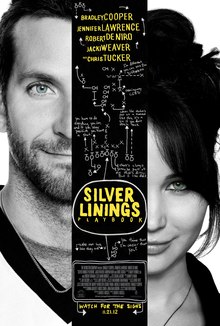
Silver Linings Playbook

Rating: ****

Most romantic-comedies are the same: boy meets girl, boy and girl date, one of them does something that causes strife with the other which forces them to end their courtship before they come together again in a beautiful, life-affirming ending. Silver Linings Playbook doesn't deviate far from that outline, but it does enjoy toying with it. Director David O. Russell pulls out various sprockets and gears and tries something of his own design: a romantic-comedy where the two lead characters sort of don't realize they're in a romantic-comedy.

Friday, 7 October 2011

Ides of March

****

George Clooney once again proves his directorial chops with Ides of March, a film about the dissolution of political ideals and betrayal of one’s principles and tight held beliefs in the struggle to not only do what’s right, but win in the total war climate of politics. What begins as a sunny-side Dr. Jekyll in the fine tradition of The West Wing or Mr Smith Goes to Washington becomes the malformed Mr Hyde we know and loathe from CNN. No one gets literally stabbed in The Ides of March, but the knife does turn.

Based on the play Beau Willimon Farragut North and adapted to the screen by Clooney and his writing partner Grant Heslov, Ides, although not inspired by actual events, is probably more closely related to the scandal involving former Presidential candidate John Edwards than anything suffered by current President Barack Obama. Against the backdrop of the Democratic primary in Ohio, two worthy but wholly different candidates are in a close race for the nomination.

The more liberal of the two is Governor Mike Morris (Clooney), whose campaign team includes the experienced political operative Paul (Phillip Seymour Hoffman) and his more idealistic deputy Stephen (Ryan Gosling). Morris has a healthy lead, but a close race in Ohio could break either way, which could either mean a huge boost for his rival, or Morris’ securing of the Democratic nomination. But this isn’t a movie about Morris, but about Stephen, whose own beliefs are tested and, yes, crushed, in the face of the corrupting influence of politics. A simple meeting with the rival campaign manager becomes a question of trust; a romance pursued with a lovely intern leads to some startling revelations.

Anchored by an excellent performance by Gosling, Ides is startling for how quickly and easily one man’s idealism can fall apart and be betrayed, and not just by those he trusted, but himself too. Gosling gets to do a little bit of everything here: the self-assured operative at the top his game, the spiteful victim watching his well-laid world coming apart while getting progressively spiteful, and eventually the embittered survivor. Somewhere in there he’s also the charming romantic lead; Gosling’s chemistry with Evan Rachel Wood as Morris intern Molly, is electric and they definitely share one of the best “meet cute” moments in recent film memory.

But it is hard to pinpoint a stand-up supporting player in a cast this good. Clooney himself it subtly sublime as Morris, and confidently lets Gosling take the lead and make it his movie. Hoffman seems appropriately frumpy after years of politicking and is well-matched by Paul Giamatti, who plays friendly conniving very well as Hoffman’s opposite on the rival campaign. Marisa Tomei has a small part as a journalist friendly with both Stephen and Paul, and manages to set a tone despite the few scenes she’s in. And Jeffrey Wright also casts a long shadow as the senator on whom all political aspirations depend.

But the true genius at work in the film is how methodically everything turns. What begins as a movie that’s almost affectionate for the romance of politics, the naïve ideal that good people can do good work and campaign on their ideals, is not so much shattered as slowly decomposed over the course of the film’s running time. We all want to think that ideas mean more than perception, and that we want our leaders to be human while still being infallible, but what happens when we think we can have both ways and then realize we can’t, and that we were never going to? The final shot of Gosling, and the look on his face as he stares into the camera, sells the audience on just how far Stephen has fallen, and how much he can’t even believe it himself.

Still, I don’t think Ides of March is a politically cynical film. Perhaps in one way it can be seen as a plebiscite about politics in Obama’s America and is a warning about putting all your hopes on a single person to fix the tremendous faults and problems of our time. Or perhaps the greatest fault to human ideals is human failings, and that if you can find a leader who inspires your best and holds many of the things you believe in to be true, you should expect there may be another penny to drop. In any event, Clooney ably shows again that in front of or behind the camera he has a unique voice and a nearly unmatched eye for interesting material.

Watch, Rent, Buy, Devour: Devour

Thursday, 22 September 2011

TIFF - Livid

Rating: ***

Alexandre Bustillo and Julien Maury made a splash the last time they were at the Toronto International Film Festival with their first movie Inside. Sadly, I don’t think Livid will make as big an impact, but I don’t think that comes from a lack of trying. Livid is a haunted house mystery that’s creepy and engaging, but there’s not a lot that jumps out at the audience, or at least not a lot to make you jump out of your seat.

The film’s heroine, Lucie (Chloé Coulloud), is a young woman that’s training to take care of people shut in their homes. Lucie’s trademark is her heterochromia, she has one eye that’s blue and one eye that’s brown, a fact that’s immediately picked up on by Madame Wilson (Catherine Jacob), the experienced nurse training her. A trip to the country mansion of renowned dancer, Madame Jessel (Marie-Claude Pietragalla) leads Lucie and two of friends on a midnight heist to rip off a comatose old lady of her rumoured treasure, but naturally that’s easier said than done.

So what’s the story? Well, it’s part ghost story, part Cube, part Black Swan, part Frankenstein, and part Let the Right One In. Perhaps that’s the contributing factor to the film’s interesting tone, it is a whole lot of different horror stories rolled into one package. But Livid clarifies nothing, and while the film goes along for the first half as a perfectly serviceable haunted house drama, it segues into a vampire story as he flashback and see Madame Jessel’s daughter eat one of her dance classmates and then run out into the sunlight and flies around inexplicably. It’s more or less all downhill from there.

But the film itself has atmosphere to spare. The production design and set decoration is so brilliantly realized that you should practically get Goosebumps just by seeing the on screen imagery. But for some strange reason there’s a disconnect between style and substance; the film looks amazing, there’s a story that seems like it wants to be told, but the film really leaves no lasting trace, no haunted feeling. I wouldn’t call the film a disappointment, but it was a kind of a letdown. Still, it’s a compelling let down just the same and it still kind of shows the promise of Hunger. Perhaps the third time will find the charm again.

Sunday, 11 September 2011

TIFF – Keyhole

Rating: ****

So far as Guy Maddin movies go, Keyhole is almost comprehendible, which despite the artistry and skill of the film is still kind of a disappointment because if there’s one thing you never want to be able to do in a Guy Maddin movie, it’s follow along. You see, a Maddin movie is one of those experiences where you want to leave the theatre and ask somebody what they thought and nod knowingly as if what he’s describing is exactly the same thing you think you saw and you don’t want to look like an idiot.

Keyhole is a stream on consciousness movie. It’s about life and death, and secrets and lies, and regrets and reconsiderations. Taking place entirely in an ethereal plain made up to look like your typical North American home. The various players appear to be an assortment of characters from the 1930s, gangsters mostly, hold up in a house during a police siege. It’s the end of the line, but the boss Ulysses does not want to fight his way out, rather there’s something he needs to accomplish in the house before the eventual raid.

Of course, that’s the straight-ahead, almost myopic perception of what the film’s all about. Being how this is a Guy Maddin film there’s layer upon layer of subtext, but there’s still this nagging bit about how I could follow along with the story. Where was the confusion? The bewilderment? The befuddlement? You know, all the staples of a Maddin classic. There was the black and white film, and odd moments of ghost falacio that remind you what world you’re playing in. And then there’s the treatment of Winnipeg as a Wonderland of an acid trip, which are all positive steps in the right direction.

This also might be Maddin’s most star-studded cast. Jason Patric plays Ulysses and throws himself into the world of Maddin with tremendous gusto. Isabella Rossellini, a veteran of the worlds of Maddin since The Saddest Music in the World, plays Ulysses’ wife Hyacinth, who fills the film with emotion and mystery. The always reliably creepy Udo Kier goes for daffy comedic, while former Kid in the Hall Kevin McDonald puts in a brief but memorable role as the loose link in Ulysses’ chain.

But like past Maddin films, Keyhole is a marvel of economy. Almost performed exclusively on the single, though complex, set of Ulysses’ house, Maddin makes the whole thing come alive thanks to the energetic performance of the cast, light camera work, and Spartan art direction. In other words, the house comes alive with both ghosts and memories; feeling that’s both nostalgic and visceral.

Walking out of the theatre, you realize that your head doesn’t have that usual ringing that a Guy Maddin film leaves you with, but that’s not to say that there wasn’t a lot to think about. There’s a surprisingly haunted quality that washes over you, and that’s despite the fact that there’s little on the surface to tie your personal experiences to the narrative and the tremendous comedy Maddin infuses the film with. Still, it’s a little nag, and that’s Maddin’s great gift, to smack you in the face with so much emotion, and so many visuals you don’t know what to believe anymore. Bravo sir.

Saturday, 10 September 2011

TIFF - We Need to Talk About Kevin

Rating: ****

We Need to Talk About Kevin reminds the viewer that you don’t need a chainsaw and hockey mask to feel truly terrified by a movie. The horror in the film is nothing less than the abyss behind the eyes of a sociopath, and how one lives with the fact that everything they knew and loved is gone, how you know you’re somehow to blame, and how you knew, before all others, that something like this was bound to happen. Knowledge is the true horror of We Need to Talk About Kevin, and human emotion is the blood and guts spilled.

In an incredible performance, Tilda Swinton plays Eva Khatchadourian. Through the film’s disjointed narrative we see that Eva was something of a free spirit. We first see her literally being carried away during Tomatina, and through other small flashbacks and lines of dialogue we come to be under the impression that she enjoys travel, and not being tied down. We see brief glimpses of her courtship with Franklin (John C. Reilly), and the two marry and later give birth to their son, Kevin. More than the typical trials of motherhood, Eva has difficulties connecting to Kevin, and those difficulties aren’t completely one sided for Eva.

I’m not sure at what point we understand the fault with Kevin, one might even say its spoiled in the title of the film, but gradually we come to understand that Kevin has some deeply dark tendencies. Even as a child. I don’t know where they found the child actor to play Kevin in his early years, but he should be given serious Oscar consideration, or maybe serious psychological help. One of the two anyway. Ezra Miller as the older Kevin has a difficult task all his own: how does he portray Kevin’s growing sociopathic tendencies while still being a boy a mother would work hard to redeem? However he does it, Miller is seriously fascinating to watch, and a little terrifying too.

But make no mistake, this is Tilda Swinton’s movie and it is a tour de force performance that she gives. We see Eva through the frustration of being able to have the kind of bond with her baby that a mother expects with her son. We see her in anger as Kevin tests her patience and pushes her to the breaking point. We see her frustration with Franklin and his inability to see the growing darkness in their son. Then we flash-forward post tragedy. We see her as a pariah. We see her try and make some human connection. We see her used and abused. And we see her relish the smallest victories, like getting a job as a secretary.

The circumstances around what Kevin did are left murky in the details until nearly the very end of the film. Director Lynne Ramsay weaves wonderful bits of foreshadowing in stray lines of dialogue and a seemingly omnipresent sound of lawn sprinklers. As much as the film offers no answers, it really offers no questions either. The film is edited in a mesmerizing way, the different scenes ebb and flow together across the storyline of the film is a thing of beauty; it’s disjointed but it all makes sense in the end, and what you’re left with is a sense of what disaster can come out of a single human life, and humility and humanity of a mother’s love.

Without a doubt, We Need to Talk About Kevin is one of the most powerful works at this year’s Toronto International Film Festival, a work that tests the mind and the spirit. After the film ended, I found myself revisiting it in my own head, not so much reliving certain scenes, but more like my a feeling that I was bond in this kind of static state of mind. People like Kevin exist, and they have parents and people who loved them and tried to reach them, but there was just always something. In tragedy, we desperately want to someone to blame and it’s usually the person closest to the source. Ramsay dares to remind us that sometimes there’s no explanation for tragedy, and usually there’s more than one type of victim.

We Need to Talk About Kevin demands to been seen at least once.

Friday, 19 August 2011

Griff the Invisible

Rating: ***1/2

The notion of a singly-determined man to done a costume and become a superhero is not new, especially in the last couple of years. On the high-profile side there was Matthew Vaughan’s Kick-Ass, about a bullied teen that finds his chutzpah in a scuba suit, and on the low-profile side is James Gunn’s grossly hilarious Super about a man sent over a mental cliff after his wife leaves him. Now, offering a different tone is Griff the Invisible, which, like Super, originally bowed at last year’s Toronto International Film Festival.

But that’s probably where the similarities end. In fact, Griff probably has more in common with Jean-Pierre Jeunet’s charming 2001 film Amélie, about a young Parisian woman who comes out of her vast inner world to make the lives of others a little bit brighter. Griff also has a socially awkward hero with a large inner world. And unlike films like Kick-Ass and Super, which uses superheroes as metaphor for escalation and power unchecked, Griff is about how the fantasy of imagining one’s self as super can make you open to the world in ways others may not appreciate.

Ryan Kwanten, whom fans may be solely familiar with playing Sookie’s dimwitted himbo brother Jason from True Blood, plays the title character. Griff, by anyone’s standards, is socially awkward to a fault. He spends his days working in customer service for an unnamed company, and is inevitably bullied by one of his fellow office dwellers (Toby Schmitz). But at night, Griff dons a black leather suit and runs the streets as a crime fighter, protecting the average guy from various ne’er-do-wells.

Griff’s world is thrown for a loop when he meets Melody (Maeve Dermody), the new girlfriend of his brother, Tim (Patrick Brammall). From when we first meet Melody, we automatically recognize that she and Griff are the real soulmates of story; Griff with his experimentations in creating an invisibility suit, and Melody with her belief that she can manifest the ability to space out her molecules and pass through walls. Griff’s feelings for Melody, and the inner conflict of crushing on his brother’s girl, forces Griff to go inside himself more and more, even as Melody realizes its destiny for her and Griff to meld their worlds.

The heart of the movie really is this touching and self-conscious romantic dance between Griff and Melody, and Kwanten and Dermody play things beautifully. It may have gone amiss in the past, but Kwanten can be quite adorable when his shirt’s on, and Dermody is lovely and poised. They both play understated really well, and don’t feel the need to play their parts with any kind of put upon quirks or ticks to reinforce the fact that they’re social outsiders. But the film’s script, written by director Leon Ford, confounded me in third act when it reaches for a plausible reason to make Griff flirt with normalcy just as his future with Melody seemed to be coming together.

What I did enjoy was how the film unfurled in atypical comic book movie fashion. Even Kick-Ass and Super, as much as they were trying to send up the genre, played right into it with villains and a climactic, winner-takes-all battle in the end. But while Griff is a romantic-comedy-drama masquerading in a superhero suit, it actually does a pretty good job of looking like one too. If you liked the world of Warren Beatty’s Dick Tracy, with its primary colours and cityscapes that looked like they were taken straight out of the comic panel, then you’ll love seeing the world of Griff unfold.

For a connoisseur of the art form, Griff the Invisible is uniquely different, but is still satisfying taste in terms of being a superhero movie. It’s refreshing to see a film take on the genre and not make it about how “in real life” mentally disturbed people can take the call to being a superhero as an excuse to do violence and immoral things to others with impunity. Griff is a sweet film, and it has a positive message that seeing one’s self in heroic terms and believing in the powers of self-made magic and ingenuity, doesn’t necessarily make one mad. It also proves that delusion, like love, is best shared with the one you love.

Thursday, 16 September 2010

TIFF - The Whistleblower

Rating: ****

The Whistleblower may not be one of the most talked about films of the Toronto International Film Festival, but it is one of the 2010 Fest’s most compelling. Like a police procedural with an international flavour, the film has the added gravitas of being “ripped from the headlines,” a hook that’s both compelling and repellent. Additionally, The Whistleblower features a first rate performance by Academy Award-winner Rachel Weisz, whose positively brilliant as she trades between frustration and inspiration from beginning to end.

Weisz plays Kathy Bolkovac, a Nebraska cop that takes a job as a private police officer in post-war Bosnia. As one of the few female cops on the force, Bolkovac manages to make progress in small ways in the prosecution of domestic violence against women, a measure that gets her recognized by the U.N. High Commissioner on Human Rights (Vanessa Redgrave). Under her new responsibilities, Bolkovac finds herself neck deep in the murky world of human trafficking in Bosnia, which has tendrils leading from the pimps to the very people that Bolkovac is working with at the U.N.

This is not surprising, and there really is no mystery for Bolkovac to solve, but what makes The Whistleblower compelling is a matter covered by many stories in the past, how can one person make difference amidst a system hopelessly corrupt. Bolkovac makes a few allies, like an internal affairs officer played by David Strathairn, but despite their reach and high standing, they turn out to be as powerless as she is when it comes to exposing complicity with the local sex trade.

Because of its subject matter, The Whistleblower is difficult to watch for a couple of reasons. First there’s the obvious and depraved abuse of these young women, many of whom were sold into slavery by people they loved and trusted. Although the film is rarely explicit in its depiction of the abuse, there are some rather chilling things alluded to or implied. The other difficulty is the sheer wall of obfuscation that Bolkovac encounters. Whether it’s the fact of the collusion of her colleagues or the fact that they do it so brazenly and without consequence, you can’t help but feel that there’s no way one person can make a dent in all of this.

Still, as they say, where there’s a will, there’s a way. Bolkovac is an admirable character, determined and committed, but at the same time flawed. She took the job so that she might have enough money to spend more time with her kids, but in the process she’s given a position requiring more than a six month commitment. However, the film doesn’t dwell on Bolkovac’s difficulties as a mother connecting to her children, but perhaps how she used that longing and poured her heart and soul into helping these young women.

A gut-wrenching journey, The Whistleblower tests your patience and gives you hope. Anchored by some pretty solid performances from Weisz, Redgrave, and Strathairn, as well as character actors like Nikolaj Lie Kaas and David Hewlett, this is a compelling drama and highlights a frequently overlooked issue. First-time director Larysa Kondracki, who also co-wrote the screenplay, keeps a very tight grip on the material and delivers the story with precision and determination. Well made with a good message, The Whistleblower is a film that deserves to be known far and wide.

TIFF - 127 Hours

Rating: ****1/2

Naturally, Danny Boyle could only follow-up the relatively light rags-to-riches Indian fairy tale that was Slumdog Millionaire with a true life survival story that features an amputation scene so graphic that it’s reputedly made some audience members seek medical attention. The story of Aron Ralston, who while climbing Blue John Canyon in 2003 became pinned by a boulder and forced to amputate his own arm to get free after five days, is brought to vivid, poignant and occasionally funny and inspiring life in 127 Hours.

Carrying the weight of the film nearly solo is James Franco, who proves himself more than up to the task. Going for long stretches with just himself to react to on screen, Franco proves his chops easily and handily while making Ralston both flawed and heroic. Boyle has said that what he liked about Ralston’s saga is that here was a man, uber-confident in his ability, brought down to Earth and made ordinary in, literally, the most crushing way. 127 Hours works on that level, but there are so many more. It’s cautionary, it’s a hero’s journey, it’s a one-man against the odds story. But mostly though, it’s just great.

Working with many of his Slumdog collaborators, Boyle seems to do quite a lot with a simple survivalist’s story. Starting off like something you’d expect from an extreme sports video, we follow Ralston as he travels to Blue John Canyon in Utah by highway at night to the tune of Fresh Blood's "Never Hear Surf Music Again." He gets up early the next morning and hits the bike trail, jauntily saying into his camcorder that he’ll beat the time it takes to bike to the canyon by 45 minutes. Naturally, it’s all to set up the idea that Aron Ralston is a guy that plays hard and is perfectly confident in his skill.

After a brief interlude where he helps a couple of wayward female hikers (Kate Mara and Amber Tamblyn) see a whole other side of the park, Ralston suddenly loses his grip as he scales the canyon. A boulder pins his right hand to the canyon wall, but even in this Ralston doesn’t lose his cool. That changes very quickly though. Desperation sets in, there’s a continuing trend of plans that go nowhere, then concern about the lack of food and water, and the slight madness that comes when your trapped between a rock and hard place with no way out.

Smartly, the script by Boyle and Simon Beaufoy doesn’t go too wild with meditations on fate and is quite open about how it was Ralston’s almost reckless confidence is to blame considering that he went out into the wild, and told no one where he was going. Flashbacks and dream states are also used to great effect, but are minimal and compelling. There’s never really any full-blown conflict shown, even in the fleeting glimpses of lost love with a girl played by Clémence Poésy, the focus is on one man in an extraordinary situation. It’s an against all odds tale where the unthinkable becomes doable.

For the record there were no ambulances called, or sudden hysterical walkouts in my screening, but most everybody was bracing for the worst. Even I, who have sat through some pretty hardcore torture porn horror movies, had a hard time watching Franco’s Ralston do ad hoc surgery with nothing but the cheap, China made multi-tool and his own guile. The way the scene is shot and edited though highlights the desperation and impulsiveness of the decision, and when it’s over, even members of the audience feel the exaltation of the moment.

I have a feeling that 127 Hours will certainly be movie award material at the end of the year, with Franco especially deserving of shiny bobbles in recognition of his acting. About 95 per cent of the film is about Ralston’s struggle and Franco owns every minute and you know by how compelling the film is from beginning to end. It’s unstoppably watchable, with the possible exception of the amputation scene (and a little tease about that event, which Boyle inserts earlier in the film). 127 Hours is a one man play about survival and tests perceptions in a very visceral way, and, at the very least, it’s a strong advocate for the buddy system.

TIFF - Cave of Forgotten Dreams

Rating: *****

Werner Herzog’s Cave of Forgotten Dreams marks the first time, at least in my mind, that the new 3-D format has made the leap to documentary outside an IMAX screen. I’m not sure if Herzog has grander ambitions with 3-D documentary, but if this is his one, then he couldn’t have chosen a better subject.

The Cave in question is the Chauvet Cave in southern France, home to the oldest collection of prehistoric cave paintings ever discovered. They’re perfectly preserved because the cliff face entrance to the cave collapsed thousands of years ago, creating near perfect hermetic conditions for the paintings to survive. Access is restricted to researchers and scientists, and even they’re only allowed in for a couple of hours a day, a couple of weeks per year. Never one to back away from a challenge, Herzog sought and received special permission from France’s Minister of Culture to film there.

It’s getting so a year can’t go by at the Toronto International Film Festival without there being a Herzog film, not that anyone’s complaining of course. After two dramatic features last year, Bad Lieutenant: Port of Call New Orleans and My Son, My Son, What Have Ye Done?, Cave of Forgotten Dreams was doubly a treat. Triply if you’re a fan of 3-D. Still I think the film would have been compelling just the same in 2-D, but at least Herzog doesn’t seem like he’s reaching for a gimmick in using it.

What’s great about a Herzog doc is that he’s not hands off like it’s found footage. He explains what he’s doing, who’s with him and how he got there. It’s Herzog, through narration, that explains the tight restrictions for cave access and lays out how he and his three man crew practically guerrilla shot there way through the caves. You’re only allowed to walk on a two-foot wide walkway, you can’t touch the cave walls or really anything in the cave, special clothing must be worn at all times, any lights used have to cold lights, and battery powered, and if that’s not enough, some sections of the cave have near toxic levels of radon and carbon dioxide.

Herzog also spends time engaging with the scientists studying the caves and discussing their findings and how they shed light on what life was like for prehistoric humans in prehistoric France. Along the way, we’re treated to some lovely Herzogisms in his deliberate, German-accented tone, which makes the documentary experience much more personal. That’s what elevates a Herzog doc above the ordinary, that voice and mind, the willingness to go off into the far corner more interested in what’s there than what might be right in front of him.

The reason that 3-D is advantageous here is because of the scenery. The depth perception of the format works as the immediate cave wall, again only illuminated by a couple of cold lights, pops right out in front of the camera with yawning darkness going on behind. There’s also a neat laser map of the whole cave system, which looked like a constellation of stars against the black screen behind it. But the 3-D is an enhancive experience. It will be well worth the extra cash when it comes out in theatres, but I don’t think the overall quality of the movie, or its impact, would be diminished without it.

Cave of Forgotten Dreams is another triumph for Herzog, who actually has a pretty long list of those already. If nothing else, the film offers a look inside a human artefact that you’ll probably never be able to see in real life, like the wreck of the Titanic or a visit to the Antarctic. Still, nobody visualizes like Herzog, and with him at the helm this look at the Chauvet Caves is as much a waking dream, a meditation on times past, as it is their actual exploration. Cave of Forgotten Dreams is a time capsule film about a time capsule, and it’s surely one that can’t be missed.

Wednesday, 15 September 2010

TIFF - Trigger

Rating: ***1/2

Originally conceived, apparently, as a sequel to Hard Core Logo, Trigger is not Hard Core Logo. It’s by Bruce McDonald, and it’s about musicians, but that’s about all that these two movies have in common. Seemingly modelled off, or inspired by, My Dinner With Andre, Trigger is a kind of Before Sunset with a lot of walking around and talking and waxing poetic about life, love and art.

The film follows two former rockers named Kat (Molly Parker) and Vic (Tracy Wright), who form the titular band. In the prologue we see a rather nasty fight unfold on stage in silent black and white footage, which was, we assume, the duo’s final show together. Flash forward a decade and the two meet up again for dinner in an upscale Toronto restaurant. Vic seems out of place, while Kat slides right in saying that she knows the chef and orders the quail. See where this is going?

Kate and Voc talk about music, life in L.A. (for Kate), working corporate, their respective substance abuse problems and whether or not they want to swing by this gig recognizing the contributions of women to rock, including Trigger of course. There’s so much to say and so little time, but a lot is shared over the course of the film’s 80 minute running time.

For added poignancy, there’s the fact that Tracy Wright passed away earlier this summer after battling pancreatic cancer. Trigger was rushed into production when Wright was diagnosed, and knowing that I couldn’t help but feel there was an unspoken reference to that in the way that Wright played Vic; whether, like Wright herself, Vic was facing her own mortality. Perhaps, the only reason she’d reconnect with Kate is because she knew it was the last time she’d be able too? There’s something terrible and gracious about that.

But even with such dark thoughts, Trigger is a wonderfully written movie. Parker and Wright also get the chance to rock out in one scene as Trigger reunites on stage for the first time in over 10 years. Weirdly though, the scene at this concert is the only music that sticks out in my mind when thinking about this movie. Perhaps that’s not so weird, it’s been done before. Besides, I don’t think music is the point. Trigger is about the people that matter in our lives and about how infrequently we really share with them the knowledge that they’re that important.

While it was hard not be mesmerized by the actresses and their delivery of a very dialogue heavy script, there seemed like times that the story was trying a bit too hard to create conflict. As well, it seems in the end to run out of steam a little bit, as if everything’s been said and the pen is having trouble finding a way to round everything off. That could be an element of exhaustion though considering that the movie goes from dusk till dawn with Kate and Vic yakking all the way.

Despite that, I found Trigger an enjoyable film; a kind of one act play that’s elegant in its simplicity. The difference being that you’ll either be taken away by the performances or you won’t, though I can’t imagine why you wouldn’t be. The two leading ladies are dynamic and energetic, bringing a genuine feeling of tension and history with the way they interact. There are a number of cameos by recognizable Canadian actors like Sarah Polley, Callum Keith Rennie and Wright’s long-time partner Don McKeller and the film gave me two really great lines, one of whish is “Rock ’n’ roll is an odour.” That’s a delightful bit of criticism that I intend to use the next time I write an album review.

But in all seriousness, Trigger is a great tribute to the life and work of Tracy Wright and I appreciate the talent and dedication brought to bear by the other actor and filmmakers in order to giver her this really great send off. Trigger is a tribute to the artists who think they’re forgotten, but really aren’t. Like the young girls with their own band who recognize Vic in line at the Mod Club, there’s always someone new to meet who you’ve inspired. I’m sure the same will be said for Tracy Wright in years to come.

TIFF - Repeaters

Rating: ****

Repeating the same day over and over again is a well tested sci-fi concept in which a character or characters is allowed to do-over the same day again and again to learn about themselves and allow for some personal growth. Naturally in these scenarios, whether it’s the Bill Murray comedy Groundhog Day or the episode of Stargate SG-1 entitled “Window of Opportunity”, there is also opportunity for more selfish and/or reckless acts to be explored without consequence.

The new Canadian film Repeaters covers much of this same ground, but takes it a step further. What if there were a trio of people repeating the same Wednesday over and over again, and while two of the three take the chance for personal growth, the third just dives deeper and deeper into debauchery of his own making? An impressive triad of actors make up this group of formally drug-addicted twentysomethings who, through a freak accident involving a lightening storm, end up going to sleep one night and waking up that same morning.

This day is a special one for our heroes, and not just because of their new found abilities. It’s the first day that they’re allowed out of rehab on a day pass and their councillor (Ben Ratner) wants them to use the freedom to address the human cost, or cause, of their addiction. Dustin Mulligan is Kyle Halstead, who tries to reconcile with his high school aged sister to no success. Amanda Crew is Sonia Logan, who goes to the hospital to visit her dying father but finds that she can’t get past the door. And Richard De Klerk is Michael Weeks, who goes to prison to visit his father only to have the old man get enraged at the sight him.

Indubitably, these are three messed up kids, so naturally their first reaction to these new found powers is to shoplift, break and enter, drink themselves stupid, get high, knock over a liquor store and force the local drug dealer to eat cow piles at gun point. But like they say, it’s all fun and games until Kyle and Sonia use one of their repeats to save a young girl from killing herself, only to have that same girl end up getting raped by Michael. What’s the problem, he says, she won’t remember because today starts all over again. Thus begins Michael’s downward spiral into deeper depravity as Kyle and Sonia wonder if their abilities are meant for something more.

The movie plays out fairly predictably, but there’s unquestionable style in director Carl Bessai’s delivery. Arne Olsen’s script does its job by drawing the characters very well and the actors imbue those roles with a lot of realism and sincerity. The emotional beats are satisfying and not overplayed, and the sci-fi centre never overpowers the human drama. While the key to the trio’s breaking the time loop is fairly implied, Bessai plays things quite nicely with a smart and slightly twisty climax.

Repeaters is high concept fair that’s as familiar and foreboding as the North Vancouver locations used to film it in. A surprising low-key and effective film, Repeaters may be worth checking out again, and at the very least seeing once. It’s a very strong production for a simple and occasionally overdone idea, which shows again that in the right hands old ideas can seem fresh. With terrific acting, a fine script and a sure hand behind the camera (quite literally since Bessai was director of photography and lead camera operator), Repeaters is immensely satisfying, and doesn’t require any do-overs.

TIFF - Black Swan

Rating: ****

If there was a hot ticket at this year’s Toronto International Film Festival it was Black Swan, the new psychological thriller from Darren Aronofsky about a ballerina driven mad by Swan Lake. Well, that’s not a completely accurate or valid description of the plot, but as an elevator pitch it’s not bad, and it probably has your attention if it didn’t already. A compelling and exciting work, Black Swan will definitely make you think about ballet as more than the bear in the little car (Homer Simpson reference. Sorry.)

At the heart of the film is an effective, but not astounding, performance by Natalie Portman as Nina, a ballerina of obvious talent, but is perhaps too controlled to really flourish in a leading role. Nina gets a chance to prove herself when cast in a new version of Swam Lake, but unlike perhaps more blander versions of the ballet, company director Thomas Leroy (Vincent Cassel) has taken the step to cast the same dancer as both the White Swan and the Black Swan.

Aronofsky has fun with themes of duplicity, exploring out darker sides, and suffering for our art. But despite that kind of weighty considerations, it seems that Aronofsky is having a good time. At the very least, despite Black Swan’s shadowy sides, Aronofsky seems a little freer, or at the very least he had a little more money and time to play with as compared to his last film, The Wrestler. What’s interesting is that where as The Wrestler featured wonderfully drawn characters in a typical redemption story, Black Swan features typical characters in a thriller that weaves and bobs and keeps you guessing.

Yes friends, Black Swan keeps you guessing. Does Nina have a doppelganger out there? Is the one other ballerina that’s trying to be friendly with her really trying to undermine her? What’s the deal with Nina’s crazy, controlling mother? All interesting questions in what could be described as a “ballet made me crazy” movie. It’s a mystery of the mind, to what degree is Nina crazy or is their really somebody in the company that’s out to get her. It’s like Inception but without all that dream stealing hooey.

Portman does reasonably well as the ballerina in the mouth of madness, although the degree to which you believe her ability as a prima ballerina was a matter of debate for a few aficionados. Basically, Nina just felt a little too bland, and despite that being the pre-eminent trait of the character, it was really hard to get beyond just how really vanilla she was. Mila Kunis, to the contrary, shows a lot of spark as Lily, but again she’s kind of the wild child and there doesn’t seem to be much more going on with her then that. Winona Ryder makes a splash as the deposed prima ballerina, and she is rather brilliant in a Joan Crawford, “no wire hangers” kind of way.

The story though is multilayered and multidimensional, and leaves you guessing over just how crazy Nina is till the bitter end. It certainly left me guessing and I was enthralled with where exactly the end result would lie. Aronofsky isn’t overly pushy, nor does he seem overly concerned with pushing the envelope as he knows that a little does a lot. A little double take here, a quick flash there and your suddenly wondering if whether Nina is seeing her own dark reflection or whether Lily is it’s living embodiment.

Black Swan works hard to develop a tone and style that’s really engrossing. Even the most ardent ballet-hater will have to admit that the film is captivating. Aronofsky really films the dancing in a visceral, almost intrusive way, and shows the power and influence of the dance for all its blood, sweat and tears. The lesson is obvious a statement in suffering for your art or killing yourself for your art, whatever you like, but it’s a potent message just the same.

As he did with making professional wrestling a thing of poetic and tragic beauty, Aronofsky has now turned ballet into an arduous, torturous test of the mind and of the soul. Of course, many have said this for years, but in the case of Black Swan we mean it in the best possible way.

Tuesday, 14 September 2010

TIFF - Modra

Rating: ****

Modra is a film that proves once again that you can do big things on a small budget. Ingrid Veninger has made an utterly charming movie that’s funny, beautiful and touching using a kind of cinéma vérité, a couple of very young, inexperienced actors upon which the whole film hinges, and the beautiful backdrop of the titular city.

Modra follows two Toronto teens as they take a week during their summer vacation to go on a trip to Modra, which is a small town in Slovakia. Lina (Hallie Switzer) has family there, and was originally supposed to go with her boyfriend until an ill-timed break-up scuttled those plans. Enter Leca (Alexander Gammal), who randomly calls up Lina for a date to the movies, or something, but ends up making the trek to Modra with her. If this were a Julia Roberts movie you’d probably know where things go from here. Fortunately though, it’s not.

Lina and Leca are wonderfully played because they talk, act and think like real teenagers. Unsure just what exactly Lina’s intentions are, Leca’s reaction to other guys giving Lina attention is to retreat. Lina meanwhile is unsure what to make of Leca’s obvious affection and confusing distance, although over the week they’re in Modra together she begins really caring for him.

Such awkwardness is typical of teenage romance, although it is rarely portrayed on screen in such a way. I enjoyed how Switzer and Gammal were unpolished and seemingly unpractised in their performances. There’s a great line in the beginning were Leca calls Lina and when she explains to him that she’s going to Slovakia, Leca’s reaction is to say, “Cool, they have a good hockey team.” Something about that line just encapsulates the tone of the film: real teens, real reactions. You can practically hear in Leca’s voice how suave he thinks he is when he drops that little piece of Slovak trivia.

The film itself is rather impressively crafted by the sheer fact of how simply it rolls by. There’s no camera trickery, weird angles, or really anything that seems to indicate that something more than natural light was used. It’s part of a whole naturalistic vibe to the film that seems as though sometimes that someone was following these kids along and making a documentary about them. The musical selection, including some local flavour from Bukasovy Masiv of the real life Modra, adds to the genuine essence of the film.

The bottom line is that Modra is just a really cute little movie. It’s immensely satisfying even though the most you can say that happened is that two kids have a nice vacation in the Slovakian countryside. Of course, the film works quite brilliantly as a travelogue for small town Slovakia as well, but really this movie is all about the quiet, sometimes, awkward, sometimes awe-inspiring nature of discovery. Whether that’s discoveries of the heart or discoveries of a previously unknown culture, Modra delivers it all with perfect candour.

It’s quirky, it’s funny, it’s a little inspirational, but most importantly of all, it’s utterly human. Big props once again go to Hallie Switzer and Alexander Gammal for just being so authentic. Whether it was purposefully, or it just came naturally due to lack of experience, these kids were the heart and soul of the movie and brought the story to life. It’s just one of those movies that makes you feel good after seeing it, and that’s even harder to come by then capturing something that resembles reality on the big screen. So on that account, I guess Modra’s doubly a miracle.

TIFF - The High Cost of Living

Rating: ***1/2

There was something about the new Deborah Chow film The High Cost of Living that immediately signalled to me something kind of cheesy and perhaps more ideally suited to cable TV than the Toronto International Film Festival. The story, about a pregnant woman who loses her baby after a hit-and-run, and how she comes to terms with that loss after befriending the man who, unbeknownst to her, was responsible for the accident, really seemed to have only one way it could all turn out.

But while the destination was written on the wall from the beginning, the journey to get there is epically rewarding in an emotional way. The acting is sublime and the digital cinematography has a crisp, yet strangely voyeuristic, visual effect on the screen. But mostly it’s the performances of leads Isabelle Blais and Zach Braff that dazzle you. The film is incredible to watch as you not only wait for that moment for the truth to come out, but you kind of find yourself hoping that it never does.

Braff is Henry, an American ex-pat and petty drug dealer who’s way too wasted to be driving when he hits the nearly ready to give birth Nathalie, played by Blais. Nathalie’s baby dies in the accident, stillborn in her womb, and the child can’t be delivered until she’s had a chance to recuperate from her other injuries. The loss creates an even greater distance between Nathalie and her husband Michel (Patrick Labbé), as Henry uses the teenage son of his landlords to try and find out any information about the pregnant woman he hit.

Henry’s guilt forces him to seek Nathalie to see how she’s faring after the accident, and the answer is that she’s not faring very well. Walking out on Michel out of anger, Henry has a “chance” encounter with Nathalie and the two begin to form a bond as Henry becomes Nathalie’s guardian angel and the one person she feels comfortable confiding in about the tragedy. Henry, meanwhile, struggles with whether his affection for Nathalie is genuine or whether it’s just guilt, even while he struggles to make sure that neither she nor the police learn of his culpability in her condition.

What makes The High Cost of Living so compelling is that Chow constructs a world where people do and don’t act the way you’d expect them too, and doing both at the same time. True, Henry’s trying to hide his true complicity in Nathalie’s condition, but he’s so invested in her well being it’s hard not to think that here’s a man who almost wants to be caught. Blias’ performance is beautifully restrained and understated. Her suffering and grief are so palpable that she makes you feel it. And more than that, she almost makes it seem that she’s not doing any acting at all.

There are a couple of subplots that didn’t quite strike the right feeling with me. The whole matter of Henry’s teenage cohort seemed kind of tacked on to give the film a bit of “action” or as the obvious escape hatch through which Henry’s loving plot unfurls. I also was initially ambivalent about Labbé’s performance about Michel, as he seemed to walk like a zombie throughout the film, but later I came to feel as if he played it just right. It was low key, kind of apathetic and a little “checked out” in mind and soul. And honestly, can you blame Michel for acting in such a way?

But The High Cost of Living is a very rewarding film for the acting and is almost obliviously in how complexly those performances are delivered. It’s a very human tale, and I find myself revisiting it in my mind every now and then ever since I’ve seen it. It’s a simple fable, but Deborah Chow does an impeccable job in making the film lively and human and down to Earth. A very well done film.

Monday, 16 November 2009

Precious: Based on the Novel Push by Sapphire

Rating: ****

It’s rare that you encounter a movie that’s starkly honest, blatantly hopeful, and just plain brutal to watch. The new film Precious is just such a film. Not only that, but it makes you struggle along with the titular heroine for every small measure of grace that can be had. To the uninitiated, Precious was the winner of this year’s audience choice award at the Toronto International Film Festival. It shares a lot in common with last year’s winner Slumdog Millionaire in the way it paints heroes who dream of something better, despite the overwhelming cruelty and hopelessness of the world around them.

Where Slumdog was something of fantasy, Precious remains a vividly human horror of urban decay and social injustice. Set in Harlem in the late 80s, the movie begins with another day in an overworked and overcrowded public school. This is where we meet 16-year-old Precious, as she dreams away her math class, fantasizing about marrying her teacher and being whisked away to the suburban New York community of Westchester. Before you get confused, you should know that there’s nothing sexual about her imagination. The daydream almost resembles a wholesome fairytale that Precious has constructed for herself. She merely wants an escape, and when you see Precious’ home life, well you start to understand why. Her mother is physically, verbally and emotionally abusive, while her father abuses her sexually.

Precious is kicked out of school when it’s revealed that she’s pregnant for a second time. Of course, what she shares with no one is that her children are the product of incest. Truly, filmmaker Lee Daniels’ fearless depiction of Precious’ life is told in such graphic detail that it is equal parts horrible and inspiring. Between the rape and incest, the horrible diet, the borderline illiteracy, and her mother occasionally trying to whack her over the head with a frying pan, it’s a wonder there’s any small room for hope in this girl’s life. But therein lies the power of Precious, that despite all this horror, nastiness, and desperation, there is still that irrepressible need to dream. Rarely are life changes as sweeping and total as they are in the movies. In actuality, they are more often then not simply a bunch of small moves, here and there. The true lesson of Precious - everyday tragedies can get a little bit better if you’re strong enough to see it through.

This strength is especially evident in the talent cast of Precious, and it is the acting that helps to balance of pathos and optimism that gives this movie its life. Newcomer, Gabourey Sidibe delivers an unexpected but complete emotional performance in the title role, while she paints with a palette that is brazenly cheerful to heart, but yet crushing in its misery. Possibly though, the thing about Precious that makes her so relatable is her ability to draw the audience into her almost unbelievably desperate circumstances. Through her performance, the audience feels her frustration, and her want of something more, but at the same time feeling ill-equipped and alienated. Truly, every one of us knows that feeling of elation that follows in wake of things finally going your way. We also know that opposite feeling, that feeling of frustration that lingers long after fate cruelly sticks out a leg to trip you up.

Not to be out-shadowed though is Mo'Nique, who plays Precioous’ abusive mother, Mary. Mo’Nique delivers such a tour de force performance of arrogant cruelty that even when she tempers her character with a shred of humanity, she breaths fresh new life into this emotionally complex role. Mo'Nique is magnetic performance is rooted in the fact that, despite being the villain of the piece, Mary and Precious exist as two sides of the same coin. Throughout the narrative, wherever Precious finds optimism, Mary finds suspicion. Another surprise lies in Mariah Carey’s role as a tough-but-caring social worker. Burying her diva image beneath a frumpy suit, uncoiffed dark hair, and a think Long Island accent Carey does disappear into this role, to the betterment of the movie.

Precious is so powerful a dramatic work that you can overlook some of its problem areas. Are some of the characters a bit too stereotypical and one-dimensional? Perhaps, but since the film is told from Precious’ perspective, maybe it’s her tone that’s coming across. Plus the film tends to rely on the cliché of the tireless, saint-like teacher here embodied by Paula Patton. Even the character’s name, Blu Rain, implies a kind of ethereal quality, a goddess teacher that never yells and never feels frustrated despite the troubled students she deals with. Patton wears it well, and as an audience member it’s hard not to fall under Ms Rain’s spell. Indeed the film itself is almost magical for letting you leave the theatre not with feelings of revulsion, but with gratitude and remembrance that our situation’s never too dark for there to be a chance of light.

Friday, 18 September 2009

TIFF Review - The White Stripes Under Great White Northern Lights

Rating: ****

It was a full, rambunctious crowd that came out to see the premiere of The White Stripes Under Great White Northern Lights Friday night at the Elgin, what wasn’t clear was whether they were there to see a movie, or there to see Jack and Meg White. I’m not a big fan of celebrity gawking, but I like the band, I like their music and the historic notion of playing every province and territory in Canada on a single tour certainly seemed like an interesting hook to hang a concert movie on. So much so, I don’t think that you even nee to be a White Stripes fan to enjoy the movie, but it helps of course.

Defying convention, Northern Lights doesn’t meticulously follow the band from city to city as they run through their repertoire. The film focuses more on the shows the Stripes did in Canada’s territories than it does on the big city gigs. Big bands touring Canada rarely make it beyond the county’s 10 biggest cities, and doing shows in places like the 200,000-plus strong Whitehorse is rarer still. Gone are the stadiums and the amphitheatres, but in are town halls and hockey arenas. Along the way, Jack and Meg play impromptu shows in town squares or entertain some seniors and trade stories at a First Nation’s retirement home. Whether they’re playing on a city bus in Winnipeg or a one note show in St. John’s, NFLD, the White Stripes go out of their way to deliver an unconventional tour.

Similarly, the film delivers with an unconventional flair and attention to detail. Much of the footage is in black and white, like a kind of White Stripes remake of A Hard Day’s Night. In fact, the music is almost an afterthought as compared to the band’s interactions with the people and places they encounter on the road. The songs though a still substantive presence of course given that it is a movie about a band on tour. Director Emmett Malloy makes some interesting choices in terms of what he selects to present and in what order, further I don’t thing that the Whites had much of a say in it, and showed a great level of trust in the director. There’s probably not another concert movie out there where you’ll see the band picked-up at the airport as Yellowknife’s Gordon Van Tighem did when the Whites touched down in his town, and there’s probably no other venue where you’ll hear Meg talk quite so much. Obviously liking the music of the White Stripes is an asset, but I think that as cultural piece it’s pretty compelling too. It’s definitely the most interesting concert films I’ve seen, and it’s a chance to see a side of Canada even many Canadians don’t get to enjoy.

Thursday, 17 September 2009

TIFF Review-Videocracy

Rating: ****

You know a film’s got to be pretty offensive if it’s banned in Italy, but that only applies if your documentary dares to attack the social and political immorality of having the nation’s biggest media mogul being both the President of his company and the President of his country at the same time. Silvio Berlusconi has the type of control over media (and as such, criticism about him in it) that Dick Cheney might call his life a fairy tale; that is if the only thing that the former U.S. Vice President actually believed wasn’t the gathering darkness. But I kid Cheney because no matter how sneaky or underhanded the Bush Administration tried to be, there was still a (semi-) free press to catch him in the act. Berlusconi meanwhile can order a show on one network stopped early if he’s appearing on a show on a different channel.

Is it any wonder that Swedish-Italian filmmaker Erik Gandini said to himself, “I’d like to make a documentary about that?” And how do you know that Gandini struck a nerve? Well, even the mere trailer for Videocracy has been banned on Italian television following its bombastic premiere at the Venice Film Festival (followed up by its Toronto Film Fest premiere). “Videocracy” is a term created to describe the power of image over society, and Berlusconi (and his campaigners) are some of its earliest pioneers. A Berlusconi campaign commercial shows various good-looking women “from all walks of life” singing in glorious song to the goodness and wondrous leadership of Berlusconi. And you though some of Kim Jung-Il’s vanity pageants were the height of a country’s leader’s self deification through propaganda.

And also, I owe a huge apology to the American networks. I used to think bottom-feeding schlock like Temptation Island, The Swan and Who Wants to Marry a Millionaire? were as low a society could get for so-called entertainment. (Don’t even bother talking about CBC’s version of reality TV were people compete for the role of Maria in the Mirvish production of The Sound of Music, or the new one where NHL players try to figure skating.) Well now I can take solace in the fact that unless they start executing people live on TV in the new NBC show Pardon or No Pardon, we at least haven’t plumbed the depths of scouring the malls for young women willing to sell their bodies for 15 minutes of fame as bikini-clad eye-candy on some talk show. Or worse still, playing a game of what can euphemistically be called “Strip Jeopardy.”

Gandini’s unflinching eye captures true television without pity, and with no fear, his camera goes into the power circles of the Italian elite in a Mediterranean playground open only to the rich and famous with potential access for anyone willing to join them. There’s no one that’s sympathetic in this world. Lele Mora, a powerful talent scout, proudly displays a ring tone of a World War II song hailing the virtues of Benito Mussolini. Looking like the older, fatter version of Lost villain Ben Linus, Mora walks around his opulent home with its all white interiors, which ups his pre-existing creep factor by like 11. Even the paparazzi are worse in Italy, talking pictures of celebrities not necessarily for profit in print, but for profit in blackmail. One of the chief paparazzos, Fabrizio Corona, blatantly calls himself a modern Robin Hood, where he takes from the rich and gives to himself. What he doesn’t say however is that he’s in cahoots with his former boss Mora, who helps keep him and his photogs up to date on celebrity movements.

And then there’s poor Riccardo, a young man trying desperately to reach his own heights of fame and fortune, but is constantly having salt thrown in his game because the deck is stacked in favour of gorgeous women willing to get naked, or at least very close to it. Stuck in celebrity purgatory, he fills his days working as a mechanic and trying to exposure by being an audience member or going to an audition, but everyday his dream seems to get further away. Now you may say that there’s no room in this world for a performer that combines the vocal talents of Ricky Martin with the poppin’ fresh martial arts moves of Jean Claude Van Damme, but if Susan Boyle is any indication, there is for all of us a chance for a shred of celebrity. Good thing for Susan Boyle that she’s not Italian, though.

TIFF Review-My Son, My Son, What Have Ye Done

Rating: ***1/2

For most directors, getting one film into the Toronto International Film Festival is reason for unabashed celebration and maybe a dance of joy, but then again most directors aren’t Werner Herzog. Not only did Herzog have the aforementioned Bad Lieutenant: Port of Call New Orleans in the Festival, but the smaller more personal drama My Son, My Son, What Have Ye Done as well. Oddly enough both films deal with police officers in difficult situations, but My Son, My Son’s Detective Hank Havenhurst (Willem Dafoe) finds himself inadvertently drawn into an unusual situation when he’s called to a crime scene in an upscale, San Diego neighbourhood.

The underappreciated Michael Shannon turns in another great performance as Brad, a traumatized man that becomes the centre of a hostage situation and the suspect in a murder. Detective Havenhurst and his partner Detective Vargas (Michael Peña) are called to a murder scene where an elderly woman is found murdered by sword. The immediate suspect his her son, who’s held up in the family home across the street, claiming that he has two hostages. As the police hunker down for a drawn out negotiation, Brad’s friends and family arrive on scene to shed light on his deteriorating state of mind, including his finance Ingrid (Chloë Sevigny) and a local theatre director Lee (Udo Kier). Eventually the facts that led Brad to such drastic actions are revealed.

I can’t deny, it’s a potent combination the bringing together of Werner Herzog and David Lynch, who produces the film. My Son, My Son is definitely in keeping with the latter filmmaker’s tendency to be non-linear and sneaky in his storytelling technique. That’s not to say though that Herzog is aping Lynch, but that the course of the movie just doesn’t run as smooth as other Herzog narratives like Rescue Dawn or Bad Lieutenant. As if trying to have the best of both worlds, it seems that Herzog is being philosophical as he’s trying to tell a straightforward story, and sometimes you sit there just wanting him to get on with it rather than take these long dramatic pauses as if putting some kind of ethereal emphasis on specific scenes.

The performances were good though. Shannon plays crazy without playing it as “Hollywood crazy.” He’s hurting and you sense that in every line and action, but he seems to lack the emotional vocabulary to talk about it. His mother doesn’t help matters, but what’s bizarre is that there were times in the flashback scenes where I wasn’t even really sure if she was real. I could have sworn for a moment there that the mother was completely a figment of Brad’s imagination, and it wasn’t until another character acknowledged her that I was certain. Was that intentional, I wonder? Or was I simply mistaking a slight to the meddlesome for something more imaginary? Sevigny is wonderful and heartbreaking as the steadfast girlfriend that plays completely against type as these roles often go; she’s not a hysteric and she’s not a victim, but a loving and concerned partner that wants the Brad she knows back.

So the actors were at least thoughtful and compelling, which was one of the reasons I kept paying attention. The story itself seemed to meander back and forth without any real kind of immediacy despite the situation, and it sometimes seemed that the characters themselves were sitting there waiting for all the pieces to come out before them. The film is ably led by Dafoe playing a diligent Joe Friday trying to collect all the facts, but the one thing he fails to manifest, or maybe that’s Herzog’s job, is a reason to believe. As an episodic story, My Son, My Son can be rewarding, but I’m not sure what it adds up to on the whole. As the down to earth companion to Bad Lieutenant, I enjoyed My Son, My Son in the broader context, especially seeing them both back to back. I have a feeling though, reaction to this film will be somewhat divided.

TIFF Review-Bad Lieutenant: Port of Call New Orleans

Rating: ****

It would make sense that Bad Lieutenant: Port of Call New Orleans would have an occasionally prevalent fascination with dangerous animals getting too close to human pray. From Werner Herzog, the man that gave us Grizzly Man and numerous other documentaries, Bad Lieutenant opens with shots of snakes gliding across water. That water is flood water from Hurricane Katrina, and it’s seeped into the basement holding cells where one lone criminal finds himself caught between drowning or getting bit be something possibly poisonous (sorry, but I don’t know from snakes). As two cops take bets at the top of the landing as to what time the prisoner will drown under the rising water, you know immediately that this isn’t going to be an ordinary cop film.

It starts with the potent combination of Herzog and Nicolas Cage; both men in their way are iconoclasts, men who defy convention in their artistic decisions. Say what you want about some of those decisions, especially in Cage’s case, but only a man like Nicolas Cage could take the purified crap that was The Wicker Man and turn it slightly camp by exclaiming about his broken legs. Some directors are able to take Cage’s natural inclination to reach for the cheap seats with his over-acting and just le him run with it randomly, but some filmmakers know how to use it, and Herzog seems to be one of them. He lets Cage be Cage, but actually not too much.

In actuality, Bad Lieutenant probably owes as much to Grand Theft Auto as it does to typical cop movies like, well, I guess the original Bad Lieutenant starring Harvey Keitel. Cage’s Lt. Terrence McDonagh, having damaged his back saving the convict in the flood cell, is a rumpled wind-up toy of a detective in a cream-coloured suit, running on a likely dangerous combination of pain killers and cocaine. The death of a drug dealer six months after Katrina’s waters have receded ends up pushing McDonagh to the braking point as he loses the only witness to the crime while saving his prostitute girlfriend (Eva Mendes) from an abusive John that won’t pay. This John ends up having friends in high places, which leads McDonagh into another whole series of problems that have absolutely nothing to do with putting the gangster (played by rapper Xzibit) responsible for the murder of a family of 5 behind bars.

There are some dramatic elements in Bad Lieutenant, but I would never in a million years call it a police drama. What else would you call a comedy about a police detective whose drug induced delusions include iguanas and the break-dancing soul of a dead criminal but a comedy? Cage is on fire through this whole movie delivering line after line with a flair and a hint of derangement in a mix that the actor rarely seems to reach anymore either taking himself too seriously (The Weather Man), or not seriously enough (the aforementioned Wicker). There’s some pretty solid supporting work from Mendes, Xzibit, Shawn Hatosy, Brad Dourif and Val Kilmer too, but mostly this is Cage’s show and he really works it.

It’s been said before that cop movies come dangerously close to skirting the same ground over and over again: the loose cannon, the patient captain, the suspicious internal affairs guy, do-or-die final shoot outs that require neither a warrant or probably cause, the things that real life police people have to do, you know. Bad Lieutenant though isn’t about serious police work. It’s a Sergio Leone-style version of Twin Peaks with bizarre characters and even more bizarre circumstances. It says a lot that in the end, after going through the motions of fairly well-constructed script that Herzog throws a curveball as McDonagh sits at an aquarium and wonders if fish dream after everything works out for him in the end. At least the whole thing was rarely dull, and for that I can live with a little confusion.

TIFF Review-[REC] 2

Rating: ****

Now I wasn’t familiar with Jaume Balagueró and Paco Plaza’s [REC] before walking into the screening to see its sequel, but I had it on good authority that it didn’t matter. Besides, I had seen [REC]’s Hollywood remake Quarantine, which surely should have been close enough to get by should the unpredictable occur during the screening. Well aside from the obvious it’s like apples and oranges; proof positive that Hollywood can never best the original and thus giving me further gloom that the upcoming Americanized Let The Right One In is going to be thinly-veiled Twilight pastiche. In the meantime however, [REC]2 is fantastic, genuinely scary and unpredictable.

The setting is the same misbegotten apartment building that the first film was set in. A SWAT team of four police officers are sent into the building with someone they’re told is a virologist. Their job is to go in, get a vial of blood and get out again with as little a fuss as possible. Too bad then that nobody told them that the building was full of humans turned monster by some kind of blood born illness: the essence of a demon as drawn from a possessed little girl through her blood. The other part of the equation is a group of kids, who are out filming a dopey stunt involving a blow-up sex doll and a bottle rocket when they come upon the apartment building in question. Sure it’s easy enough to get in, but will they be able to get out again?

The answer, of course, is no. And sure enough, [REC]2 was as easy to get into a advertised with only a passing familiarity to the original needed in order to find your way into its sequel. To me surprise, the story in the [REC] version is much more complex and original than as it was presented in Quarantine as a straight-up po-mo (that’s post-modern) zombie flick. The whole idea of genetics creating a communicative demon possession is wonderful perverse, and it gives the goings on more heft and more possibility to play with convention than if we had a building full of walking dead. It gives the story a shot at being more than about survival, it’s about rectifying a grave mistake and it’s a mission to see if that mistake can be salvaged (not to mention the people).

The first person shot horror has become a staple in the horror director’s tool kit since The Blair Witch Project and has been used from moderate to limited success in movies like Cloverfield and Diary of the Dead. But with [REC], Balagueró and Plaza seem to get it in a way that a lot of people don’t. The cinematography’s messy, sometimes out of focus, sometimes off-kilter, but it feels genuine. In [REC]2 we even get picture-in-picture to add to the sometimes deliriously confusing circumstances. Having two sets of cameras also allows the filmmakers to tell a more elaborate story with more coverage of events in the building. The kids went from annoyingly cocky to annoyingly irritating really fast, but it added a great new level to the story, as well as painting the authorities as that much more sinister when even the kids are left to rot in the apartment.

[REC]2 is scary too, which as weird as it sounds, is sometimes a rarity for even the best made horror movie. The production design, the lighting, the camera set-ups all add to a wonderfully foreboding atmosphere where death could come from around every corner and the gimmick of night vision doesn’t wear off, because without it, you’re dead. [REC]2 is an indispensable treat from this year’s Midnight Madness, and is infinitely a much better selection than Survival of the Dead it terms of the frightening march of blood-thirsty monsters in the dark. I wish George Romero was still this sharp, but in the meantime, I pay tribute to Balagueró and Plaza as monster men of the hour.