Showing posts with label romance. Show all posts

Wednesday, 21 November 2012

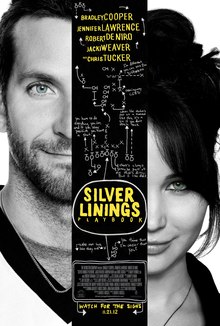
Silver Linings Playbook

Rating: ****

Most romantic-comedies are the same: boy meets girl, boy and girl date, one of them does something that causes strife with the other which forces them to end their courtship before they come together again in a beautiful, life-affirming ending. Silver Linings Playbook doesn't deviate far from that outline, but it does enjoy toying with it. Director David O. Russell pulls out various sprockets and gears and tries something of his own design: a romantic-comedy where the two lead characters sort of don't realize they're in a romantic-comedy.

Friday, 19 August 2011

Griff the Invisible

Rating: ***1/2

The notion of a singly-determined man to done a costume and become a superhero is not new, especially in the last couple of years. On the high-profile side there was Matthew Vaughan’s Kick-Ass, about a bullied teen that finds his chutzpah in a scuba suit, and on the low-profile side is James Gunn’s grossly hilarious Super about a man sent over a mental cliff after his wife leaves him. Now, offering a different tone is Griff the Invisible, which, like Super, originally bowed at last year’s Toronto International Film Festival.

But that’s probably where the similarities end. In fact, Griff probably has more in common with Jean-Pierre Jeunet’s charming 2001 film Amélie, about a young Parisian woman who comes out of her vast inner world to make the lives of others a little bit brighter. Griff also has a socially awkward hero with a large inner world. And unlike films like Kick-Ass and Super, which uses superheroes as metaphor for escalation and power unchecked, Griff is about how the fantasy of imagining one’s self as super can make you open to the world in ways others may not appreciate.

Ryan Kwanten, whom fans may be solely familiar with playing Sookie’s dimwitted himbo brother Jason from True Blood, plays the title character. Griff, by anyone’s standards, is socially awkward to a fault. He spends his days working in customer service for an unnamed company, and is inevitably bullied by one of his fellow office dwellers (Toby Schmitz). But at night, Griff dons a black leather suit and runs the streets as a crime fighter, protecting the average guy from various ne’er-do-wells.

Griff’s world is thrown for a loop when he meets Melody (Maeve Dermody), the new girlfriend of his brother, Tim (Patrick Brammall). From when we first meet Melody, we automatically recognize that she and Griff are the real soulmates of story; Griff with his experimentations in creating an invisibility suit, and Melody with her belief that she can manifest the ability to space out her molecules and pass through walls. Griff’s feelings for Melody, and the inner conflict of crushing on his brother’s girl, forces Griff to go inside himself more and more, even as Melody realizes its destiny for her and Griff to meld their worlds.

The heart of the movie really is this touching and self-conscious romantic dance between Griff and Melody, and Kwanten and Dermody play things beautifully. It may have gone amiss in the past, but Kwanten can be quite adorable when his shirt’s on, and Dermody is lovely and poised. They both play understated really well, and don’t feel the need to play their parts with any kind of put upon quirks or ticks to reinforce the fact that they’re social outsiders. But the film’s script, written by director Leon Ford, confounded me in third act when it reaches for a plausible reason to make Griff flirt with normalcy just as his future with Melody seemed to be coming together.

What I did enjoy was how the film unfurled in atypical comic book movie fashion. Even Kick-Ass and Super, as much as they were trying to send up the genre, played right into it with villains and a climactic, winner-takes-all battle in the end. But while Griff is a romantic-comedy-drama masquerading in a superhero suit, it actually does a pretty good job of looking like one too. If you liked the world of Warren Beatty’s Dick Tracy, with its primary colours and cityscapes that looked like they were taken straight out of the comic panel, then you’ll love seeing the world of Griff unfold.

For a connoisseur of the art form, Griff the Invisible is uniquely different, but is still satisfying taste in terms of being a superhero movie. It’s refreshing to see a film take on the genre and not make it about how “in real life” mentally disturbed people can take the call to being a superhero as an excuse to do violence and immoral things to others with impunity. Griff is a sweet film, and it has a positive message that seeing one’s self in heroic terms and believing in the powers of self-made magic and ingenuity, doesn’t necessarily make one mad. It also proves that delusion, like love, is best shared with the one you love.

Tuesday, 3 May 2011

Hot Docs - Matchmaking Mayor

Rating: ***


In the village of Zemplínske Hámre in Eastern Slovakia, the Mayor there, a former military general, has built new facilities, ensured quality infrastructure, and speaks out publicly about incidents of public drunkenness in his town. Sounds like paradise, right? But if this small-town mayor has one goal he’d like to achieve before leaving office, it’s his vision to see the numerous 30-something singles in his village married off and starting families of their own. What follows is the kind of state interference that would make social libertarians on this side of the Atlantic want to hit a wall.

Erika Hnikova’s film is as much about a mayor taking the unusual step of playing cupid, as it is about the curious case of the people in this small town, many of whom live with their elderly parents, most of whom seem neither interested or encouraged in going out to seek a mate. One of the most interesting scenes in the documentary juxtaposes a night out in Zemplínske Hámre as the men hang out with other men at the pub, and all the ladies hitting the dance floor at the disco.

The climax takes place at a dinner and dance put together by the mayor, who sends his assistant out into the village to personally invite singles to the event. Many of the single villagers are rather insulted by the mayor’s insistence, but on the night in question, many local singles come out, though the men number the women.

Interestingly, it seems that the men have more of an interest in marrying than the women, who when asked about marriage simply say that they are happy and if they really wanted to find a man, they would find one handily. Perhaps this has something to do with the Old World traditionalism of these people, like how the mayor talks about old-fashioned gender roles, like how the women take care of the men, while the men win the bread and do other manly things like home repair. Perhaps, the women just enjoy their independence and genuinely don’t think they need a man in their lives.

I wish that the film had been more about that aspect, less about the cutesy, romantic-comedy-like quality of an ambitious mayor trying to put people together in the bond of holy matrimony, more about the psychology and sociology of the good people of Zemplínske Hámre. To me, the one would have followed the other, but the more esoteric concerns never seemed to be a consideration in the finished film.

Much like the man himself, Matchmaking Mayor is ambitious, but light on the in-depth story details. It’s light and enjoyable, but a little more substance would have made for a more compelling effort on screen.

Friday, 4 March 2011

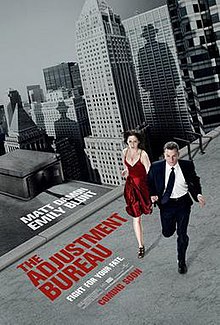
The Adjustment Bureau

Rating: ****

Philip K. Dick has provided the basis for some of the most exciting and imaginative science fiction films in the history of cinema: Blade Runner, Total Recall, and The Minority Report. Of course, the work of Dick also inspired Next, Paycheck and Impostor, but the author can hardly be blamed for the cinematic missteps made more than 20 years after he died.

But Dick is done right by The Adjustment Bureau, a philosophical treatise about fate versus chance, disguised as a romantic drama with a conspiratorial bent. It’s also a new entry in the subgenre of Matt Damon running movies. Damon plays a U.S. congressman with high political ambitions that realizes there’s more to the world he knows than he ever knew, and the aftermath of that seems to be a lot of running. He runs enough for all 435 members of the U.S. House of Representatives. But then again, if you were chasing the girl of your dreams and she looked like Emily Blunt, you’d probably do a lot of running too.

Damon’s Congressman, David Norris, has a bright political future, and is set to be the youngest member of the U.S. Senate ever, only to be T-boned in the eleventh hour by a scandal involving a gag with his old fraternity brothers. On Election Night, on the brink of his first real loss, David rehearses his concession speech alone in the men’s room, when meets an utterly enchanting woman named Elise (played by Blunt). Elise is hiding from security after having crashed a wedding, and through this chance meeting, David is able to give an impromptu speech that turns his loss around and sets him up for a victory next time.

What David doesn’t know is that despite the love-at-first-site connection between him and Elise, he wasn’t supposed to see her ever again. This is where The Adjustment Bureau comes in. A group of near-omniscient figures that nudge people to where they need to be in order to meet their destiny, Bureau Case Agent Harry Mitchell (Anthony Mackie) is supposed to wait for David to pass by a bus bench one morning and have him “accidentally” spill his coffee. But Harry falls asleep and misses David, and instead David makes his bus and just happens to run into Elise again. Is it fate? Is it written in the stars? Or is The Bureau just getting really sloppy?

David finds out pretty early on about the Bureau and its agents. Richardson (John Slattery) lays it out for him when David arrives at the office early and catches a Bureau adjustment in process. Basically, Richardson tells David, you have bigger fish to fry than romancing some random girl you’re smitten with. And sorry dude, we really meant that to be a one time thing and if you don’t do what we say, we erase your memory like the Men in Black.

I did enjoy the almost laid back quality of the Bureau. They’re not some perfect force of universal bureaucrats, but capable of fallibility and making mistakes. Apparently, David’s not the first guy to find out about the adjusting business, and he probably won’t be the last. Reluctantly, he accepts that he can’t see Elise again. Of course, Richardson burning the slip of paper with her phone number on it made that a bit easier.

The film’s pace moves rather briskly. We flash-forward a few years later to the brink of another senate run by David, and through no fault of his own, he one day looks out the bus window and sees none other than Elise walking down the street. Loophole, boys. He didn’t seek her out, this is completely random and David knows it’s random because the Bureau guys told him seeing Elise was a no-no. Where does fate end and chance begin? The Bureau and Richardson still insist that a life with Elise is not in David’s plan, but why does he keep running into her?

It’s a rare quality that the philosophical divide can create genuine suspense and an edge-of-your-seat quality, but screenwriter and director George Nolfi manages to do just that. You both root for David and Elise to find love with each other, but you fear those consequences that the Bureau agents speak of. There’s a “Come on, just let those crazy kids be” cheering appeal, but you’ve got to wonder why they’d chase a guy all over Manhattan to keep him from the ballet dancer he’s crushing on. But to the viewer though, love wins you over in the end.

That decision is helped with the wicked chemistry between Damon and Blunt, which makes you believe in love at first sight. Blunt comes across as free-spirited but not too flighty, while Damon manages to bring out convincingly the romantic inside the buttoned down politician. I give kudos to Slattery and Mackie for giving their characters some human grace rather than playing things too cold and distant, I just wish someone could have told Terence Stamp as Adjuster boss Thompson that he didn’t have to play it like General Zod.

But the focus in The Adjustment Bureau isn’t on grandiose sci-fi set pieces or scenery chewing overacting, it’s on simple storytelling and character work. It’s charming and witty in its way, and you may scoff at the silliness of the Bureau agents getting their powers through their awesome fedoras, but in keep with the tone of the movie, it makes perfect sense and not contrived at all. It’s a winning movie that does Philip Dick proud, and handily proves that you don’t need a lot of flash or cash to make a compelling sci-fi movie. I don’t know if it’s your destiny to see it, but it should be.

Tuesday, 14 September 2010

TIFF - Modra

Rating: ****

Modra is a film that proves once again that you can do big things on a small budget. Ingrid Veninger has made an utterly charming movie that’s funny, beautiful and touching using a kind of cinéma vérité, a couple of very young, inexperienced actors upon which the whole film hinges, and the beautiful backdrop of the titular city.

Modra follows two Toronto teens as they take a week during their summer vacation to go on a trip to Modra, which is a small town in Slovakia. Lina (Hallie Switzer) has family there, and was originally supposed to go with her boyfriend until an ill-timed break-up scuttled those plans. Enter Leca (Alexander Gammal), who randomly calls up Lina for a date to the movies, or something, but ends up making the trek to Modra with her. If this were a Julia Roberts movie you’d probably know where things go from here. Fortunately though, it’s not.

Lina and Leca are wonderfully played because they talk, act and think like real teenagers. Unsure just what exactly Lina’s intentions are, Leca’s reaction to other guys giving Lina attention is to retreat. Lina meanwhile is unsure what to make of Leca’s obvious affection and confusing distance, although over the week they’re in Modra together she begins really caring for him.

Such awkwardness is typical of teenage romance, although it is rarely portrayed on screen in such a way. I enjoyed how Switzer and Gammal were unpolished and seemingly unpractised in their performances. There’s a great line in the beginning were Leca calls Lina and when she explains to him that she’s going to Slovakia, Leca’s reaction is to say, “Cool, they have a good hockey team.” Something about that line just encapsulates the tone of the film: real teens, real reactions. You can practically hear in Leca’s voice how suave he thinks he is when he drops that little piece of Slovak trivia.

The film itself is rather impressively crafted by the sheer fact of how simply it rolls by. There’s no camera trickery, weird angles, or really anything that seems to indicate that something more than natural light was used. It’s part of a whole naturalistic vibe to the film that seems as though sometimes that someone was following these kids along and making a documentary about them. The musical selection, including some local flavour from Bukasovy Masiv of the real life Modra, adds to the genuine essence of the film.

The bottom line is that Modra is just a really cute little movie. It’s immensely satisfying even though the most you can say that happened is that two kids have a nice vacation in the Slovakian countryside. Of course, the film works quite brilliantly as a travelogue for small town Slovakia as well, but really this movie is all about the quiet, sometimes, awkward, sometimes awe-inspiring nature of discovery. Whether that’s discoveries of the heart or discoveries of a previously unknown culture, Modra delivers it all with perfect candour.

It’s quirky, it’s funny, it’s a little inspirational, but most importantly of all, it’s utterly human. Big props once again go to Hallie Switzer and Alexander Gammal for just being so authentic. Whether it was purposefully, or it just came naturally due to lack of experience, these kids were the heart and soul of the movie and brought the story to life. It’s just one of those movies that makes you feel good after seeing it, and that’s even harder to come by then capturing something that resembles reality on the big screen. So on that account, I guess Modra’s doubly a miracle.

Friday, 13 August 2010

Scott Pilgrim Vs The World

Rating: *****

Sometimes the ignorance of the movie-going public is astounding. They’ll line-up for anything remade, animated, or done in 3-D, but a blisteringly original and energetic work of film, let’s skip that to see something that’s supposed to be for 10-year-olds. That may be a little harsh, but it really does flabbergast me about where the mentality of people that go to the cinema is. I could watch SCOTT PILGRIM VS THE WORLD again. I could watch right after I watched it. That’s how good this is. At least in my opinion.

Based on the graphic novel series by Bryan Lee O’Malley, SCOTT PILGRIM is zany, colourful and most importantly heartfelt. It looks pretty, but it’s got heart, which is what separates this film from the pack. That and its oozing in maple syrup love of Canadiana (or at least Torontoniana) as director Edgar Wright really nails something authentic about his hyperactive, comic book version of Hogtown that comes complete with all sorts of video game sound effects.

At the heart of the story is the boy-meets-girl drama between the titular unemployed slacker (played by Michael Cera) and the hipster, pink-haired love of his life named Ramona V. Flowers (Mary Elizabeth Winstead). Naturally, the course of true love never does run smooth, and as a result, Scott must battle Ramona’s Seven Evil Exes in order to win her heart. Along the way, Scott must also help his band, The Sex Bob-Ombs, to ascend the Battle of the Bands to win a record contract and “sell out and stuff.”

That’s really kind of the bare minimum in terms of plot description because there’s really so much going on every minute of the film that you could write a 1,500 world plot breakdown. What’s really interesting is that there are a lot of characters in the film, and this can be dangerous because there’s a limited time to tell a story with little time for deviation into a side-character’s wacky antics. Not that the time issue is different with SCOTT PILGRIM, but there are a lot of characters and they’re all very well drawn.

At the centre of it all is Cera, who, while playing the sardonic slacker yet again, finds the material fitting his rather one note delivery. I think this is the fate of Michael Cera, destined to a career of finding the right scripts and right directors to suit his one note tone. Fortunately for him, SCOTT PILGRIM is all aces. As Scott’s soulmate Ramona, Winstead practically dares you not to fall for her, with her candy-coated hair, those eyes that had to have been taken right from the head of a Disney Princess and driest of the dry line deliveries. Winstead is definitely the girl you’d fight seven evil exes for, with a sardonic sass that makes her even more desirable.

Speaking of those evil exes, it’s practically a parade of geek friendly cameos. From future Captain America Chris Evans doing meathead macho right as skater/actor Lucas Lee, to former-Superman Brandon Routh as super-powered vegan Todd Ingram, to the once and future Max Fischer Jason Schwartzman as the Lex Luthor-like organizer of the evil exes, Gideon Graves, these guys are golden. And in an inspired bit of injoke casting, Cera’s ARRESTED DEVELOPMENT girlfriend Mae Whitman (her?) plays the bi-furious Roxy Richter.

If there’s a breakout star – if you can call him that considering that he’s spent all but eight of his 28 years in show business – it’s Kieran Culkin as Scott’s best friend Wallace Wells. Culkin steals a lot of the scenes he’s in, not to mention a lot of the best lines in the movie. I think I would love to see a movie about Wallace’s solo adventures, living his life according to the double standard code of Liberace’s Ghost and not caring who knows it. But honestly, I can’t pick out a bad actor in this thing.

Perhaps what trips up people is SCOTT PILGRIM’S unabashed love of modern pop culture in general and video games in particular. Things like “pee bars” and fighting your enemies until they explode into coins, or fighting the negative version of yourself in order to win the prize (or the girl in this case), should go down well with the current generation, who grew up, like me, on the original 8-bit Nintendo. It surprises me that it hasn’t translated, but I suppose that’s how cult classics are born.

I have little doubt that in the months and years to come, especially when it hits video shelves, SCOTT PILGRIM will find its audience. It’ll find the small and vocal, who will continue to sing its praises until they start fighting over who “discovered it” first. On second thought, that’s pretty much where this movie was always meant to be. SCOTT PILGRIM VS THE WORLD is a cult film made with studio money, and that, by me, is alright because I’ll do everything I can to make sure that I get $60 million worth of enjoyment out of it in the years to come.

Thursday, 1 July 2010

Love Ranch

Rating: ***

The new film Love Ranch does something unusual for a Hollywood film, it makes age look sexy. True, this is a film about the first legal brothel in Nevada, but the honorific title of sex bomb doesn’t belong to one of the nubile young actresses that play the ladies of the house, but rather the Academy Award-winning Dame that plays their madam. It should come as no surprise that Helen Mirren owns sex appeal at 65 years of age, but it’s just nice to a movie let it be. Of course, we can probably credit that to Mirren’s husband Taylor Hackford, who happens to also be the film’s director.

But leaving aside the aesthetics for a moment, Love Ranch is an interesting story. The titular establishment, which opened for the first time in the 70s, was the subject of much controversy, even in the laissez-faire state of Nevada. The Ranch was the brainchild of Charlie Bontempo, but it was really his put upon wife Grace Bontempo that kept up the business and made it lucrative. One might even say it was a model. Charlie had his ambitions to turn Reno into the new Vegas with himself as the Bugsy Siegel-like mastermind, but as the story goes, behind every great man…

Mirren stars as Grace and she’s teamed with fellow Oscar-winner Joe Pesci as Charlie; an odder couple on film you can hardly find. Yet somehow, for some strange reason, the combination of classically Brit Mirren and obnoxious Jersey boy Pesci works, and works beautifully. You buy them as a couple because of their dynamism, because there’s something that the one needs from the other and vice versa. Pesci is restraint in his performance playing a kind of giddy con man that hides his more thuggish inclinations that only come out when things don’t go his way.

The movie follows Grace and Charlie has the latter copes with his latest brush at immortality: managing a washed up heavy-weight fighter named Armando Bruza (Sergio Peris-Mencheta). Of course because of Charlie’s questionable past in regards to law enforcement, on paper, the management of Bruza falls to Grace. But while Grace knows nothing about managing a boxer, she does know something about men, and what she gets out of Bruza – attentiveness, passion and a little danger – is a far cry from what she gets from Charlie – philandering, neglect and violent leanings.

Grace begins a secret affair with Bruza. Secret because if Charlie ever found out then Bruza’s value would decrease both as a person and as a boxer. The relationship between Grace and Bruza is utterly believable in the moment as Mirren and Peris-Mencheta have palpable chemistry. Still, there’s so much more punch to the stuff going on between Mirren and Pesci that when the movie doesn’t focus on their tumultuous marriage/business partnership the mind wanders. You want to learn more about their background, how they met, and how they engaged in this let’s say “unique” business venture together. The film has an ample and talented supporting cast including Bryan Cranston, Gina Gershon, M.C. Gainey, and Bai Ling, but who’s kidding who? The only stars of this movie are Pesci and Mirren.

The screenplay itself, as penned by American Gangster writer Mark Jacobson, seems a bit too all over the place. It makes no moral judgments against the Bontempos but it doesn’t do much to stick up for them either. The film required the assured tone of P.T. Anderson’s Boogie Nights, which chronicled the lives of people in the porn industry in a sympathetic way while showing it for what it is, warts and all. Combined with Mirren’s melodramatic narration that seems more romance novel than anything, and the opportunity to make something unique and powerful about sex workers and their industry seems wasted. Especially in a historical context.

Structurally, Love Ranch struggles to get beyond the typical biography pattern of a good-spirited character, bogged down with adversity but given the strength to overcome and stand on their own as a smart, successful and independent person. But this type of storytelling always strikes me as more TV-movie-of-the-week than something made of people with Oscar-calibre skill. Still, that skill comes through thanks to Mirren and Pesci’s performances. Love Ranch was interesting, though not all together involving. Not nearly as lurid or as lucid as it could be, Love Ranch is fittingly in the middle of nowhere thematically.

Wednesday, 30 June 2010

The Twilight Saga: Eclipse

Rating: ***1/2

Who would have guessed that one of the most divisive films of our age would be a tawdry, but chaste, tale of a love triangle between a high school aged human, vampire and werewolf? The sheer vitriol against these movies, and the books from whence they came, boggles the mind considering the content. Is Twilight cheesy? Yes. A bit old fashioned? Sure. Do its young actors sometimes confuse making a frowny face with actual emoting? Most definitely yes.

But for so-called Twi-hards, the haters don’t matter and even they realize that the movie they’re so invested in isn’t exactly melodrama par excellence like, let’s say, Gone with the Wind. There were more than a few chuckles at some of the cheesier bits of New Moon at the press screening, which had a healthy mix of hardcore fans in there with the press. So how do you tell that Eclipse is a marked improvement over its predecessors? Fewer laughs.

So far as Twilight movies go, Eclipse is sharper, tighter and just all around better than the first two films in the franchise, but this could be for a number of reasons. First and foremost is the source material. Stephanie Meyer’s third novel set in the Twilight universe saw grand improvements in terms of character development and building rising action.

Then there’s the film’s director, David Slade. The filmmaker’s last tango with vampires, the bloody good comic adaptation 30 Days of Night, couldn’t have been further from the “Parents Don’t Just Understand” vampires’ world of Twilight. You know there’s a change a-coming when the opening scene in Eclipse takes place on a rain soaked street in Seattle where a boy is tormented, mawed and left to die in agony on a pier. Anyone walking in unfamiliar with the novel may think for a minute that some one got chocolate in their peanut butter.

But soon things settle down to what you’d expect from Twilight. Bella (Kristen Stewart), being a modern young woman struggles with the notion of marrying her vampire beau Edward (Robert Pattinson) as condition of him turning her into a vampire. At the same time she’s struggling to keep her friendship with werewolf pal Jacob (Taylor Lautner), which isn’t easy for the boy considering that his crush’s boyfriend is one of his tribe’s sworn enemies.

But much of the hate is put aside when Bella comes under threat from an army of new born vampires under the sway of the vengeful Victoria (Bryce Dallas Howard effectively, but not convincingly replacing Rachelle Lefevre). Twi-haters may actually like this aspect of the film, seeing what they would consider more “real” vampires in this VINO (Vampire In Name Only) movie. The story culminates in what’s actually a pretty decently executed fight scene between the new born vamps and the werewolves/good vampires super-team.

Also stronger is some of the acting and dialogue. Edward’s self-referential pondering as to whether or not Jacob owned a shirt got a few (in context) laughs, but not as many as this uncomfortable version of “The Talk” between Bella and her normally stoic dad Charlie (Billy Burke). The three main actors – Stewart, Pattinson and Lautner – continue to show improvement and comfort in their parts, but there may still be an irritant factor for those who show up to the film under less voluntary circumstances. Instead, focus on the impish charm of Ashley Greene’s Alice and the cool dignity of Jackson Rathbone’s Jasper, who I believe gets more lines in Eclipse than in the first two movies combined.

Still, no matter what a critic has to say, members of Team Edward and Team Jacob will swoon for their respective namesakes, while Team Death-to-Bella will just come out to throw salt in people’s good time. Perhaps endurance when it comes to dealing with all things Twilight depends on one’s own ability to put themselves in the mind of a 13-year-old girl. If nothing else, Eclipse is entertaining whether you genuinely enjoy it, or genuinely enjoy ragging on it.

But for those interested in the movie itself, Eclipse is answer and antidote to typical male-driven summer blockbusters. Perhaps that’s the ultimate conundrum of Twilight. Without robots, wizards or superheroes it’s captured the imagination (and money) of so many. Much like the story’s vampire protagonist, who point blank refuses to have sex with his girlfriend until they’re married, there’s something old-fashioned in Twilight, and that seems to be okay to the female demographic that made this franchise a billion dollars.

So to all the haters out there, do yourself a favour and save that hate for things that matter, like British Petroleum or Soccer World Cup. And to Twi-hards everywhere, enjoy what is the best Twilight yet with aplomb. As if you haven’t already.

Saturday, 9 January 2010

Leap Year

Rating: **1/2

To get through 99 per cent of the romantic comedies out there, you have to accept a couple of things. First, that the girl at the centre of the story is always fastidious or precise in a manner that’s measurable. Second, the man she’s with and/or interested is almost always bad for her. Third, the new man that she thinks is bad for her almost always ends up being the one beneath his layers of gristle and/or cynical detachment. Additionally, the story nearly always begins with some kind of ridiculous conceit: a deadline, a road trip or a mission. The talented few are the ones that can take these concepts and wrangle them in such a way to make the experience bearable, if not enjoyable.

Leap Year has a deadline, a road trip and a mission as the fastidious and precise Anna (Amy Adams) follows her foolish father’s advice to chase after her boyfriend to Dublin in order to propose to him on Leap Day. According to an Irish legend, which may or may not be an actual Irish legend, a woman can propose to a man on the 29th of February and he has to accept. The powerful bonding magic of Leap Day is just what Anna needs when Jeremy (Adam Scott), her boyfriend of four years, fails to propose after they buy a swank Boston apartment. Anna, desperate to seal the deal goes by land, sea and air to Dublin to meet up with Jeremy at a medical conference so that she can surprise propose to him on the 29th.

Naturally, following traditional rom-com conceits, Jeremy is a borderline jerk that appears only mildly interested in Anna, that is to say when he shows any interest in her at all. It should go without saying that the romantic intentions of any man that would show his girlfriend photos of open-heart surgery via his mobile device over dinner should be questioned, and questioned thoroughly. As to what Anna sees in Jeremy is never really explained, but I suppose when you invest four years in a man, simply dumping him would be like burning your own house down. Fortunately, while on her trip, Anna gets diverted by bad weather, and fate drops her at the small pub owned by Declan (Matthew Goode), an Irish bloke that prefers a tall pint of Guinness to a high-maintenance woman.

Anna and Declan’s excellent adventure across the Irish countryside is the typical, movie couples’ journey from open hostility to flirty animosity to begrudging companionship to actual friendship and romantic realization. Screenwriting Mad Libs is saved by the chemistry between Adams and Goode who snipe at each other in a believably loving way. You root for them and get somehow invested in the story despite the fact that the plot is superficial and obvious. Goode’s Declan is just the right kind of scruffy ne’er-do-well and Anna is just prissy enough that you don’t find the characters completely annoying. Which just leaves poor Jeremy, but you can live with the other man being a clueless buffoon in this instance.

The bottom line is that Leap Year in one of those rare romantic comedies where you can live with the predestined nature of the plot and the overly conceptualized characters and just take it all in stress free. Maybe it’s the season and the past several weeks of high concept, highly significant filmmaking, but there’s a simplicity to Leap Year that’s charming rather than annoying. Rather than rage against the ridiculousness of the plot or complain about the overly stereotypical nature of the battling old Irish men trading trivia at Declan’s pub, you can just sit back and enjoy. And in this way alone, Leap Year’s got the luck of the Irish working for it.

Wednesday, 30 December 2009

Nine

Rating: ***

I was very much looking forward to Nine, the movie musical based on the Broadway variety inspired by the life of Italian filmmaker Federico Fellini as written in a book by Arthur Kopit based on Fellini’s own semi-autobiographical film called 8 ½. Now I’m not typically a fan of musicals or having to follow a labyrinthine chronology to understand where the origins of a movie come from. Additionally, though I’m pained to admit it, not even the fact that director Rob Marshall stacked his deck with a handful of beautiful actresses in 60s glamour was entirely persuasive. But there was a quality to Nine certainly, a style, a romance, a rawness, an energy that just drew you in when watching the previews. Which is why it’s painful to say that style is about all that Nine has in its favour.

Of course, it would be inappropriate for a movie about Italian film in the 1960s to look like a Communist-era state-sponsored black and white educational film, but the great con of Nine is that lavishness trumps subtlety, and that production supplants story. I can’t say that I know enough about Fellini to understand where “based on” ends and dramatic license begins, but much like the lead character, filmmaker Guido Contini, it seems that the people behind Nine were working without a script. Guido, played with surprising musical aptitude by Daniel Day Lewis, faces writer’s block as the start date for his latest opus, Italia, approaches in just a week’s time. Hoping to escape the rigors of work, he escapes to a spa only to have the production follow him there in full force. Can a guy not smoke, drink and womanize in peace, Guido laments.

But the women in question are Marion Cotillard as Guido’s wife Luisa, Penélope Cruz as his mistress Carla and Nicole Kidman as his muse and lead actress Claudia. But if that’s not enough female trouble for you there’s Judi Dench as Guido’s tough talking costume designer Lilli, Kate Hudson as a provocative American Vogue reporter in Go-go boots and appearing in flashback and as ghostly apparition is Sophie Loren as the Guido’s mother. It’s a cast that epitomizes the term “all star,” so why do they feel so under-used? It seems that each of the actresses is in the film just long enough to do their musical number and take a bow; Kidman isn’t really seen till the end, Cruz is remembered mostly for her (lack of) costume and Cotillard feels cheated with the typical spurned wife role.

This leaves much of the emotional heavy lifting in the film up to Lewis, who happily seems as energetic and invested in singing and dancing as he was berating Paul Dano about “drinking his milkshake” in There Will Be Blood. His chemistry with the leading ladies sometimes seemed a bit lacking, but Lewis’ timing with some of the physical comedy and dance numbers was right on. He was also good sparring with Dench as Lilli’s tart though truthful advice about the movie business clashes with Guido’s creative meltdown. It would have been nice if there had been more of Lewis and Dench’s comedy routine in the film because it was certainly as lively as the brilliantly choreographed and orchestrated musical numbers.

Which is why despite some of my creative misgivings about Nine, I still give the film a positive recommendation because if anything else you will leave the theatre humming the very catchy music. As a dramatic work though, the movie leans too heavily on its ability to doll itself up with bright lights, amazing scenery and fancy costumes. And as great as the songs were, there’s still a kind of detachment from the drama because the action always cuts away to the music rather than having the characters burst into song. I never thought I’d miss that in a musical, but it does give the action on screen more emotional heft when characters are singing to each other, and not just thinking about it. So in other words, to use film parlance, you’ve got energy kid, but you don’t quite have what it takes. Keep trying though, you’ll get there.

Saturday, 26 December 2009

It’s Complicated

Rating: ***

Like most romantic comedies, It’s Complicated is remarkably uncomplicated. Where it’s different though is that it deals with mature adults rather than immature young people, which is a niche that Nancy Meyer does really well at filling. Sadly, It’s Complicated is terribly predictable, but it’s so well acted that it almost doesn’t matter. The movie is fun, the actors are great and there are some rather interesting opportunities for farce, but it feels like script only really gets half the way there. Still, the movie is so winning in its way that you hardly mind, and it’s so well cast that you’re rooting for It’s Complicated to deliver, which unfortunately it doesn’t fully.

Meryl Steep plays Jane Adler, a successful businesswoman coping with her suddenly empty nest. Alec Baldwin is Jake Adler, Jane’s ex who cheated on her 10 years earlier, which resulted in their divorce. Jake has since remarried to the younger woman (Lake Bell) he cheated with and is dealing with visits to fertility clinic to fulfill her desire to get pregnant. Then, while both Jake and Jane are flying solo in New York for their son Luke’s college graduation, a night of drinking and dancing leads to, shall we say, renewed romantic interest. (If that’s too subtle, look at the movie poster again.) Due to the potency of this one, wild night, Jake and Jane decide to try having an affair and while Jake is really into it, Jane’s dealing with conflicting romantic feelings for her architect Adam, played by Steve Martin.

Meyers manages to keep things degenerating fully into Three’s Company territory although there were times that I wondered if Mr. Furley was about to walk in and take something the wrong way. It’s cool though, because Meyers makes it work for her, although I almost think that she didn’t take it far enough. Jake and Jane try sneaking around once, but an ill-timed health issue results in, ahem, cloitus interruptus. Unfortunately, there seems to be no real dedication to the affair, which may have been the point, but I think the story would have worked better if Jane had been more into taking Jake up on his extra-marital exuberance. So what ends up happening is that there’s always a sense of build up without any actual payoff, which is kind of disappointing in the end.

But as I said, the actors help make this a winner. Baldwin is as funny as ever with all the appropriate swagger and jocularity that a character like Jake requires, but he does so with equal parts charisma and pathos. Streep is naturally fabulous and it’s always nice to see her do something with her hair down and allow herself a little swagger for a change. Martin, meanwhile, needs to realize that he’s better playing people like Adam then he is playing broad caricatures like Inspector Clouseau in the Pink Panther movies or the dad in Cheaper By the Dozen. The Office’s John Krasinski also deserves a tip of the hat as Jake and Jane’s future son-in-law, who, much to his chagrin, finds himself the person trying to keep the affair from becoming open knowledge to the Adler kids.

In fact, the scenes where Krasinski’s Harley is working overtime to keep things from getting farcically out of hand are some of the best, so much so I actually wished there was more of that kind of comedy rather than time wasted on the relationship drama stuff. This goes further because if I had to choose my second favourite gag it was when Jane and Adam get high at the welcome home party for Luke. And if there’s anything weirder on film than grooving with Meryl Streep as she’s doing a stoner gag then I’m not sure I want to know about it. Still, these things left me extremely confused because it seems that at times Meyers wants to be James L. Brooks and others where she wants to be Kevin Smith. But despite the stylistic complications, It’s Complicated is, at least, never dull.

Wednesday, 23 December 2009

Broken Embraces

Rating: ****

What can be said about Pedro Almodóvar’s latest film Los abrazos rotos, or by its English title, Broken Embraces? Well, it’s a comedy, it’s a mystery, it’s a romance, it’s a family drama and it’s a tale of vengeance. It’s all these things and none of them, told in that signature Almodóvar style where the way you tell a story trumps even the fact you’re telling a story. The film proceeds at its own pace, and is rather fluid with the narrative. It seems to enjoy leading you around the question at the heart of the film and all the while you don’t ever really think about asking it. It’s weird, I know, but that’s Almodóvar in a nutshell. The guy’s either a cinematic wizard, or I’m maybe too thick to follow along.

Let’s presume option number one for a minute because at the very least Almodóvar gives us a film about filmmaking that miraculously feels neither pretentious nor self-congratulatory. Even the best films about people making movies cast off this air that if you’re not working in the world of cinema then you’re not realizing you’re life to the fullest. After all, everybody wants to make movies, hang out on the set, and tap on their Blackberry’s all day until the scene is finally set and the director’s ready to call action. But Broken Embraces is not completely innocent in this. Almodóvar’s muse Penélope Cruz plays Lena, an office worker that marries a rich tycoon Ernesto Martel (José Luis Gómez), whose acting ambitions lead her on a dangerous path.

But that’s not how it starts. At the beginning of the film, we meet Harry Caine (Lluís Homar), a blind screenwriter living a quiet life of anonymity, his only visitors being an old colleague named Judit (Blanca Portillo) and her son Diego (Tamar Novas) who acts as Harry’s secretary. Harry one day learns of Martel’s death and soon after receives a visit from the mysterious Ray X (Rubén Ochandiano). The visit leads Harry to recall a period 14 years earlier when he was noted filmmaker Mateo Blanco, working on a romantic comedy being funded by one Ernesto Martel. Martel’s wife Lena becomes Mateo’s leading lady both on screen and off, and a story of personal destruction through lies, jealousy and betrayal is revealed.

It’s a wonderful labyrinth for what is, in essence, a simple story. The trick is though that you really have no idea where it’s all going or how these varying plot threads tie together from one to the other. The talent of Almodóvar is that he’s making you focus on the clues while he’s telling a story. You’re so focused on what this means and what that means that it’s hard to sit back and take in the film as a whole until after the credits role, and then you really appreciate the care Almodóvar took in weaving together the story. What seems like randomness in the beginning becomes neatly sewn together in the end. The film is about a half hour over before you realize just how interconnected Harry and Lena’s stories are. Of course they are interconnected, but for a second there you wonder what exactly an office temp in ’94 and a blind screenwriter in 2008 have in common.

Powerful performances help sell the nearly soap opera like premise. Naturally Penélope Cruz is a vision that enchants every moment she’s on screen, but fortunately she’s also a tremendous actress. How can you tell? For the movie inside the movie, a rom-com translated hilariously as ‘Girls And Suitcases’, she has to act like a mediocre actress, and you believe it. I also enjoyed Lluís Homar a lot because as Harry/Mateo states in the opening narration he’s lived his life as two different people, and Homar really plays that up. In the end, there’s some reconciliation between the two personas and it takes a nuanced actor to play a character three different ways. I dare not say anymore because as might be interpreted from the film’s message, some secrets are best left hidden. Embrace Broken Embraces with as clean a slate as possible, and you’ll be well rewarded. It’s a first rate film on just about every level.

Monday, 21 December 2009

A Single Man

Rating: ****

Earlier this year we had A Serious Man, which despite its rather solemn sounding title was actually rather droll. Now with A Single Man, which under different circumstances might sound like a silly romantic comedy, we get one of the most finely acted dramas of the year. What’s more is that this is the directorial and screenwriting debut of Tom Ford, the fashion designer that turned Gucci into a billion dollar company. Well I don’t know much about fashion, but it’s certainly pleasant to see a man step far outside his artistic comfort zone and succeed with astounding skill. A Single Man, the adaptation of the 1964 novel by Christopher Isherwood, is an involving and well-acted bit of drama thanks to Ford’s eye and the tremendous skill of lead Colin Firth.

The film follows George (played by Firth), a college professor living in 1960s Southern California. The story takes place during the height of the Cuban Missile Crisis, as George continues to cope with the accidental death of his long-term partner Jim (Matthew Goode) several months earlier. George is practically a ghost in his own life, but in a rare moment of zeal he gives an exuberant lecture on the nature of fear to one of his classes, sparking the interest of student Kenny (Nicholas Hoult) in more ways than one. As George diligently makes plans to dine with his old friend Charley (Julianne Moore), he also looks to putting his affairs in order. But will this be one of those nights that changes George’s point of view, or will it push him further to give up on the life he doesn’t believe in anymore?

Staged with the precision and thoughtfulness of live theatre, A Single Man captures and arrests you with provocative performances, and its deliberate but seemingly natural pace. Firth as the gravitational centre is engrossing, one of the most genuine and visceral portrayals of a grief-stricken man that I’ve ever seen on screen. Firth plays up a bit of mystery as well since you’re never quite sure for the first half of the film how exactly it’s all going to play out. Like a beautifully drawn picture book, every turn of the page offers more detail, while allowing you the time to appreciate all that detail. It’s Firth performance that keeps things personal and almost intimate. A true leading performance, he’s in every scene and almost always shoulders the emotional weight in every exchange.

But it would nonsense to say that Firth is alone on screen in his dedication to the film. Probably second for screen time (and marquee name value) is Moore, who’s Charley could have been the usual pathetic, two-dimensional drunk divorcee archetype, but with Moore’s talent one can appreciate something deeper underneath. Newcomer Hoult, who’s perhaps best known for his work on the British drama Skins, also shows a lot of depth as Kenny’s youth and optimism plays well against George’s resignation and pessimism. And though he plays but an apparition, Goode is quite excellent as George’s lost lover Jim. The loss George feels, as conveyed by Firth, is palpable, and the two actors easily make you feel as if they’ve been together the better part of 15 years. That’s not a high-five for two straight actors playing gay men, just that they have the chemistry between the two of them to really make it believable.

This emphasis on acting makes the film, but that’s not to discount the technical merits. The aesthetic of the production design and the soft lighting of the cinematography create a feeling of a film not just set in the 60s, but one that almost feels like it was shot in the 60s. Ford is to be commend for his attention to detail and for immediately setting himself out as an “actor’s director.” I honestly can’t remember a director’s debut that’s been this impressive, or at least a first-time director that seems this together. This was not an easy film to make, I think. From the emotion of the characters to recreating the early 60s setting to the unconventional direction of story, Ford should be commend for tacking this material, and more than that, tackling it beyond expectations. Firth and Ford make A Single Man a must see. A great and greatly acted film.

Sunday, 20 December 2009

The Young Victoria

Rating: ***1/2

If anything else, The Young Victoria offers us a unique look at the life of the longest reigning monarch in the history of the Britains by focusing on her, well, youth. An interesting place from which to launch a film from, but the thing of it is, aside from the acting and the production design I’m not sure what separates The Young Victoria from several other great king/queen-in-the-making stories. But as a devoted monarchist, I have to admit that though as unoriginal as the story’s conceit may be, despite the fact that it was based on real life, there is something truly compelling in this film by C.R.A.Z.Y. director Jean-Marc Vallée from a script by Academy Award winner for Gosford Park, Julian Fellowes.

The film’s story begins in 1836. The future queen is 17 and, unbeknownst to her, is about year away from ascending to the throne. Young and headstrong, the Princess Victoria (played by Emily Blunt) refuses to sign papers that would allow her mother the Duchess of Kent (Miranda Richardson), and through her Sir John Conroy (Mark Strong), to rule in Victoria’s stead once the King dies. But when King William (Jim Broadbent) does pass on, Victoria eagerly accepts her calling and takes the throne. Despite her new found power though, Victoria finds herself being pulled by all sides to work for their political benefit, not the least of which is her chief advisor, Prime Minister Lord Melbourne (Paul Bettany). At the same time, Victoria contemplates marriage with Prince Albert (Rupert Friend), son of the Belgium’s King Leopold (Thomas Kretschmann), who’s pushing for the union to strengthen his own position.

What’s strange is that despite all this going on it’s almost as if the film just scraped the surface of this woman’s life. Perhaps that’s the consequence of being Queen for over 75 years, but in its way, just as the movie feels like its at the place where the story really begins, it comes to end. The blanks are filled in with a rather odious number of title cards at the end, so many that it almost felt like there was going to be a pop quiz on Queen Victoria before leaving the theatre. On the other hand, the script goes into a lot of detail about those tumultuous first few years with all the political slights and negative reaction from the people. Who knew that the decisions over who’s made a lady of the Queen’s court could be as divisive as choosing a Supreme Court Justice?

Actually, the script does a good job of laying out these minor controversies and how they became blown out of proportion in a politically sensitive time. Vallée, for the most part, is able to build appropriate tension and intrigue as the young queen is pushed and pulled between all the various forces involved. This is also where Blunt gets to shine. She manages to convey Victoria’s strength and defiance while still allowing instances of vulnerability and self-doubt. Under a lesser actress those qualities might have all been played too broadly to be believed or to be taken seriously, but Blunt finds a nice balance and is able to engender a lot empathy and pathos. I wish the same could be said for Friend’s Prince Albert though because while the advertising pushes their great love as a plot point, in the actual film it seems more like an after thought.

What’s weird is that the film still tries mightily to make the romantic storyline relevant. Naturally you can’t ignore it, but the meticulousness of all the political issues is no match for the rather simplistic romance where, as portrayed in the film, saw Albert hang around the palace just long enough so that he definitely stood out as the most committed of all marriageable options. In other words, he was there. Blunt and Friend are cute together though, which may be all you need to get by so far as the romantic subplot goes. Meanwhile, the detail and vision of this relatively brief period in Victoria’s life seems ready made for something more like a TV miniseries rather than a limiting two hour movie. Having said that though, there is a spell to The Young Victoria that has a pleasing effect. The film may not be original, but it is wholly enjoyable regardless.

Saturday, 19 December 2009

Did You Hear About the Morgans?

Rating: **

Did you hear about the fact that Hugh Grant is charmingly befuddled? Did you hear that Sarah Jessica Parker is a New Yorker and proud of it and would never ever think about living anywhere else? Did you hear about how everyone in Wyoming likes guns and cowboy culture and hates erudite, sophisticated city folk? If you answered yes to any of these questions then you probably already know enough about Did You Hear About the Morgans? to never, ever bother seeing it. It’s a movie featuring the kind of mismatch, fish-out-of-water comedy that can only come from the age old witness relocation set-up and combines that with the typical rom-com paradigm of two people trying so hard to not be together that they end up together.

Grant and Parker play Paul and Meryl Morgan, a Manhattan couple going through the motions of separation after Paul’s infidelity. Paul’s a lawyer and Meryl a high-priced realtor, so naturally it takes the unwavering dedication and schedule reorganizing of their personal assistants (Jesse Liebman and Elisabeth Moss) for them to even have a sit down dinner together. After this particularly awkward dinner, the couple witness a murder of a noted arms dealer and for the Morgans protection they’re immediately placed in protective custody. Sent to Ray, Wyoming, they’re reborn as Meryl and Paul Foster, the cousin and husband of local sheriff Clay (Sam Elliot). It’s only in the fresh Wyoming air and its silent nights that Paul and Meryl start to remember why they fell in love in the first place.

It’s worth noting that The Morgans was not the painful experience you imagine its going to be. Something about the Grant and Parker dynamic mitigates just enough hatred for this stale clichéd set-up that you can get into the story even though much of the humour falls flat. You know things are bad though when the actors have an embarrassed face, that is they look as though it’s physically uncomfortable to be in this movie. Grant looks like he’s swallowed caster oil in some scenes, probably a reflex from doing his I’m-so-English shtick one too many times. Sam Elliot looks bored as hell, again because he’s Hollywood’s go to guy for world-weary rural lawman. He and Tommy Lee Jones should headline a movie called “Southern Policemen Stereotypes.” And I’m not sure how Michael Kelly got cast as the assassin plaguing Paul and Meryl, but he was about as threatening as Grant with five o’clock shadow.

Did You Hear About the Morgans? is not without some charm though, unfortunately it lies mostly in the secondary characters who don’t get nearly enough screen time. For instance, it would have been great to see more of the slow-boil sexual tension between the two assistants with Liebman doing a better befuddled than Grant against Moss’ passive aggressive perfectionist. The relationship between Clay and his wife played by Mary Steenburgen seemed worth more exploration rather than the dysfunction of the Morgans. Even a brief cameo by Wilford Brimley was more to get excited about then most of the developments in the movie. And what does it mean that Grant had more comedic chemistry with Brimley than he does with Parker? A buddy movie with the grizzled Brimley lobbing insults at his flimsy cohort Grant may be a comedy worth seeing.

Basically, The Morgans is good for a few giggles. There’s nothing here that’s outright laugh worthy because so much of the humour is based on ridiculous stereotypes that seem really passé. You know what would have been refreshing? If the Morgans had moved to Wyoming and found that they like it there better then their New York lives, or if the assassin chasing them didn’t seem so inept that he looked like he should have been trying to rob Macaulay Culkin’s house. There was just no real surprise in this movie, and it desperately needed surprise because it plays out more predictably than a Three Stooges short involving either food or paint. If you hear about The Morgans at all, you probably hear that it was not that great and that you should have got to the theatre earlier for that 3-D screening of Avatar instead.

Friday, 11 December 2009

The Princess and the Frog

Rating: ****

Almost 15 years ago, Toy Story broke all the rules of animation. A little while after that there was a movie called Shrek, and it was so successful that the money men in Hollywood started thinking that if your animated movie wasn’t being populated by computer engineered characters you were practically daring the general public to not see it. Since the traditional cel animation wing of Disney seemingly closed its doors nearly six years ago, it seemed that anyone that specialized in the art of hand drawn animation was either relegated to Saturday morning stuff or oblivion. In an interesting twist of fate, it took one of the guys that started the computer animation revolution to blow the dust off the Ink and Paint division of Disney, and do you know what happened? There’s still some magic in those pencils.

Thanks to producer John Lasseter and his team, Disney finds its way home with The Princess and the Frog, a marvel of both moviemaking artistry and storytelling magic. Several smart decisions make Princess and the Frog a worthy successor to modern Disney classics like The Little Mermaid and Beauty and the Beast. First was casting the studio’s first African-American princess, a broken barrier nearly rivalled in grandness by the man now occupying the White House. Second is the transfer of setting to a roaring jazz age New Orleans, which gives the film a rambunctious zeal from the supporting characters to the jazz-inspired musical numbers. There’s still a romantic subplot and the talking animal sidekicks, but these elements seem fresher somehow. The relationship between working class waitress Tiana (Anika Noni Rose) and the indulgent Prince Naveen (Bruno Campos) seems more Hepburn and Tracy then Cinderella and her Prince Charming.

The story follows Tiana trying to live out her father’s dream of opening a restaurant in the Crescent City, working herself to the nub to earn enough money for a down payment on an old sugar mill where she’ll set up shop. Prince Naveen, meanwhile, rolls into the Big Easy looking for a good time. Cut off by his parents from his family’s large fortune, he’s near penniless but doesn’t seem to care as he strums his ukulele in time with a street band. But money is on the mind of the voodoo enchanted con man Dr Facilier (Keith David). He turns the prince into a frog and his assistant into the prince so that a wealthy socialite will marry the stooge prince and Dr Facilier will get all the money and power he wants.

Its after this that Naveen, in frog form, encounters Tiana thinking she’s a princess, and gets her to kiss him only to turn her into a frog as well. Strangely, this is about half an hour into the story, and you think to yourself that there’s no way that the frog versions of Tiana and Naveen can fall in love, find a way to become human again, defeat the plans of Dr. Facilier and fulfill Louis the Crocodile’s dream of playing trumpet in a jazz band, all in the time remaining. But unlike several of Disney’s recent efforts, outside of collaborations with Pixar that is, one can sense a confidence in the material that’s sometimes been lacking. I’m thinking primarily of films like Atlantis: The Lost Empire and Treasure Planet, in which the studio tried to break formula but seemed to get scared along the way resulting in something that seemed bold but watered down.

But in The Princess and the Frog there was nothing watered down and no expense was spared. As a long time admirer of the art form, I felt positively indulged by this film. This is Disney animation as it was meant to be realized with no attempts at backhand satire or cheap shots at pop culture quirks of the moment. I loved the chemistry between Tiana and Naveen, Dr Facilier is perhaps the best Disney villain since Aladdin’s Jafar, and the songs by Randy Newman were memorable and singable. Sure, you get the traditional happy ending, but it feels like it’s earned in The Princess and the Frog, and not just a forgone conclusion based on the accepted Disney playbook of storytelling. I sincerely hope that this film is commercially successful enough to prove that when you put the right effort into traditional animation it can still surprise you. Welcome home Disney, we missed you.

Thursday, 10 December 2009

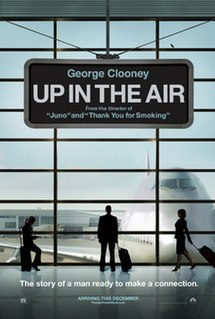
Up in the Air

Rating: ****

The thing about Up in the Air is that you shouldn’t like its main character: professional pink slip distributor Ryan Bingham. You shouldn’t find him funny, you shouldn’t find him interesting and you certainly shouldn’t be rooting for him. Ryan is a symptom of a spineless corporate system that cares more about making sure fired employees don’t make a fuss then they do about the fact their loyal workers are losing their jobs. There’s an interesting comparison between Ryan Bingham and the protagonist of the first film by director Jason Reitman, Thank You for Smoking. Like cigarette company spin doctor Nick Naylor, Ryan knows what he is, has made peace with it, and perhaps even revels in it.

Reitman’s third film is another bittersweet comedy. This one is about someone that leads what many would consider a sad, sad life of constant air travel and living out of a single suit case. So naturally, Ryan Bingham (played by George Clooney) thinks he’s got it made in the shade. He spends, in total, less than three months a year on the ground at the home office of his company in Omaha Nebraska, and the rest of the time he flies from city to city professionally firing people for corporate execs too spineless to do it themselves. But Ryan finds himself forced to think more about his life on the ground for two reasons. First, his company is considering the implementation of teleconference firings as opposed to sending someone in person, thus ending Ryan’s 250 days a year of travel. The second is Ryan’s growing attraction to Alex (Vera Farmiga), a fellow corporate jet-setter whom he passes like a ship in the night occasionally.

Typically in a movie like this, it would dawn on Ryan that his baggage-less lifestyle would be hollow and empty. His philosophy, which he shares at an occasional self-help seminar, is to picture all the things that tie you down – friends, family, a house, and possessions – and stuff them all into a backpack and set that thing on fire. As the story unfolds, one might think that Ryan would come to realize that even carrying around a small backpacked filled with a few life attachments would be okay. But in screenwriting parlance though that would be playing it safe and while Ryan doesn’t get a complete transformation, he does begin to re-evaluate a couple of things. It’s to Clooney’s credit as a talented and charismatic actor that Ryan doesn’t come off as a cold-hearted jerk but rather an honest broker of his personal belief in living out of a single suitcase.

The other half of the equation is the subplot about the business of firing people. And though it’s far from a Wall Street like condemnation of corporate culture, one can easily appreciate the humour in how an entity as indifferent as Corporate America can take something as cold and distant as firing someone and add the internet to equation. This idea is cooked up by Natalie Keener (Anna Kendrick). Natalie, a newcomer to Ryan’s employer, though eager to please is actually green in the practical business of firing people for a living. But under Ryan’s tutelage she learns his backpack philosophy and that handing out pink slips isn’t as easy as reading the approved script you’re given during job training. If Clooney is the brash and direct centre of the film, then Kendrick, who’s best known as Bella’s fast-talking friend Jessica in the Twilight movies, is the proverbial straight woman, holding her own against Clooney and creating her own unique character voice as well.

Up in the Air is an uncomfortable twist on the times with many people who have been fired or laid off in real life playing the unwitting victims of Ryan’s fire-for-hire sharpshooter. There’s a resonance in here that’s hard to shake, and in a way is a black comedy about the suffering of people living on the economic bubble and the clearly masochistic nature of Ryan’s vocation. Like Wall Street’s Gordon Gekko, Ryan Bingham just seems to be, and fortunately Reitman spares us some kind of reckoning or recompense for Ryan and his lifestyle choice. Does he get a wake-up call? Absolutely, but the question is: will it stick? After the credits roll, does he try to make a change, or like so many people stuck in a rut will he find it just easier to stop squirming? Up in the Air is an often humourous ode to being stuck in your ways, and not really knowing how or why or if you might get yourself out of it.

Wednesday, 2 December 2009

An Education

Rating: ***1/2

There’s something sketchy about the new film An Education. It’s certainly not the acting, which led by a cast of British thespians including Alfred Molina, Olivia Williams, and Emma Thompson, is impeccable. Everything, from the cinematography, the 60s looking production design and the art direction, are all top-notch. The plot follows a smart and talented young woman with a promising future that starts to date an older man who seduces her with… Oh. There we go. But it’s okay because the older man is really quite charming and handsome and played by Peter Sarsgaard, right? And no Virginia, this is not a post-modern spin on Lolita.

The girl is 16-year-old Jenny(Carey Mulligan) who studies hard in school, plays the cello, and dreams of journeying to Paris one day only to be interrupted in her daydream by the nerdy boy that crushes on her. A chance meeting one day with Mr David Goldman (Sarsgaard) opens up a new world of possibilities for Jenny, ones that have nothing to do with her prudish and overbearing father (Molina), and her stuffy teachers (Williams, Thompson). The debonair David shows Jenny a world of hot jazz, cool beat poetry and the laissez-faire lifestyle of professional rip-off artists. As Jenny gets more deeply involved with David, her schooling becomes less and less important as she’d rather be tripping the light fantastic with her older beau.

But David Golman carries a secret, and it’s a secret so obvious that the only way that you won’t be able to see it coming is if you’re an infatuated teenage girl living in 1960s Britain. But sarcasm aside, An Education is a rather astute satire with decent chuckles and a couple of moments both heartbreaking and heart-warming. The difficulty for me in watching this movie was trying to comprehend the message. Was there a message? Teenagers can be silly? Sure, you may hate your responsibilities, all the hard work, testing and such, but those successes are far more substantive than following a stranger with candy. Really, director Lone Scherfig, tell me another one.

Granted there’s not a lot of depth here, but maybe I’m looking for things that aren’t supposed to be there in the first place. One can’t fault the fact that An Education is rather entertaining. A diverting piece of 60s glam cinema with an engaging cast anchored ably by a young star with a lot of talent and charisma. Alfred Molina is appropriately stuffy and befuddled as the dad, but he also gets to show some dimension and some vulnerability too as he realizes he’s played no small part in his daughter’s future trashing machinations. Molina’s probably my favourite actor in this film, but it’s a tight horse race.

But some of the credit for An Education’s appeal goes to young Carey Mulligan, who manages to convey the spiralling depths of naivety and the post screw-up weariness to be convincing as Jenny from beginning to end. This film is hers and its no small feat for a young actress to play convincing on all sides. I’m still sure about the creepy overtones, but maybe that’s the difference between eras and the bias there in. Watching An Education I could help but think of Chris Hansen and ask, “Haven’t you seen To Catch A Predator?” To which Jenny would probably say “I beg your pardon.” Where’s Hansen when you need him?

Tuesday, 1 December 2009

Coco avant Chanel

Rating: **

I can’t say I’m really a fashion connoisseur. In fact, I can’t even spell connoisseur, I just had spell check do it for me. So what’s the appeal in seeing a movie called Coco avant Chanel? A fetish for reading subtitles? Possibly, but more pertinently is that fact that regardless the capacity of your frame of reference in regards to fashion, Chanel didn’t just design clothes, she changed the culture. Named one of Time magazine’s most influential people of the 20th century, Chanel helped usher in a new day in women’s fashion. It was a day where women were free of corsets and bloomers and able to be elegant in simpler, more masculine-inspired fashions. Which is probably why it’s a good thing that she gave up on the notion of seeking fame through a singing career.

The film opens with the young Coco, whose birth name was really Gabrielle, working by day as a seamstress in a tailor’s shop and singing at night on stage at a local club. Working side-by-side with her sister Adrienne (Marie Gillain), the Chanel sisters have big ambitions about singing to bigger audiences in fancier venues, and if all else fails, they can take up acting in motion pictures. After her sister marries an aristocrat, Coco becomes mistress to Baron Balsan (Benoît Poelvoorde). But wanting to be more than some rich guy’s silent girlfriend, Coco begins designing hats, which slowly become the rage with the French upper crust. Of course, there are romantic complications. Enter Arthur 'Boy' Capel, a British playboy and polo player that would go on to be Chanel’s first financier, and the man that broke her heart.

I have to say that this movie left me torn. On the one hand, the film delivers what it promises by meticulously following Chanel’s life before she was the trend setting fashion designer. On the other hand though, one couldn’t help but feel a disconnect between the two parts of Chanel, the struggling singer/actress/mistress/aspiring designer and the legend she would end up becoming. What exactly drove Chanel to become the biggest female designer of her time, if not all time, and how did the experiences related in the movie inform her mould-breaking fashion ideas? These are questions that never got answered in my opinion. True, this is Coco BEFORE Chanel, but she was still Chanel. The way the ending leaves you, a proud and accomplished Coco having achieved enormous success, made the rest of the film feel like an extended Family Guy cut away gag. This is even more boring than when Coco Chanel bummed around her boyfriend’s house for years, they might remark.

Not helping things was Audrey Tatou’s wooden, almost bored performance in the title role. I mean, it’s obvious that being moody and pissy is part of the character’s inner struggle as she tries to become the woman of class and success that she always wanted to be rather than being stuck in the seen and not heard role of the mistress. But there’s only so many times Tatou can grind her teeth or slam a door and still make it real. Overall, I’d have to characterize the performances, on the whole, as clinical and without any life to them. Not a single actor stood out and made me say, now that’s a good performance. Rather everybody just seemed to be going through the motions.

Between the rather meandering story and the wooden acting, one leaves the theatre with a sense of why did I just pay good money to see that. Certainly the film was well made from a technical standpoint, and there were some interesting story possibilities to be true. Instead, it just seemed as if screenwriter and director Anne Fontaine had decided to expand upon the bits that were the dullest of Chanel’s life without going into any real detail about her process, methodology or creativity as an emerging fashion designer. Plus, Chanel’s life got so much more interesting after she became famous, with probably enough material in there for two movies. The Chanel Trilogy? Perhaps.

Wednesday, 25 November 2009

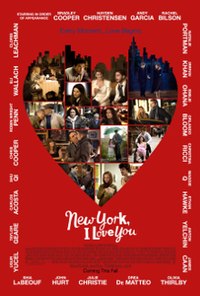
New York, I Love You

Rating: **1/2

A series of short film anthologies focuses on finding, keeping, and losing love in the world’s most cosmopolitan cities isn’t the worst idea for a franchise producers have ever come up with. Recruiting various well known directors to film each segment isn’t a terrible notion either. In the compilation Paris, je t’aime, which was released in 2006, the formula worked beautifully. The finished collection features varying styles and stories which highlight not just different characters, but different areas of the city of Paris as well. In its sequel, if that’s the right word, New York City gets its close-up, but some of the magic however didn’t rub off from New York, I Love You’s Parisian predecessor.

I first saw New York, I Love You last year at the Toronto International Film Festival. It was a preview print, a work in progress, and we in the press were warned that spilling any details would come with non-specific consequences. Well due to either my own short term memory, or the fact that very few alterations were made, I could detect no discernable difference between the two versions of NYILY. In reality though, there were two segments removed from the finished film, including Scarlett Johansson’s contribution, thus proving once and for all that Natalie Portman has a brighter future than Scarlett Johansson as a filmmaker. But despite the loss of a big-name like Johansson, the film is still pretty stocked. Allen Hughes (Menace II Society), Mira Nair (Monsoon Wedding), Brett Ratner (the Rush Hour movies) and Shekhar Kapur (Elizabeth) are amongst the contributors.

The ensemble of directors is nothing to sneeze at, but the thing of it is that the amount of talent gathered for New York, I Love You seems oddly imbalanced as compared to its Paris brother. Paris, je t’aime featured work by The Coen Brothers, Wes Craven, Alfonso Cuarón, Alexander Payne and Gus Van Sant. It also seemed that those directors were granted more creative freedom than the filmmakers in New York. In New York, I Love You, everything seems to come across as some form of Woody Allen. Paris had vampires, magical cowboys, Steve Buscemi, and the ghost of Oscar Wilde. New York, on the other hand has insipid urbanites re-enacting the same conversation on every street corner in lower Manhattan.

New York, I Love You is not without its fair share of charm. Kapur’s segment, which was originally supposed to be directed by Anthony Minghella until his untimely death, broke up a lot of the relationship drama nicely. The story was about a singer played by Julie Christie who’s staying at her favourite Manhattan hotel one last time. Look for the touching moment she shares with the hunchbacked bellboy, played by Shia LaBeouf. This short film had atmosphere, poetry and interesting performances, despite the difficulty in buying “The Beef” as an Eastern European hunchback. Joshua Marston also delivered with his short about a married couple on their 63rd wedding anniversary. Eli Wallach and Cloris Leachman are equal parts hilarious and adorable as the couple, bickering in perfect time, as they very slowly make their way to the boardwalk where the first met over six decades earlier.

Strangely, despite the fact that the shorts of New York, I Love You don’t measure up to the same level as Paris, je t’aime, it feels like everyone involved in this film were simply trying too hard. There’s more interconnectivity between the various vignettes, and although I appreciate that, I wonder if it is tied together too strictly? Plus, it leaves no room for individual flare or signature style, because if each segment is tied together, then it also requires some level of continuity. Still, I’d be lying if I said that New York, I Love You wasn’t without its charm. Hopefully, when this series moves on to the next city, like the proposed Jerusalem, I Love You, Rio, Eu Te Amo, and Shanghai, I Love You they put the focus on the artistic expression to create the aesthetic rather than let the aesthetic dictate the art.