Showing posts with label matt damon. Show all posts

Friday, 4 March 2011

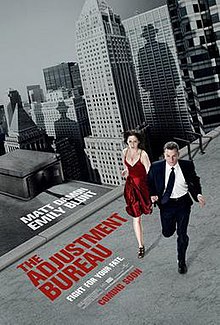
The Adjustment Bureau

Rating: ****

Philip K. Dick has provided the basis for some of the most exciting and imaginative science fiction films in the history of cinema: Blade Runner, Total Recall, and The Minority Report. Of course, the work of Dick also inspired Next, Paycheck and Impostor, but the author can hardly be blamed for the cinematic missteps made more than 20 years after he died.

But Dick is done right by The Adjustment Bureau, a philosophical treatise about fate versus chance, disguised as a romantic drama with a conspiratorial bent. It’s also a new entry in the subgenre of Matt Damon running movies. Damon plays a U.S. congressman with high political ambitions that realizes there’s more to the world he knows than he ever knew, and the aftermath of that seems to be a lot of running. He runs enough for all 435 members of the U.S. House of Representatives. But then again, if you were chasing the girl of your dreams and she looked like Emily Blunt, you’d probably do a lot of running too.

Damon’s Congressman, David Norris, has a bright political future, and is set to be the youngest member of the U.S. Senate ever, only to be T-boned in the eleventh hour by a scandal involving a gag with his old fraternity brothers. On Election Night, on the brink of his first real loss, David rehearses his concession speech alone in the men’s room, when meets an utterly enchanting woman named Elise (played by Blunt). Elise is hiding from security after having crashed a wedding, and through this chance meeting, David is able to give an impromptu speech that turns his loss around and sets him up for a victory next time.

What David doesn’t know is that despite the love-at-first-site connection between him and Elise, he wasn’t supposed to see her ever again. This is where The Adjustment Bureau comes in. A group of near-omniscient figures that nudge people to where they need to be in order to meet their destiny, Bureau Case Agent Harry Mitchell (Anthony Mackie) is supposed to wait for David to pass by a bus bench one morning and have him “accidentally” spill his coffee. But Harry falls asleep and misses David, and instead David makes his bus and just happens to run into Elise again. Is it fate? Is it written in the stars? Or is The Bureau just getting really sloppy?

David finds out pretty early on about the Bureau and its agents. Richardson (John Slattery) lays it out for him when David arrives at the office early and catches a Bureau adjustment in process. Basically, Richardson tells David, you have bigger fish to fry than romancing some random girl you’re smitten with. And sorry dude, we really meant that to be a one time thing and if you don’t do what we say, we erase your memory like the Men in Black.

I did enjoy the almost laid back quality of the Bureau. They’re not some perfect force of universal bureaucrats, but capable of fallibility and making mistakes. Apparently, David’s not the first guy to find out about the adjusting business, and he probably won’t be the last. Reluctantly, he accepts that he can’t see Elise again. Of course, Richardson burning the slip of paper with her phone number on it made that a bit easier.

The film’s pace moves rather briskly. We flash-forward a few years later to the brink of another senate run by David, and through no fault of his own, he one day looks out the bus window and sees none other than Elise walking down the street. Loophole, boys. He didn’t seek her out, this is completely random and David knows it’s random because the Bureau guys told him seeing Elise was a no-no. Where does fate end and chance begin? The Bureau and Richardson still insist that a life with Elise is not in David’s plan, but why does he keep running into her?

It’s a rare quality that the philosophical divide can create genuine suspense and an edge-of-your-seat quality, but screenwriter and director George Nolfi manages to do just that. You both root for David and Elise to find love with each other, but you fear those consequences that the Bureau agents speak of. There’s a “Come on, just let those crazy kids be” cheering appeal, but you’ve got to wonder why they’d chase a guy all over Manhattan to keep him from the ballet dancer he’s crushing on. But to the viewer though, love wins you over in the end.

That decision is helped with the wicked chemistry between Damon and Blunt, which makes you believe in love at first sight. Blunt comes across as free-spirited but not too flighty, while Damon manages to bring out convincingly the romantic inside the buttoned down politician. I give kudos to Slattery and Mackie for giving their characters some human grace rather than playing things too cold and distant, I just wish someone could have told Terence Stamp as Adjuster boss Thompson that he didn’t have to play it like General Zod.

But the focus in The Adjustment Bureau isn’t on grandiose sci-fi set pieces or scenery chewing overacting, it’s on simple storytelling and character work. It’s charming and witty in its way, and you may scoff at the silliness of the Bureau agents getting their powers through their awesome fedoras, but in keep with the tone of the movie, it makes perfect sense and not contrived at all. It’s a winning movie that does Philip Dick proud, and handily proves that you don’t need a lot of flash or cash to make a compelling sci-fi movie. I don’t know if it’s your destiny to see it, but it should be.

Saturday, 16 October 2010

Hereafter

Rating: ***1/2

With few exceptions, there’s always something to recommend in a Clint Eastwood film. As a filmmaker, he’s very chill, very cool. He’s a director that can let the story happen without forcing anything and without trying to drum up any kind of false emotion of dramatic tension. In a way, his movies just kind of happen, and honestly, if he did it any other way would the third act of Million Dollar Baby have had the same punch that it did?

So naturally, going into Hereafter, a meditation on how death and near-death affects three very different people, one knows that they’re not going to see The Sixth Sense as reinterpreted by the man that played The Man With No Name. In many ways, Hereafter isn’t a movie about death and the afterlife, but about people dealing with grief and trying to make sense of a knowledge that they probably shouldn’t have. It’s intriguing, it’s really well told, but it seemed sometimes to lack an extra dramatic bump to push the story further.

The style of the film, according to Eastwood, is very much in keeping of French films in that it tells separate stories that come together in one big scene at the end. It’s an interesting approach, but one that makes the story hard to sit through at time. As the action unfolds in three separate and distinct lines that switch back-and-forth, you know that the story’s building up to a strange, sudden and coincidental convergence of the three at the very end. Knowing this, some of the drama is zapped from the movie, and in return you have to trust that Eastwood’s deliberate pace will get you there eventually.

In the meantime we meet George (Matt Damon), a blue-collar worker in San Francisco who desires nothing more than to forget about the fact that he has a psychic ability that can help people communicate with loved ones in the afterlife. Of course, this isn’t made easy thanks to George’s brother Billy (Jay Mohr) who, like Peter Venkman, sees dollar signs in paranormal activity. In London, young Marcus tries to cope after his twin brother Jason (both played by real-life twins George and Frankie McLaren) is killed in a car accident. Then there’s French TV reporter Marie LeLay (Cécile De France), who nearly dies in a tsunami while on vacation, and the more she throws herself into work, the more haunted she is by her near death experience.

Eastwood glides smoothly between the three different stories, but each comes with its own strengths and weaknesses. Much of Marie’s story is interesting as she begins a political memoir only to start fully exploring her own trauma after nearly drowning. Throwing out her planned book about François Mitterrand, she starts to investigate near death experiences and those researching them only to find that these people are met with vitriol for their efforts. This was interesting, but then the screenplay kind of saddles Marie with a lot of typical career woman drama: an impatient boyfriend, worries about job securities and ambitious rivals, and so on.

Damon does good work as George by making the character more exhausted by his ability rather than disgruntled about it. He doesn’t hate his gift, he’s just tired of the way it separates him from people, the way it lets him, both accidentally and purposefully, gleam knowledge that he’d rather not have. There’s a great scene where George’s cooking class partner Melanie (played by Bryce Dallas Howard) kind of goads George into a reading only to reveal something she never expected him to hit upon, a deeply personal and invasive secret. In ruins any chance at romance between the two and further highlights George’s aspersion of his abilities despite the constant push by his brother.

For Marcus’ story, Eastwood manages to avoid a lot cutesy or melodramatic moments, although some of the stuff the young boy encounters kind of strained the tone of realism I think Eastwood was aspiring to. Still, the McLaren Boys were very good and very natural in a Dickensian sort of way. One of the final scenes, which is a chance meeting between Marcus and George, could have come across much more hokey if it had seemed like McLaren was trying to really act it big. The fortuitous series of events that brought the two characters together would have been bad enough, if it weren’t for the emotional and tonal restraint shown by the actors and the filmmaker.

So no, Hereafter isn’t a ghost story or a thriller, or chalk full of surprise twists or marshmallow men and the like. But what it all adds up to is something I’m not sure of. I think the stories are compelling, but there’s really no underline message, or maybe there are too many non-specific messages that can be derived. As usual, Eastwood shows unparalleled craftsmanship, and it’s nice to see him expand his horizons. So far as ghost stories go though, Hereafter makes an excellent case for something weird going on we know not what. No spooks, no squeals, just the simple possibility that there’s something more to this life. And that’s something we can all believe in.

Friday, 12 March 2010

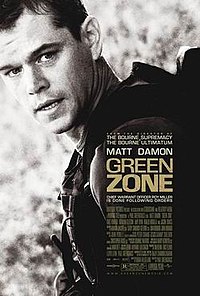
Green Zone

Rating: ****

I’m a big admirer of the book Imperial Life in the Emerald City by Rajiv Chandrasekaran. For those of us who were against the Iraq War before it was cool, it’s a soul-crushing, hair-pulling, frustrating tale of corporate greed, partisan back-slapping and one particularly disturbing episode where the one time probable Secretary of Homeland Security treated Baghdad like his own personal Westworld. The book was told in vignettes, but it painted an overall picture of how the post-war effort in Iraq went so horribly wrong. The Mess O’Potamia, if you will, wasn’t a result of one big screw-up, but rather the proverbial sting of a thousand bees.

When the book was optioned by Hollywood, I had no idea how they would turn Chandrasekaran’s book into a narrative film. Recruiting director Paul Greengrass was a good start though because his Bloody Sunday and United 93 were both detailed, visceral, near-documentary accurate dramatizations of real events. However, in the case of Green Zone, the trailers came across as kind of “Bourne Identity in Baghdad,” as in all action and no subtext. This was a rather frightening notion for me, again, because Chandrasekaran’s literary work was so powerful to begin with.

But for a minute there, I forgot I was working with professional: Greengrass, actor Matt Damon, and screenwriter Brian Helgeland. The many vantages of the book are boiled down into a single player, Warrant Officer Miller played by Damon, a U.S. Army soldier charged with finding weapons of mass destruction. As we join the action, just a couple of months after the fall of Saddam Hussein, Miller is already frustrated with the fruitless search for WMDs. He begins questioning the intelligence openly and rightly figures that if the threat was so imminent and the intel overwhelming, then his job should be going a heck of a lot easier.

Damon is really good as a patriotic soldier driven to performing duty, but is gradually coming to terms that his country may not be as altruistic in its intensions as he is. The plot unfurls convincingly without seemingly like a digestible, Hollywood version of the complexities presented in Chandrasekaran’s book. Greg Kinnear gives a thoroughly sleezy performance as typical Bush-era lackey Clark Poundstone and Brendan Gleeson does surly right as Martin Brown, a C.I.A. operative that’s been in the Middle East long enough to know political B.S. when he hears it. These three characters really perfectly encapsulate the themes and points of view from the book, and as a bonus, they feel neither plastic nor preachy.

Aside from Amy Ryan’s reporter, a kind of apologetic newspaper woman that was given access in exchange for hyping the war, the film feels real. My problem with the reporter character is that she flies in the face of what we saw, and what we still see, in American mainstream news. Those people are not sorry, and never have they seemed anything of the sort. Their current criticisms of the war seem hollow because it was non-existent before the war started and in hindsight, there was plenty to be suspicious about. Ryan’s character also doesn’t fit because she seems more pastiche than person. A plot device to give Kinnear’s Pouondstone a villain on his field.

Mostly though, Green Zone was a profoundly satisfying thriller of both the war and political variety. Greengrass blends both well by giving the thinking man the complexities of war policy and its administration to mull over, while the obligatory action scenes provide nice balance and a few explosions. But what I really appreciate is the details, the little stories and asides worked in the background to make this film a true adaptation of Imperial Life in the Emerald City. This may also be the first film about the Iraq War to transcend the partisanship, and if there’s a reason for that it’s because of the old axiom: truth is stranger than fiction.