Thursday, 1 July 2010

Love Ranch

Rating: ***

The new film Love Ranch does something unusual for a Hollywood film, it makes age look sexy. True, this is a film about the first legal brothel in Nevada, but the honorific title of sex bomb doesn’t belong to one of the nubile young actresses that play the ladies of the house, but rather the Academy Award-winning Dame that plays their madam. It should come as no surprise that Helen Mirren owns sex appeal at 65 years of age, but it’s just nice to a movie let it be. Of course, we can probably credit that to Mirren’s husband Taylor Hackford, who happens to also be the film’s director.

But leaving aside the aesthetics for a moment, Love Ranch is an interesting story. The titular establishment, which opened for the first time in the 70s, was the subject of much controversy, even in the laissez-faire state of Nevada. The Ranch was the brainchild of Charlie Bontempo, but it was really his put upon wife Grace Bontempo that kept up the business and made it lucrative. One might even say it was a model. Charlie had his ambitions to turn Reno into the new Vegas with himself as the Bugsy Siegel-like mastermind, but as the story goes, behind every great man…

Mirren stars as Grace and she’s teamed with fellow Oscar-winner Joe Pesci as Charlie; an odder couple on film you can hardly find. Yet somehow, for some strange reason, the combination of classically Brit Mirren and obnoxious Jersey boy Pesci works, and works beautifully. You buy them as a couple because of their dynamism, because there’s something that the one needs from the other and vice versa. Pesci is restraint in his performance playing a kind of giddy con man that hides his more thuggish inclinations that only come out when things don’t go his way.

The movie follows Grace and Charlie has the latter copes with his latest brush at immortality: managing a washed up heavy-weight fighter named Armando Bruza (Sergio Peris-Mencheta). Of course because of Charlie’s questionable past in regards to law enforcement, on paper, the management of Bruza falls to Grace. But while Grace knows nothing about managing a boxer, she does know something about men, and what she gets out of Bruza – attentiveness, passion and a little danger – is a far cry from what she gets from Charlie – philandering, neglect and violent leanings.

Grace begins a secret affair with Bruza. Secret because if Charlie ever found out then Bruza’s value would decrease both as a person and as a boxer. The relationship between Grace and Bruza is utterly believable in the moment as Mirren and Peris-Mencheta have palpable chemistry. Still, there’s so much more punch to the stuff going on between Mirren and Pesci that when the movie doesn’t focus on their tumultuous marriage/business partnership the mind wanders. You want to learn more about their background, how they met, and how they engaged in this let’s say “unique” business venture together. The film has an ample and talented supporting cast including Bryan Cranston, Gina Gershon, M.C. Gainey, and Bai Ling, but who’s kidding who? The only stars of this movie are Pesci and Mirren.

The screenplay itself, as penned by American Gangster writer Mark Jacobson, seems a bit too all over the place. It makes no moral judgments against the Bontempos but it doesn’t do much to stick up for them either. The film required the assured tone of P.T. Anderson’s Boogie Nights, which chronicled the lives of people in the porn industry in a sympathetic way while showing it for what it is, warts and all. Combined with Mirren’s melodramatic narration that seems more romance novel than anything, and the opportunity to make something unique and powerful about sex workers and their industry seems wasted. Especially in a historical context.

Structurally, Love Ranch struggles to get beyond the typical biography pattern of a good-spirited character, bogged down with adversity but given the strength to overcome and stand on their own as a smart, successful and independent person. But this type of storytelling always strikes me as more TV-movie-of-the-week than something made of people with Oscar-calibre skill. Still, that skill comes through thanks to Mirren and Pesci’s performances. Love Ranch was interesting, though not all together involving. Not nearly as lurid or as lucid as it could be, Love Ranch is fittingly in the middle of nowhere thematically.

Wednesday, 30 June 2010

The Twilight Saga: Eclipse

Rating: ***1/2

Who would have guessed that one of the most divisive films of our age would be a tawdry, but chaste, tale of a love triangle between a high school aged human, vampire and werewolf? The sheer vitriol against these movies, and the books from whence they came, boggles the mind considering the content. Is Twilight cheesy? Yes. A bit old fashioned? Sure. Do its young actors sometimes confuse making a frowny face with actual emoting? Most definitely yes.

But for so-called Twi-hards, the haters don’t matter and even they realize that the movie they’re so invested in isn’t exactly melodrama par excellence like, let’s say, Gone with the Wind. There were more than a few chuckles at some of the cheesier bits of New Moon at the press screening, which had a healthy mix of hardcore fans in there with the press. So how do you tell that Eclipse is a marked improvement over its predecessors? Fewer laughs.

So far as Twilight movies go, Eclipse is sharper, tighter and just all around better than the first two films in the franchise, but this could be for a number of reasons. First and foremost is the source material. Stephanie Meyer’s third novel set in the Twilight universe saw grand improvements in terms of character development and building rising action.

Then there’s the film’s director, David Slade. The filmmaker’s last tango with vampires, the bloody good comic adaptation 30 Days of Night, couldn’t have been further from the “Parents Don’t Just Understand” vampires’ world of Twilight. You know there’s a change a-coming when the opening scene in Eclipse takes place on a rain soaked street in Seattle where a boy is tormented, mawed and left to die in agony on a pier. Anyone walking in unfamiliar with the novel may think for a minute that some one got chocolate in their peanut butter.

But soon things settle down to what you’d expect from Twilight. Bella (Kristen Stewart), being a modern young woman struggles with the notion of marrying her vampire beau Edward (Robert Pattinson) as condition of him turning her into a vampire. At the same time she’s struggling to keep her friendship with werewolf pal Jacob (Taylor Lautner), which isn’t easy for the boy considering that his crush’s boyfriend is one of his tribe’s sworn enemies.

But much of the hate is put aside when Bella comes under threat from an army of new born vampires under the sway of the vengeful Victoria (Bryce Dallas Howard effectively, but not convincingly replacing Rachelle Lefevre). Twi-haters may actually like this aspect of the film, seeing what they would consider more “real” vampires in this VINO (Vampire In Name Only) movie. The story culminates in what’s actually a pretty decently executed fight scene between the new born vamps and the werewolves/good vampires super-team.

Also stronger is some of the acting and dialogue. Edward’s self-referential pondering as to whether or not Jacob owned a shirt got a few (in context) laughs, but not as many as this uncomfortable version of “The Talk” between Bella and her normally stoic dad Charlie (Billy Burke). The three main actors – Stewart, Pattinson and Lautner – continue to show improvement and comfort in their parts, but there may still be an irritant factor for those who show up to the film under less voluntary circumstances. Instead, focus on the impish charm of Ashley Greene’s Alice and the cool dignity of Jackson Rathbone’s Jasper, who I believe gets more lines in Eclipse than in the first two movies combined.

Still, no matter what a critic has to say, members of Team Edward and Team Jacob will swoon for their respective namesakes, while Team Death-to-Bella will just come out to throw salt in people’s good time. Perhaps endurance when it comes to dealing with all things Twilight depends on one’s own ability to put themselves in the mind of a 13-year-old girl. If nothing else, Eclipse is entertaining whether you genuinely enjoy it, or genuinely enjoy ragging on it.

But for those interested in the movie itself, Eclipse is answer and antidote to typical male-driven summer blockbusters. Perhaps that’s the ultimate conundrum of Twilight. Without robots, wizards or superheroes it’s captured the imagination (and money) of so many. Much like the story’s vampire protagonist, who point blank refuses to have sex with his girlfriend until they’re married, there’s something old-fashioned in Twilight, and that seems to be okay to the female demographic that made this franchise a billion dollars.

So to all the haters out there, do yourself a favour and save that hate for things that matter, like British Petroleum or Soccer World Cup. And to Twi-hards everywhere, enjoy what is the best Twilight yet with aplomb. As if you haven’t already.

Friday, 18 June 2010

Jonah Hex

Rating: *

Pitiful. I thought we lived in an age when studios took comic book-based movies seriously. Jonah Hex rewinds back to an era of Batman & Robin, Steel and Spawn. A clusterf**k of film that takes its comic-based property and pays superficial lip service to it, while seemingly showing a complete disregard for the fact that the script and direction were flushing the whole thing down the toilet. There hasn’t been a screw-up this bad since The League of Extraordinary Gentlemen movie, and that film’s sins were compounded by the fact that it was Alan Moore’s legacy that it was pissing on. Even Halle Berry’s Catwoman has grace and subtlety by comparison.

But “grace and subtlety” aren’t part of the vocabulary of Jonah Hex. Neither is “cohesion”, “structure”. “humanity”, or “civility.” Granted this is a tale of the rough life in the Old West as seen through the eyes of notorious bounty hunter and ex-Confederate soldier Jonah Hex (Josh Brolin), but the least they could do was edit the film in a way that made sense. At a scant 75 minutes, the makers of Hex seem content to say that the less you know the better. From what I saw, I can’t disagree with them.

From what I can understand, Hex was a Confederate soldier that had a disagreement with a friend and fellow soldier named Turnbull about certain war time actions never really exaggerated upon. Turnbull dies, but after the war his father comes calling on Hex for revenge. Extreme revenge. The type of revenge that leaves Hex the father of murdered children and the husband of a murdered wife. Left horribly scared by Turnbull and abandoned to die on his own, Hex lives thanks to some local natives and now has a supernatural gift to raise the dead and converse with them.

The whole thing about Hex being with the Sixth Sense is not in the comic book, which is more Searchers than Steampunk, another rogue element that has no part in Hex but is there just the same. And because the film leaves no cliché unturned, we get Megan Fox as a hooker with a heart of gold. That would fine, but sadly Fox gets no where near enough screen time to make oogling her worth the effort to sit through this mess. And what John Malkovich is doing here I’ll never know, because this is a man who will turn down playing the Green Goblin in Spider-Man, but will willing sign-up for this crud.

Only Brolin seems to realize what movie he’s in, playing the grizzled Hex with a John Wayne swagger and Clint Eastwood growl. Fortunately, Brolin also gets some room to build a semi-realized character, which could be a sign that the director was trying to do something interesting with the material before deciding that people were dumb and hate nuance. The screen is utterly filled with waste, whether its good actors like Will Arnett or Aiden Quinn being used for what’s basically Basil Expositions to the fact that every action scene seems to end with Hex blowing up a building.

I’m not sure where Jonah Hex went off the rails (so to speak), but I’d wager that it began with Mark Neveldine and Brian Taylor. The authors of such Pulitzer worthy material like Crank, Crank 2 and Gamer penned the script, which was then handed off to Jimmy Hayward, whose past experience with directing is telling pixels which way move. His animating background (including work on several early Pixar hits) may serve him well with scene composition, but Hex could be taken as proof that no one from the Pixar School is an island onto themselves. Regardless of the filmmaking pedigree, I would thought it hard to believe that anyone could screw up a western comic this badly, but seeing truly is believing.

Toy Story 3

Rating: *****

My first reaction to hearing that there was going to be a TOY STORY 3 was “Do we really need a TOY STORY 3?” Seriously, what was not said in those first two movies that needed to be said in a third, and over 15 years after the fact? It turns out, quite a bit. Not only is TOY STORY 3 necessary, it’s beyond must-see. It’s must-not-be-denied. Not only is it a wonderful animated family movie, but it’s a powerful and emotional piece of filmmaking to boot. Not only has Pixar once again upped their game with this movie, they’ve changed it.

Picking up several years after the second TOY STORY, days have seemed brighter for Andy’s Toys. With Andy about to head off to college, his once grand toy collection has been widdled down to a precious few, and they all know their days in Andy’s Room are numbered; even the Army Men decide to take their chances on the outside. Woody, Buzz, Jessie, Bullseye, Rex, Slink, Hamm and Mr & Mrs Potatohead confront an uncertain future; Woody will go with Andy to college, the sole memento of childhood’s end, while the others go to a garage sale, a daycare, or most dreaded of all, the dump.

Such thoughts of mortality, for all intents and purposes, could really drag down the narrative, especially for escapist family film fun. But screenwriter Michael Arndt and director Lee Unkrich manage to strike this strange balance of hopefulness in the face of inevitable doom. But hope there is in the form of Sunnyside Daycare. Lots-A-Hugs Bear and his associate Ken (as in Barbie and Ken) show the gang from Andy’s Room around the retirement home like opulence of Sunnyvale, and the toys are impressed until they realize Sunnyside’s dark secret: There’s a racket in place, run by Lotsa and Ken. New toys go in the toddler room, and to continue with the retirement home analogy, this is like one of those crooked homes on 60 MINUTES.

It’s up to Woody to find a way to free the other toys from their indentured servitude, and most of the film rollicks in a GREAT ESCAPE meets THE NUTCRACKER vibe, with shades of Tim Burton-esque eeriness thrown in for good measure (yes Big Baby, I’m talking about you). It’s nice to know that despite the mature themes TOY STORY still has its sense of humour. But really, there’s nothing care free about this movie, there’s a lingering feeling of sadness and uncertainty that underwrites every beat. Pixar’s last two films, WALL-E and UP, are about age, and loneliness, and abandonment, and TOY STORY 3 covers a lot of the same ground.

The climax of the film tests the endurance of even the most optimistic of viewers, the ones that believe in happy endings, no matter what. While trying to avoid details, let’s just say there was a minute there when I thought that all was lost for our friends the Toys. For the last few years, Pixar has been painting themselves as the studio that will service story and character before spoon-feeding the audience feel good sugar and spice. The ending, once you get to it, is a beautifully bittersweet finale for the characters. It rounds off the story nicely, and leaves you with equal parts melancholy and hopefulness. The highest duty for a toy is to be there for a kid that wants to play with them, and in the end, the torch is passed wonderfully.

So ambiguity about TOY STORY 3 gives way to a notion of we really needed this movie. Once again, the artists of Pixar impress with a combination of finely nuanced storytelling that evokes a rainbow of emotions while using the animation technology to push the boundaries. The opening scene in which we see one of the Toys imagined adventures fully realized is brilliantly executed, and a lot of fun to watch. If ever a movie were capable of illustrating the equal importance of style and substance, it’s TOY STORY 3. It’s another surprising homerun from the Pixar hit makers, and at this point I’d even believe that their next film, a sequel to CARS will be as loaded with poignancy and emotion. At this point, anything’s possible.

Saturday, 12 June 2010

Agora

Rating: ***

The historical drama Agora opens with a star field, as the camera pans down to get an orbital view of the African continent from space. And for a minute there I thought I had put in the wrong DVD. But matters of planets in space are very much on the mind of the filmmakers as they tell this historical dramatization of the fall of the Library at Alexandria and the rise of Christianity. Yes, science and religion clash in their age old struggle, which in the time of Agora was still a youthful struggle.

Rachel Weisz plays Hypatia, a philosopher, scientist and teacher that lives in fifth century Alexandria. Against the back drop of the waning years of the Roman Empire and the increased sectarian violence between Christians, Jews and Pagans, Hypatia teaches the future leaders of Alexandria about the Earth and the heavens. Weisz is really quite perfectly cast in her role. With her authority and grace you can understand how this woman would hold such an important place in Alexandrian society in a time when being an independent, authoritative woman was the exception rather than the rule.

But it doesn’t take long to see why Agora was the subject of a little controversy when it was released in theatres earlier this year. A Spanish Catholic group called Observatorio Antidifamación Religiosa (or Religious Anti-Defamation Observatory, for you English-speakers) said that the film promotes “hatred of Christians and reinforcing false clichés about the Catholic Church,” and that’s actually pretty close to being true. The Christian mob is mostly raving and dogmatic, while the defenders of the Pagan faith are elite and decedent. You don’t need a degree in history to know how this is going to turn out.

Not to get overly political in a DVD review, but I did appreciate the loaded allegory. And it’s not one way either as it’s the Pagans responding with violence to Christian defacing of Pagan relics that leads to the Christian siege on the library and its eventual destruction. Still, looking at the performances by Sami Samir as the local Bishop Cyril and Ashraf Barhom as street preacher Ammonius it’s hard not to see the vicious streak of modern TV evangelicals like Pat Robertson and Jerry Falwell. If you hate those guys, you’ll love Agora, at least during the parts where Cyril and Ammonius are getting all fundamental.

Story-wise, there is a lot of political intrigue in terms of who Christianity overcame centuries of oppression and became the one’s doing the oppressing. The debate is magnified in Alexandria prefect Orestes (Oscar Isaac) who was one of the ones battling the Christians outside the Library but converted when he felt which way the wind was blowing. Through the years, he continues to depend on Hypatia for insight and counsel, even though she rejected his romantic overtures. Isaac wears Orestes struggle to find harmony well, as well as his character’s own struggle between idealism and pragmatism.

When the focus of the film is on the political and religious instability of Alexandria during this period, I found the film very engaging. But when we cut away from that to follow Hypatia’s dissection of heavenly bodies, or worse still, the struggles of her former slave Davus (Max Minghella) and his bizarrely confusing love/hate relationship with both his former mistress and his Christian faith, things get stalled. Minghella’s idea of angst seems to be to scrunch up his face as if both perplexed and irritated by every situation.

Although the various stoylines come out in the end with mixed results, there is something in Agora that made it compelling enough to see all the way through. Visually though, the film is amazing to behold. The sets and the additional visual effects work are wonderful, and the cinematography by Xavi Giménez almost makes you feel the scorching sunlight of the desert through your TV set. The photography was lush and vile and it made you feel like the crew had gone 1,500 years back in time to film the movie. Modern political allegories make Agora compelling, but the film was also very pretty to look at. Some better character development would have taken Agora to the next level, but the film, as it is, works well enough.

Friday, 11 June 2010

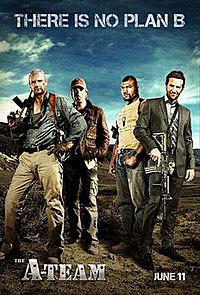
The A-Team

Rating: ***

Before seeing this film, I did not have the mind to revisit The A-Team television series created by Frank Lupo and Stephen J. Cannell that ran on NBC from 1983 to 1987. Sure, like any other child of the 80s I watched the show first run along with Dukes of Hazzard and Transformers, but I’ve felt no pressing need to re-familiarize myself with the material either, whether it was on my own or in the context of doing prep for the 2010 big screen version. Channel-surfing? Sure, I’d come across it occasionally, but I’d rarely watch beyond that awesome opening titles sequence. Family Guy references aside, The A-Team was something best left in the time capsule.

Flash-forward to our underwhelming blockbuster season that is the summer of 2010 thus far and what we have is a time when The A-Team, under the direction Joe Carnahan, gets to shine in all its glory once again. As far as action movies go, it’s as predicable as ever in terms of the underline formula. But within that formula works a filmmaker of skill and ability. There are some great chases, good humour and some dynamic team work courtesy of this A-Team for the new millennium.

Still our plot is pretty standard. We see how this Army Covert Ops Alpha Team – or A-Team – come together during a mission in Mexico that sees Face (Bradley Cooper) being rescued from the clutches of corrupt federals by erstwhile C.O. Col. “Hannibal” Smith (Liam Neeson) and wheel man Cpl. B.A. Baracus (Quinton “Rampage” Jackson) in that trademarked black GMC Vandura van. A quick helicopter getaway courtesy of Capt. “Howling Mad” Murdock (Sharlto Copley) completes the outfit, not to mention the pre-title sequence.

The rest of the film hinges on the A-Team’s attempt to clear their names for an operation in Baghdad where soldiers were killed and mercenaries got away with U.S. Treasury printing plates. Convicted of being co-conspirators in the theft, Hannibal and his men break out of prison to find the real thieves and the guys who set them up, which could be anyone from the C.I.A. to a group of Blackwater like soldiers of fortune to their own Army commanders. To complement the action, Jessica Biel is on hand as the pretty young thing playing Inspector Javert to this group of dysfunctional Valjeans.

Strictly in the context of judging a summer blockbuster by its unique character – meaning that this ain’t Oscar bait for anyone involved – A-Team is pretty darn close to being grade A it terms of fulfilling expectations. The action, which is pretty much wall-to-wall, is well executed with a monogram of flourish. Telling you that there’s a scene where the team uses the main gun of a tank to “pilot” said tank, while being suspended by one parachute, towards a lake to perform an emergency crash landing may sound ludicrous, but in the moment you just go with it. Restarting a helicopter in midair after performing barrel rolls and other air show routines in it? Sure, I’ll buy that. Jessica Biel as a straight-as-nails Army Captain? Yeah, I’ll buy that too.

But insane stunts are nothing new, the real question is can you make us care about the characters, especially since some people may level a kind of – ahem – iconic status on this movie’s TV origins. Well, all I can say is that Neeson channels the late, great George Pepard well. Having an actor of Neeson’s calibre in the middle of this thing, gives an air of respectability to the endeavour, as if the filmmakers were genuinely interested in reaching beyond the key demographic. And you can tell Neeson’s having fun too playing the alpha dog of the A-Team.

As for Jackson, one would have to pity the fool that tries to fill Mr. T’s shoes, which was why it was nice that he didn’t try. Aside from the mohawk, the name and the bad attitude, this B.A. is given, at least, some kind of depth beyond calling people foolish and looking menacing. In the mean time, Jackson gets to prove that there just might be life after mixed martial arts. Cooper and Copley also get a pass, if only for confirming their statuses as leading man hunk and quirky character actor respectively.

Not that this is a Royal Shakespeare Company production of The A-Team just to reiterate, but then again, it doesn’t have to be. This is satisfying action for the summer movie crowd who will give it a chance with good humour and an open mind. You don’t need to be a fan of the original A-Team to enjoy it, though I’m sure there will still be some fans riled up by the artistic direction of this interpretation. But The A-Team does impress that director Carnahan came to it with a degree of style that’s beyond the pressure cooker explosion factory of the average Michael Bay film. And let’s face facts, for salvaging the summer box office, there is no plan B.

Friday, 4 June 2010

Splice

Rating: ****

There can be no better compliment to Splice then to call it Cronenberg-esque. Featuring believable characters, up-to-the-second genetic chicanery and a couple of compelling gross outs, Splice is everything that most modern Hollywood horrors are not: original.

This new decade has been pretty golden for horror efforts so far with The Crazies remake and Adam Green’s Frozen generating some genuine chills at the box office; even The Human Centipede is exploitation cinema par excellence. But I think Splice takes things to a whole other level. It’s a compelling What-If scenario that’s grounded in a knowing realism that the movie world isn’t that far outpacing real world science and tech. It’s a Frankenstein tale with a monster that’s not as monstrous in context of its creators. It deals with issues and themes so hot button that the film practically sizzles. The whole thing could have been ripped from the headlines of the latest issue of Popular Science.

Mostly though, Splice is about character. Adrien Brody and Sarah Polley play research scientists Clive Nicoli and Elsa Kast. Not only are they cleverly named after Bride of Frankenstein stars Colin Clive and Elsa Lanchester, but they’re very grounded people that are played genuinely by the actors. In other words, this isn’t Nutty Professor territory or even Herbert West territory either. As a couple and as researchers, Clive and Elsa are smart, talented, down to earth, and, dare I say, hip. Which is why, according to the Joss Whedon school of screenwriting, it’s only fair that terrible things befall them.

Geneticists on the edge of using their research to create compelling new medicines, Clive and Elsa decide to take things a bit too far, just to see if they can. Adding human DNA to the new-life recipe, despite the warning against it by their corporate sponsors, Elsa and Clive end up giving birth (so to speak) to Dren, a bald-headed human-hybrid with bird-like legs and a long tail. She demonstrates incredible intelligence and reasoning skills while biologically being able to breathe underwater and having nutrient rich cells that may hold the key to curing several incurable diseases. Oh yeah, this can only get bad for our heroes here on out.

Elsa begins to develop previous unfelt maternal instincts for Dren (played as an adult by French actress Delphine Chanéac), which only unsettles Clive further being the conscientious objector to Dren’s creation in the first place. There is an almost touching – dare I say “Spielbergian” – vibe to the scenes of Elsa teaching young Dren word association or keeping her safe from curious and exploitative lab scientists, but at the base of your spine there’s a tingle that says this can all go wrong at any minute.

Director Vincenzo Natali knows how to build tension and play the creepy-crawly card well. He keeps such a firm focus on character and story that when you do get these bouts of violence and gore, you get rattled by them easily. Splice isn’t some torture porn that tests you to see how much you can take, but rather takes a less-is-more approach to make each instance on its own take you for maximum effect. Even a scene featuring CGI blob creatures stabbing each other to death with their proboscises got a bunch of film critics at the press screening gasping. Natali further shows that he learned the lessons of Cronenberg well by not losing sight of character amidst the gore and allegory. Read into it what you want, this is a drama about three people. Well… two people and the hybrid they created together.

That’s also giving praise to the work of Chanéac. A true gift from the god of thespians who has to play every emotion without words while being in the midst of make-up, effects, appliances, wires or whatever devices the filmmakers needed to bring Dren to vivid life. The final twists of the story all involve what happens to Dren and I will not spoil them. What I will say that the ending of Splice will either leave you delighted or sickened. As for the film itself, the door is left open for sequel potential, but I will point out that Cronenberg’s own The Fly spawned a sequel, which was a whole different sort of genetic mutation. After all, as the film itself points out, once is enough.