Friday, 3 August 2012

Total Recall (2012)

Rating: **

So outraged were some of the nerdery that when it was announced they were remaking Total Recall, many people acted like someone said Citizen Kane, or Casablanca. The original Total Recall, although definitely with its own charm, is hardly the type of seminal science fiction film, like 2001 or Star Wars, that should probably defy the odds of re-imagining. I've said it before, and I'll say it again, remakes, as a trend, is not necessarily something we need fear. There's a fine tradition of remakes sometimes exceeding the original, like John Carpenter's The Thing of the Humphrey Bogart-starring Maltese Falcon. Even in music there's the long proud tradition of the cover song.

But let's not to get your hopes up. Total Recall, the 2012 edition, is not in anyway an improvement on the Paul Verhoeven version from 1990. This one's directed by Len Wiseman with the general feeling that before undertaking the film he sat down one weekend and watched Star Wars, Blade Runner, and Die Hard a couple of dozen times. There are storm troopers, gravity cars, rain-soaked futuristic cityscapes and an everyman hero in over his head being pursued by a pair of dangerous women. One of them is being played by an actress married to the director.

Colin Farrell plays Douglas Quaid in this new Recall replacing Arnold Schwarzenegger. He too has a menial job, a hot wife and longs for something more of the secret agent variety, and he too has seen the ads for Rekall and wonders if he can get away for a couple of hours into an action-packed fantasy. The difference this time is that Quaid doesn't have to get his ass to Mars, the action's happening right here on Planet Earth, were an ecological disaster has rendered only two parts of Earth unscorched: England and Australia. Workers from Australia serve the decadent Britons via an elevator that spans the planet called "The Fall." And there are some nefarious seeds a-doin' as Britain seems to be making a move to reclaim Australia.

This is where Quaid comes in. He knows... Something, and the evil British Empire of the Future are prepared to do anything to keep him from remembering. Or maybe they want him to remember. Or maybe they want him to think he's still plain old Doug Quaid to keep him out of the equation. Perhaps they want him to turn back into Hauser so that he can lead them to the rebel Matthias. Either way, Quaid's pretty, American-accented EMT wife is a butt-kicking, British-accented assassin out to kill him. But on the other hand, there's the idealistic, equally action-capable and lovely sidekick that picks up Quaid and promises to help lead him to the truth. But which truth is the truth?

The original Total Recall was a thinly-veiled meat-head blockbuster filled with Arnold-ready catchphrases and over-the-top violence. Who cares if nothing about it vaguely makes any kind of sense? It was awesome for the sake of being awesome! I wish this Total Recall had that kind of self-awareness. While I appreciate any attempt to make an empty-calorie summer blockbuster more deeper than a shallow pond, Recall's mish-mash of greatest hits and the surprisingly long shadow of the original film create a difficult double hurdle for the filmmakers to vault.

In its favour, Recall has exception production design acumen, and I can tell that Kate Beckinsale relished stepping into Sharon Stone's well-worn bitch boots, but the screenplay's attempt to craft a puzzle out of the conundrum of what's real and unreal is more akin to a jumble than the New York Times crossword puzzle. The normally reliable Bryan Cranston seems to be working overtime to channel Ronny Cox, and Jessica Biel is remembered more for being a vague presence than actual creating a memorable character.

As for the man behind it all, director Len Wiseman, I think the best thing of him is to get away from the remakes and sequels. I may not have liked Sucker Punch, but I've got to give Zack Snyder a hand for at least recognizing that he can't build a whole career as a filmmaker reveling the ideas of others. Considering that much of what counts as "originality" in Total Recall is totally derived from other, better movies, Wiseman should approach the idea that he should be generated, at the very least, original stories that he could then integrate the recycled details. And as for the fans out there who were against this from the beginning, congratulations! Your sacred cow remains intact.

Friday, 22 June 2012

Abraham Lincoln: Vampire Hunter

Rating: ***

Reading some of the reviews of Abraham Lincoln: Vampire Hunter, you get the sneaking suspicion that a lot of my fellow critics believed they were walking into some camp ground of historical meta-fiction where the 16th President of the United States would dispatch bloodsuckers with some Schwarzeneggerian one-liners. But that’s not the case, and this is where being of the nerdy persuasion has advantages over other critics.

I’m only about 100 pages into Seth Grahame-Smith’s original novel and can say easily that there isn’t an ounce of camp between the pages. It’s no sketch either, as it’s also been compared to a Saturday Night Live skit. The book is a surprisingly thoughtful, well-researched alterna-biography of Lincoln. As if there really was a vampire named Henry carrying around “Honest” Abe’s secret diaries all this time and showed them to Grahame-Smith.

As for the movie, it carries none of the book’s subtlety, but being from the director of Wanted, Timur Bekmambetov, I didn’t expect there to be much. Although clearly more horror flavoured than recent vampire films like Twilight or Priest, the potential for straight-up horror is replaced with absurdist, nearly over the top action sequences complete with CG blood spurts. I think we wanted something closer to Bram Stoker’s Dracula rather than something that feels cut from the cloth of Van Helsing.

The plot follows Abraham Lincoln (Benjamin Walker) from witnessing the death of his mother by a vampire as a boy to his days in Springfield, Illinois as a lawyer and burgeoning politician to his years in the White House as Commander-in-Chief during the Civil War. In between, he trains under conscientious vampire Henry (Dominic Cooper), courts and marries the lovely Mary Todd (Mary Elizabeth Winstead), and learns the dark underbelly of American History: vampires using slavery as an easy food source to build their own dominion in the American South.

Sounds serious, but it’s hard to deny the fun. Although some may scoff that a movie called “Abraham Lincoln: Vampire Hunter” takes itself too seriously, I found it a rousing summer popcorn thriller. Those action sequences may strain the laws of physics, but they are executed very, very well, and all the while I was sitting in my theatre seat thinking, “If Lincoln doesn’t get all the silver to the front lines, the Union will lose the war and vampires will enslave America!” Stupid, I know. I have a history degree. But the movie’s actually pretty good about making you buy its reality.

Lead Benjamin Walker not only has the looks of a youthful Liam Neeson, but he kind of has the magnetism of one too. The movie skips along from drama to drama much too fast to build any meaningful character development, but fortunately, Walker does well both with Lincoln’s vampire hunter physical prowess, and the historical Lincoln’s gravitas as he delivers several signature speeches. If a star is born from Abraham Lincoln: Vampire Hunter, it will be Benjamin Walker.

Mary Elizabeth Winstead also gets to have some fun with history when Mary Todd gets a bad ass moment of her own in the film’s climax. But more interesting, Winstead gets to play Mary Todd’s more gregarious and flirty youth, which is a side of the woman we don’t normally get to see, as they say.

Dominic Cooper, who was so compelling in the small supporting role of Howard Stark in last summer’s Captain America: The First Avenger, once again lends ample and able support to our hero in Lincoln. His Henry captures both the good humour and easy cynicism of Lincoln’s vampire fighting vampire mentor from the book.

The film also introduces us to a few new characters too. Anthony Mackie plays Lincoln’s obligatory black friend Will Johnson, and although Mackie was perfectly fine in the part, I feel like I would have rather have seen other real life characters from the book like Edgar Allan Poe, and Lincoln’s fellow vampire slayer (and later Secretary of State) William Seward. Rufus Sewell plays the vampire leader Adam, and is perfectly serviceable in the part, but it would have been nice if Lincoln had a match in the main villain, someone who was played as a visionary vampire leader equivalent to The Great Emancipator.

Technically though, the film is solid. There’s some impressive stunt work, and the climactic train chase is mind-blowing, plus the film’s a genuine R-rated vampire movie, so you have to admire the filmmakers’ dedication to giving the fans what they want. Bekmambetov definitely has a visual flare, but what he lacks is patience. Anytime Lincoln isn’t killing something, or racing off to kill something – in other words the quiet, dramatic moments – it feels like Bekmambetov is a 10-year-old with A.D.D., sitting on the couch with his knees knocking waiting for the power to his video game to come back on.

But honestly, if there’s one thing to recommend Abraham Lincoln: Vampire Hunter it’s that it’s fun, and that’s despite the fact, as the critics say, it takes itself seriously. I have a feeling that if this was camped up, the spirit of it would have been lost and the critics would still be complaining.

And for my final thought, if you can see this movie without paying extra for 3-D, do so. It adds nothing to the film, least of all spectacle. Making films that were shot dark and turning them into 3-D in post just doesn’t work no matter how many times they keep trying it, and for the first time watching a 3-D film I could swear I was getting a headache. The format can be fun, but only when it’s done right.

So I guess now the ball is Steven Spielberg’s court. His straight-up bio-pic starring Daniel Day Lewis and titled simply Lincoln comes out this Christmas, and I guess at that point we’ll decide what Lincoln we like best. Either way, in Abe we trust.

Friday, 1 June 2012

Snow White and the Huntsman

Rating: ***

Obviously, this ain’t your mama’s Snow White. Not just because the titular princess is played by vampire bait emo-queen Kristen Stewart, and not just because Charlize Theron paints the evil queen as one of her recurrent sexpot roles, but because the film revels in the style implied by the name of the original Snow White authors: Grimm.

Under the supervision of commercial director Rupert Sanders, Snow White becomes a Tolkien-like epic across a sprawling fantasy landscape to battle improbable evil forces to save the kingdom from evil. And because of that, it’s less a damsel in distress-y tale where the limp and weak princess needs constant saving. Well it kind of is, but at least there’s a feeling that although Snow White may need occasionally (frequent) rescues, she’s not waiting for rescuers, be they drunken hunters, or seven little dwarves.

In this Snow White, trouble comes when the grief stricken king rescues the beautiful captive Ravenna (Theron) from an evil army. But Ravenna has her own dark agenda, and after seducing the king, she murders him on their wedding night, seizes his kingdom and locks up his daughter Snow White (Stewart) high up in the castle tower. Years later, Ravenna is told by her magic mirror that she’s not the fairest anymore, but if she wants the title forever she’ll have to literally take the heart of Snow White.

Here’s where the fairy tale goes off its traditional course for a more post-modern turn: Snow White uses a rusty nail to strike Ravenna’s brother (Sam Spruell) when he comes to collect her for dinner. She runs through the castle, evades the guards, escapes through the sewer, steals a horse and rides through the dark forest before the bad guys are able to catch up with her. Like Robert Munsch’s Paper Bag Princess, this royal knows how to handle herself.

In this movie, Snow White even has a “Prince Ronald.” Not that Snow’s long-lost childhood love William (Sam Claflin) is superficial and self-absorbed, but William as the story’s prince, doesn’t serve a tremendous function. Indeed, the Huntsman (played by Thor himself, Chris Hemsworth) is probably closer to being Snow White’s love interest here, although I don’t think that’s the point. Whether a matter of function or a matter of chemistry, it only helps the story’s new narrative, Snow White is not (just) the object of romantic desire, but a symbol of freedom from the evil, youth sucking claws of Ravenna. Sure, there’s still a poison apple and a kiss, but the tone and intention of those scenes is changed I think.

But while the screenplay does some interesting things with the story and its inherent archetypes, it is a letdown in some regards. It feels like the story wants to do so many things, but its running time is an issue and thus it all seems rather crammed. In the end it seems as if Ravenna’s forces go down so pitifully that you’re wondering what took the cowering masses of the kingdom so long to take her down. The time between Snow’s escape and climactic showdown seems like a series of checkpoints, and though it comes across as a Lord of the Rings-style epic journey, Snow White lacks Rings’ leisurely indulgence.

But the joy of Snow White is how it plays against expectations. Theron as the evil queen never ceases to be mesmerizing, and the actress throws herself into the part and all the assorted goo that comes with it. It’s actually surprising how much Theron gets away with, from some not so subtly implied incest between Ravenna and her brother, to the fact that Ravenna practically orgasms after she kills the king.

Against Theron, it’s hard for Stewart to keep up in the much blander role of the movie’s heroine, but unlike the majority of movie fandom, I find Stewart perfectly lovely and talented, and she’s at least believable as a butt-kicking princess in shining armour. She struggles in the giving of inspirational and commanding speeches, but she doesn’t come across as wholly out of place in the fairy tale world of the film.

Hemsworth is perfectly fine as the Huntsman, but really that’s all you can say about the character. It’s said that he had a wife, and after her death succumbed to despair and alcoholism, thus making him the type of brigand that I compare favourably to Harrison Ford’s portrayal of Han Solo in Star Wars. What’s missing though is what it is about Snow White that changes the Huntsman’s mind about turning her over to the queen, and the reason why he sticks around after he turns on the queen’s lackeys.

But where the film falls flat repeatedly is the hints at story threads that never get played up (or might get played up in a sequel). There’s hints that Ravenna is quite mad, as we see a scene where she talks to the golden cloaked figure that comes out of her mirror, but she seems to be the only one that sees him. The assembled dwarves have a beef with the queen, but it’s never explained what that is. It’s also never explained how Snow White can seemingly commune with the giant stag, or why the bridge troll retreats when she looks in his eyes. And it’s also never made clear why the land actually withers as Ravenna rules, and comes back to life when Snow White takes back her throne (a meme borrowed from The Chronicles of Narnia).

Snow White and the Huntsman is a middle of the road fantasy epic that has some interesting things in it, and has an interesting spin on a classic. It’s a cover tune, and a decent one at that. It’s a cover that feels like there’s reason and idea for it to exist although no one, least of all the filmmakers, seem to know what that is. Naturally, a sequel is already in the works, and I’d be interested to see what the filmmakers can make of the story now that Snow White’s “origins” have been established.

Either way, the film should make feminist critics of the Twilight films happy, for at least this time Kristen Stewart plays a princess that can save herself.

Friday, 18 May 2012

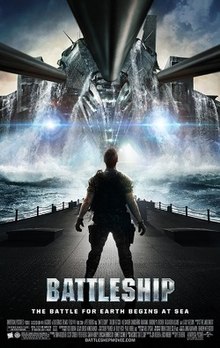
Battleship

Rating: **

Has there ever been a movie more likely to be doomed to creative folly? Not since producers at Disney ludicrously suggested that their theme park ride “Pirates of the Caribbean” would make a great basis for a film, has the twin demons of brand recognition and built-in fanbase been so egregiously exploited. Although I’m hardly comparing Battleship to Curse of the Black Pearl, both films yield some unexpected results. In this instance, the result is that Battleship, as pure popcorn entertainment, isn’t a complete waste of your time.

What’s interesting is that director Peter Berg is really working his butt off to channel Michael Bay, but naturally being Berg he can’t out-do the master. Nobody’s going to confuse Bay’s Transformers films with high art, nor will they with Berg’s Battleship for that matter. But in the case of the Battleship, I see a bizarre attempt to make something more than a by-the-numbers sci-fi action epic. In much the same way as Berg’s Hancock, a nearly post-modern take at Superman and the hero myth, it seems that half a good idea is better than no idea at all.

Still, we must confront the notion that this film is based on a board game, and I would say you can tell by the woodenness of the actors involved, but the actual game was made out of plastic. The somewhat pathetic excuse for an emotional through line involves Lieutenant Alex Hopper (Taylor Kitsch), a man so gifted at the art of screwing up he’s about to be washed out of the navy despite having high aptitudes, an important position on his ship as chief weapons officer, and, as we learn later, he’s improbably one of the highest-ranking officers on his boat.

The entire set-up for the film is inane and predictable. Hopper is a malcontent, a rascal. He’s incorrigible and his older brother Stone (Alexander SkarsgĂ„rd), a navy captain with a bright and accomplished future, is always yelling at him to straighten up and fly right (as it were). Alex wants to marry Sam, but her father (Liam Neeson) is a powerful naval admiral who’s about as likely to give his approval as he is to confuse a destroyer with a submarine. Alex is a hot head that needs a lesson in humility, a rebel without a cause, a slacker looking for a reason… Naturally, he’s the only man that can save us when evil aliens come a calling.

But in all seriousness, if Berg had shaved the first hour and gotten right into the fighting, I think people might be more willing to give Battleship a pass. Nods to the game are incorporated in surprisingly inventive ways: the alien’s mortar fire resembles the game’s plastic pegs, and one of the key action scenes involves Hopper’s ship using tsunami warning buoys to form a grid pattern so that they can hunt the alien ships at night.

I also like how Berg has a genuine appreciate for military people in uniform beyond their being puppeteered for cool action sequences. One of the heroes is a veteran, a double amputee whose physiotherapist is Sam, and the film’s climax – without getting into spoilers- involves World War II vets fighting alongside the young pups to deal the aliens a final, crushing blow. The whole movie thinks that it’s going to break out of its cocoon of mediocrity to become something rather unique, but for whatever reason it just can’t seem to get there.

But for all the innovation Berg attempts to bring to the story, the film is horribly anchored (pun intended) by the usual action movie tropes like the arrogant man-child hero, the doting girlfriend, the loyal best friend, and the terse but well-meaning mentor figure. The motivation of the aliens is never explained, which is a mixed blessing, but then again the whole plot is centred around aliens parking their small fleet off shore near Hawaii so that they can access a satellite array to call in their larger armada. “Sure, we can span the universe in our powerful ships, but can we borrow your phone?”

But for better or for worse, the movie will be judged by the fact that it’s based on a board game, and unlike that previously referenced Pirate movie, the end result does nothing to make the audience believe that the people behind it care. When they talk about bland studio product, Battleship is the next best example, and it’s all the more frustrating given what Berg & Co. seem to want to do with the damn thing. Hopefully the movies based on Ouija and Monopoly will bear sweeter fruit.

Friday, 4 May 2012

The Avengers

Rating: ****

The Avengers, by virtue of being the first movie of summer, gets to set the tone for the season, and that tone is a fun, thrilling spectacle that balances big action and heart. It develops strong characters with complex relationships, while still being able to level New York under the thumb of an alien invasion. Under the stewardship of Joss Whedon, The Avengers, a movie that really was too big to fail, does the highly improbable for modern Hollywood blockbuster filmmaking: it makes your ticket price seem like money well spent.

Following up on Iron Man, The Incredible Hulk, Iron Man 2, Thor, and Captain America: The First Avenger, The Avengers brings together characters from all those films into a single adventure. When Thor’s vengeful brother Loki suddenly appears in an installation run by the world peacekeeping agency S.H.I.E.L.D., stealing the Cosmic Cube (from Captain America) and kidnapping Dr Selvig and Hawkeye (from Thor) as his worker bees, S.H.I.E.L.D. Director Nick Fury puts the Avengers Initiative into effect. Assembling Captain America, Bruce Banner, Iron Man, Black Widow and eventually Thor, The Avengers set out to stop Loki before he can unleash an alien army to take over the Earth.

So, where to begin? How about the writer/director Joss Whedon, and may I say how astounded I am about how much of his typical Whedon-ness manages to make it into the finished film. How does one define ‘Whedon-ness?” Well, there’s the scene during the alien invasion when Black Widow reminisces about Budapest to which Hawkeye retorts that the two of them remember Budapest very differently. There’s the scene on the helicarrier where Stark refers to Loki’s slaves as “flying monkeys” to which Captain America excitedly realizes that he gets that reference. And then there a couple of prime Hulk scenes that are honestly too good to spoil.

Speaking of whom, this is another area that Whedon excels: his characterization of the Hulk and his alterego Bruce Banner. The recasting of Mark Ruffalo for the part was an added treat because Ruffalo, as a person, is so unassuming and seems so harmless that when he Hulks out, there really is something to fear. Ruffalo getting to be the first actor to play both Banner and Hulk through the miracle of motion capture adds to that effect because you can see both characters reflected in each other. But Whedon gets credit for this Hulk too because I think the script gets that psychology better than any writer on a Hulk movie previous.

The rest of the cast does well, although I think Chris Hemsworth as Thor and Jeremy Renner as Hawkeye get the short end of the stick, because, sadly, in a cast this big, there just isn’t the same amount of room for everyone. The one character, besides the Hulk, that gets the benefit of the Whedon treatment is Scarlett Johansson’s Black Widow. In Whedon’s hands, Widow rightly joins the filmmaker’s pantheon of butt-kicking females, and Johansson gets to show some vulnerability as well as some cleverness considering Widow is one of two Avengers without powers. Chris Evans continues to be commanding as Captain America, and subtly plays well Cap’s man out of time struggles while still being a authoritative presence. Whedon also does well restraining the unbridled enthusiasm of Robert Downey Jr as Tony Stark, and focusing it. Downey also plays well off Ruffalo as the team’s two resident brainiacs.

But the true miracle of The Avengers is pacing. There were so many masters that Whedon had to answer to, so many highlights he had to hit, it’s a wonder that the movie didn’t look more like a highlight reel rather something with a coherent narrative. There’s a lot of action, but there’s also a lot of character moments, a lot of time spent on seeing how these heroes interact outside the immediacy of the next crisis. And in another typical Whedon touch, one supporting character is killed before the end of the second act, providing both a dramatic impetus for the team, and a justifiable reason why they go with their given nom de plume.

On the downside, The Avengers is geek chic of the highest order, so when you come, you have to come in a playful mood because there’s no room for curmudgeons in the theatre. Alan Silvestri’s score is perfectly unmemorable, which is a real shame because I think if there’s one element holding this back from being perfect popcorn fare it’s the forgettable music. Sure Raiders of the Lost Ark was great, but what connected you to all those great memories of the film as you left the theatre? It was the John Williams theme. Perhaps J.J. Abrams’ Star Trek, featuring a score by Michael Giacchino, may be a more recent example of a musical score that makes just that little bit of extra difference.

But ultimately I feel that any criticism of The Avengers might fall under the category of nit-picking, and certainly the box office returns thus far prove that if ever there was a movie that fit the definition of critic proof, this would be it. But the thing of it is that The Avengers deserves the accolades and the adulation, and appropriately, just as the superhero genre seemed to be a game of diminishing returns, The Avengers comes in and saves the day. Ultimately, when it came to building hype for this movie, there was no assembly required.

And do stay to the very end of the credits for the second bonus scene. You will not be disappointed.

Thursday, 3 May 2012

Hot Docs - The Young Man Was (Part 1: United Red Army)

 
Rating: **1/2

I don’t know if director Naeem Mohaiemen is a genius, but he’s blazed a trail for a completely new style of documentary filmmaking: the minimalist footage documentary. You see, The Young Man Was (Part 1: United Red Army) is more the type of documentary you read than watch. Much of the film is text against a black screen transcribing the communications from a hostage crisis 35-years-ago, the rest is a limited amount of archival footage, and clips of a bizarre 6-part British spy show from the 60s.

The subject is the 1977 hijacking of flight JAL 472 by the Japanese Red Army. The drama unfolded over 80 hours, and while many were captivated to the then unprecedented 24-hour media coverage, one boy, Mohaiemen himself, tuned into his TV hoping to watch The Zoo Gang, a TV series about World War II spies reuniting to get revenge for one of their own who was killed.

The politics of this hijacking, if you don’t remember first hand the era, might require you a couple of minutes of internet research or more to get up to speed. That’s one of the problems with the film, not context; who were the Japanese Red Army? Where did they come from? Where did they go? Why is this affair important to broader history? On the other hand, I don’t think this is supposed to be a history lesson, which is fine. There’s a bizarre kind of real time aspect to the film. You’re trying to understand what’s happening and you’re going on very little information, as if watching a current event unfolding on TV, which I liked.

Mohaiemen’s chosen format is compelling, although probably not to everyone’s taste. What I think it does capture well is the kind of absurdist nature of this crisis, various conversations and the limited-English of both the hijackers and hostage negotiators is almost hilarious in places given the seriousness of the situation. I applaud Mohaiemen for stretching the bounds of what a documentary can do and how it does it, but at the same time it kind of stretches one’s patience in places too. Ultimately, you will either go with it or you won’t, and for the most part I went with it.

Hot Docs - Ping Pong with The Record Breaker


Both Films: ****

In terms of sport, ping pong hardly ranks amongst the Top 20 of physically challenging activities. But… Maybe that’s because you’re not a senior citizen over the age of 80. For octogenarians around the world, ping pong is not just a hobby, but a lifestyle. It sharpens the mind and the reflexes, and sometimes it provides an escape. Or it provides hope. It can mean so much to people, and just generally be life affirming. And that’s the spirit that Hugh Hartford captures in his documentary simply titled Ping Pong.

The film follows about eight different ping pong players from around the world as they descend on China for the world championships of table tennis. There’s Terry, who supposedly has a week to live and seems to keep living through the magic of ping pong; German Inga lives in a home because she has dementia, but she’s as sharp as anyone half her age at the table; and Dorothy, from Australia, is officially over the century mark age-wise, but she can still take on all contenders, even abandoning her wheelchair when its game time.

There’s about 703 years of life experience between all the various players, so there’s a lot of great insight aside from just being kind of life affirming. It reminded me of Young at Heart, a doc that was released a few years ago about a group of seniors in a choir singing rock hits. It’s more than just a “aren’t old people funny” kind of thing, but you really appreciate the positive effects of ping pong on them, and how, in some cases, the sport has literally saved their lives.

The actual competition portion of Ping Pong goes by too fast, and I think that could have easily been stretched out a bit longer, and as consequence of that, I think some of the characters get more screen time than others. The build-up is very, very solid, but the competition and the denouement of the stories kind of go by without really leaving an emotional effect. But what’s surprising is that it doesn’t matter that much, because the film is funny and effecting with what it does, and it proves affirmatively that there’s life after 80.

Ping Pong is well matched with The Record Breaker, a short film about Ashrita Furman, a Queens man that holds the record for the most records in the Guinness Book of World Records. I think there’s an argument that can be made for the quality of records like walking up a mountain on stilts or cutting apples with a samurai sword, but what is unavoidable is Furman’s zest for life, and his proactive promotion of an active lifestyle. Because Furman is so giddy about being The Record Breaker, and because he’s such a complex and interesting character, this film is definitely a winner.